

Why Sanitary Pruning Matters in Fall
Autumn pruning isn’t about shaping — it’s about cleansing and protecting.
As roses slow their growth and prepare for dormancy, fungi and pests search for safe winter shelters. A few careful cuts now will determine whether your spring garden emerges healthy or struggles with disease recurrence.
Sanitary pruning removes everything that could harbor infection — leaves, twigs, or branches that are no longer vital. It’s an act of prevention and care.
When to Perform Sanitary Pruning in Fall
Timing is everything.
Start sanitary pruning only after the main growing season has ended and the plant begins entering dormancy. Cutting too early—while sap is still active—can trigger soft new shoots that frost will destroy.
Universal Signs It’s Time
- Night temperatures consistently drop to 40–45°F (4–7°C).
- Daytime highs stay below 60°F (15°C).
- Growth slows or stops, and leaves begin yellowing naturally.
- The last flush of blooms has faded.
When these signs align, it’s safe to start cleanup, pruning, and winter preparation.
When to Start Sanitary Pruning in different USDA zones
Zones 8–9 Late October – mid-November Growth stays active longer; prune lightly before rainy season.
Zones 6–7 Early–mid October Begin when nights stay around 40°F (4°C). Ideal window: before the first light frost.
Zones 3–5 Late September – early October Start once the weather stabilizes below 45°F (7°C). Complete pruning, Dormant Spray Oil treatment, and soil mounding before hard frost.
Garden tips
“Roses always tell you when it’s time. When the new tips stop stretching — that’s nature’s whisper to start pruning.”
Rule of thumb: wait for consistently cool, dry weather, but finish before the first hard frost (below 28°F / –2°C).
At around 40°F (4°C), rose metabolism slows, and cut surfaces heal without bleeding sap, protecting the plant from dieback and fungal entry.
Step-by-Step: How to Perform Sanitary Pruning
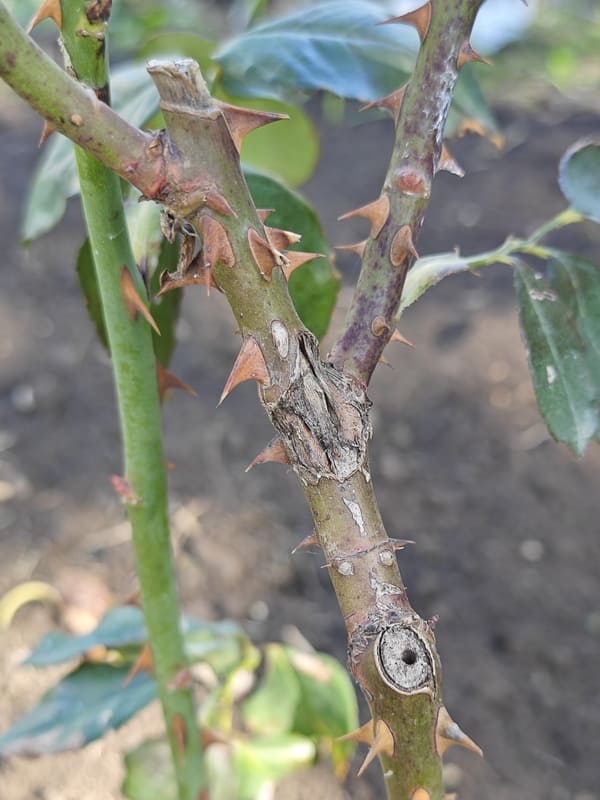
1. Inspect Each Bush Carefully
Use clean, sharp pruners. Look for:
- Black or brown lesions on stems (signs of canker or black spot)
- Crossed or rubbing shoots
- Dead or dry wood
- Yellowed or spotted leaves
2. Remove Without Hesitation
- Dead, diseased, and crossing stems
- Shoots thinner than a pencil
- Leaves showing black spot or rust
- Faded blooms and soft green tips are unlikely to mature before frost
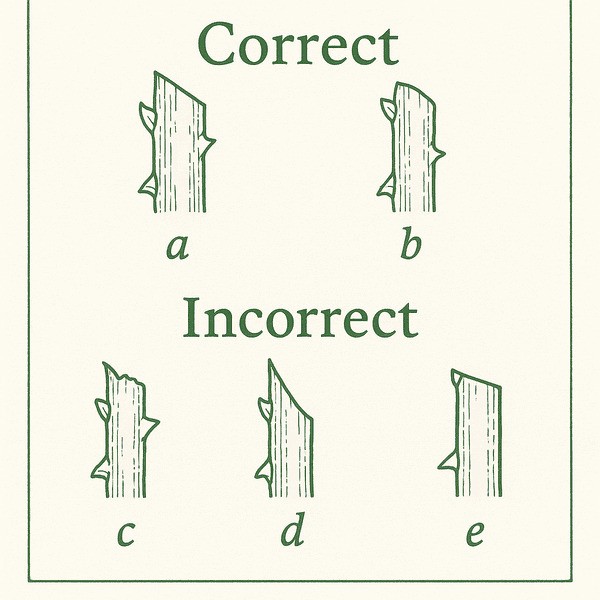
Always cut ¼ inch above a healthy outward-facing bud at a 45° angle.
3. Disinfect Tools Often
After each bush, wipe the blades with 70% alcohol or a 1:10 bleach solution to prevent the spread of disease.
4. Dispose Properly
Never compost infected foliage. Burn or discard it with household waste to prevent fungal spores from overwintering.
Pruning Differences Between Rose Types
Hybrid Tea / Floribunda
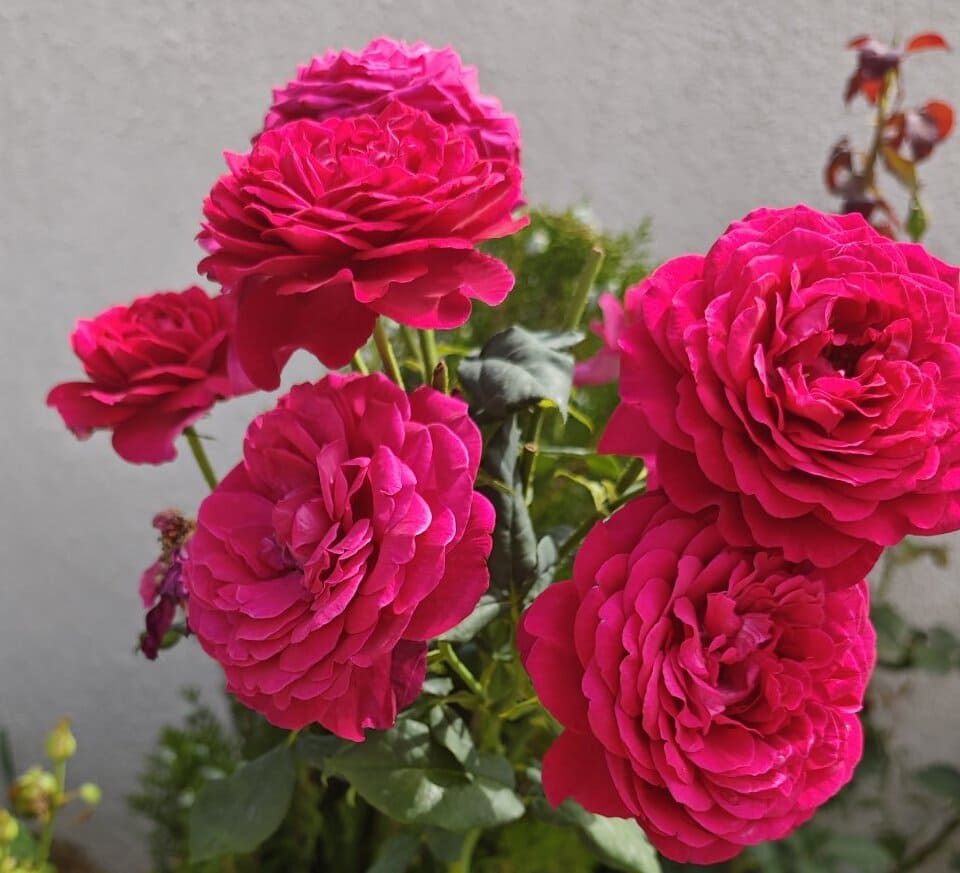
Shorten tall stems by ⅓, remove thin and weak shoots. Don’t cut low — leave structure for frost protection.
Shrub / English Roses
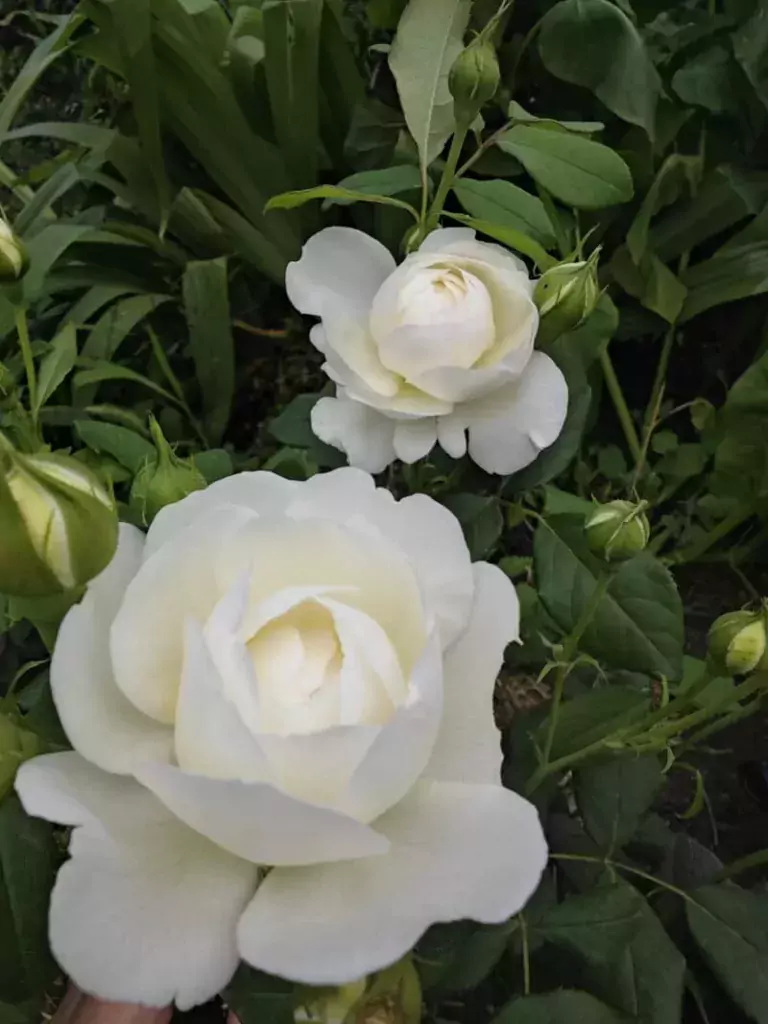
Focus on sanitation only. Keep main framework intact. Old wood provides protection and early spring bloom sites.
Climbing Roses
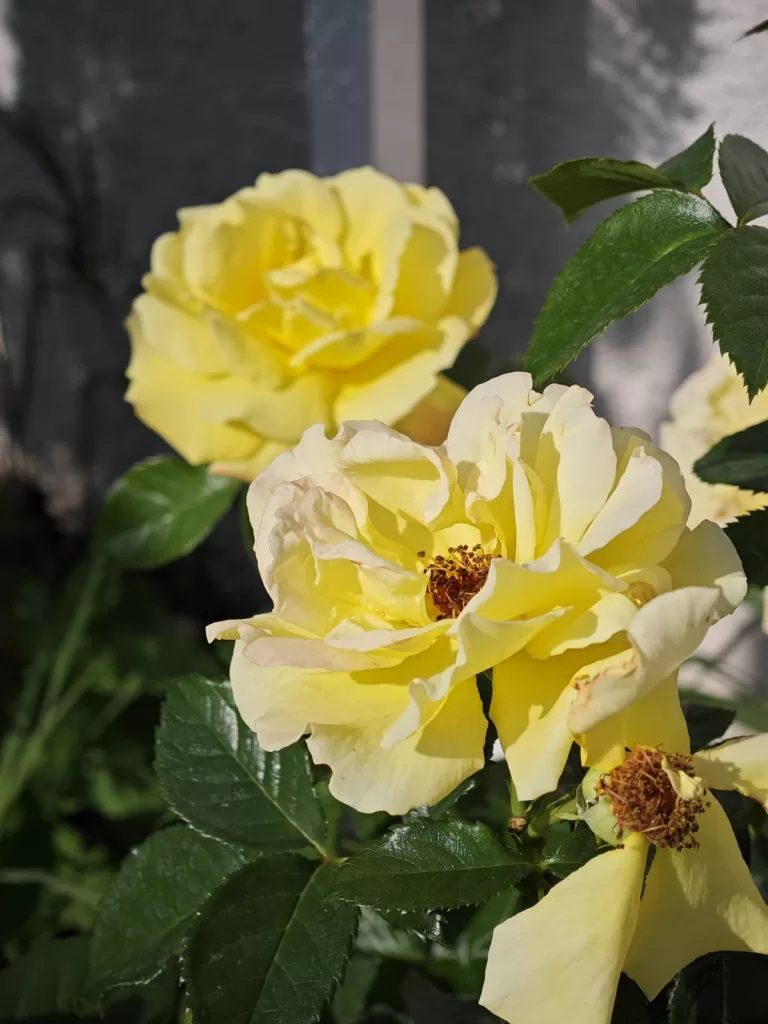
Remove dead laterals, tie main canes securely. Complete pruning postponed until spring.
Groundcover / Miniature Roses
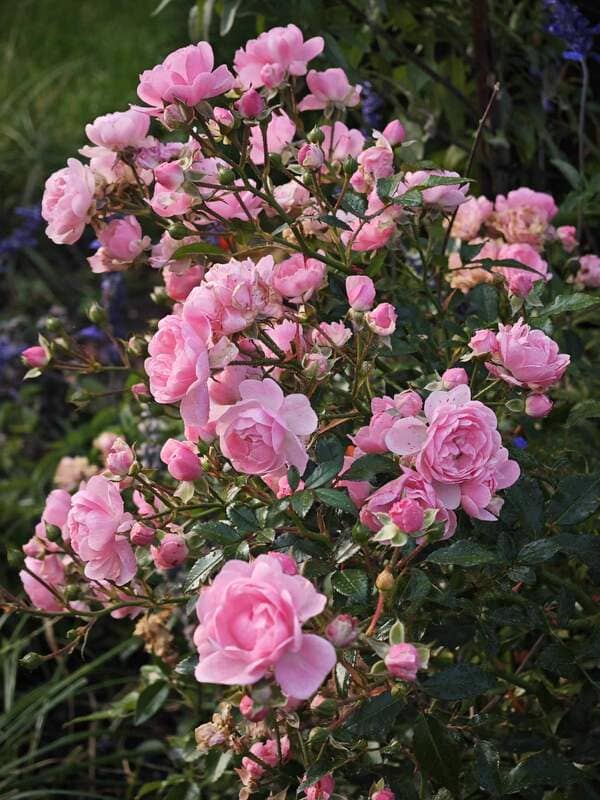
Light trim for shape and hygiene. Keep foliage as an insulating layer.
Adjusting Pruning for USDA Zones
Zones 8–9 (Mild Winters)
- Perform light sanitary pruning and leaf cleanup.
- Roses may keep some foliage—remove only diseased parts.
- Finish with a fine mulch layer.
Zones 6–7 (Moderate Winters)
- Remove diseased and soft growth.
- Shorten tall canes by one-third to prevent wind damage.
- After pruning, spray with Dormant Spray Oil to eliminate overwintering insects and spores.
- Once the soil cools, add 3–4 inches of mulch around the base.
Zones 3–5 (Cold Winters)
- Combine sanitary pruning with cut-back for covering: shorten canes to 8–10 inches.
- Mound compost or soil around the crown, then cover with breathable fabric or spruce branches after the ground freezes.
- Spray with Dormant Spray Oil or a copper solution before covering.
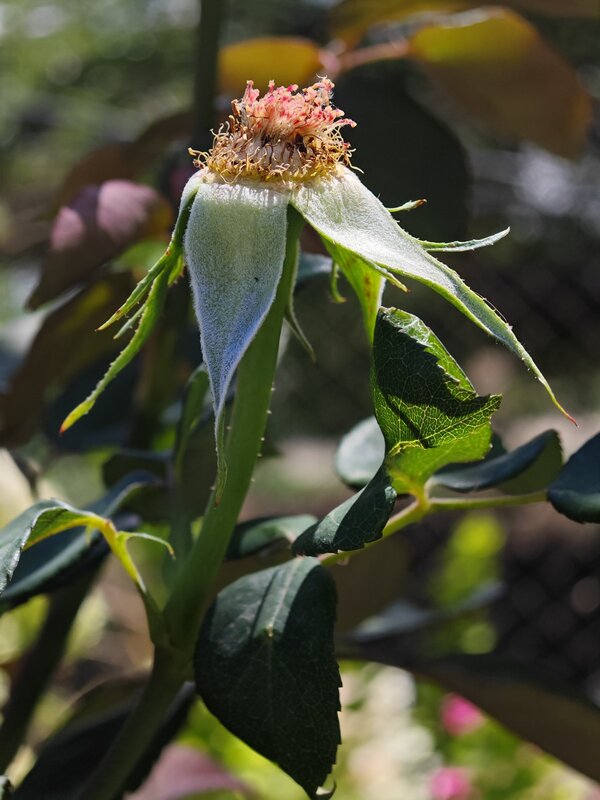
After-Pruning Care
- Seal cuts wider than a pencil with natural tree balm or clay paste.
- Spray with Dormant Spray Oil — this step is essential for a clean winter start.
- It coats stems and buds, smothering overwintering pests and fungal spores without harming beneficial biota.
- 👉 My personal favorite is this Dormant Spray Oil on Amazon — it’s reliable, safe for organic gardens, and I’ve used it for years as part of my fall care ritual.
- Feed lightly with mature compost or wood ash for potassium and trace minerals.
- Mulch with shredded leaves or clean straw (never fresh manure).
Garden tips
I never skip this spray. After pruning, a fine mist of Dormant Spray Oil is like a soft protective blanket for your roses — they rest clean and safe until spring.
Common Mistakes to Avoid
- Over-pruning: stimulates growth before frost.
- Leaving fallen leaves: they harbor spores.
- Skipping oil spray: overwintering pests survive beneath buds.
- Covering too early: wait until soil temperature stays below 40°F (4°C).
FAQ: Fall Pruning of Roses
No — only sanitary cuts. Hard pruning should be delayed until early spring, when new buds begin to swell.
It suffocates overwintering pests and fungal spores without the use of chemicals. It’s safe, organic, and an essential part of my fall care routine.
Yes — on a dry, calm day above 40°F (4°C). Allow the cuts to dry for at least an hour before spraying.
Tie the main canes securely, remove dead laterals, and cover the base. In cold zones, bend and lay canes before covering.
Remove only diseased or damaged ones. Healthy foliage protects stems and soil life in mild zones.
Keep Learning and Growing with Me
If you found this guide helpful and want to go deeper into rose care, you’ll love my books — written from real-garden experience, not theory. Each one is filled with practical tips, natural recipes, and the lessons I’ve learned through years of tending hundreds of roses.
📖 Why Doesn’t My Rose Grow and Bloom? — Discover 100 common mistakes gardeners make and the simple fixes that turn struggling bushes into bloom machines.
📗 Sustainable Secrets for a Thriving Rose Garden — Learn how to feed, protect, and strengthen your roses using only organic, soil-friendly methods.
📘 Small Garden Design Secrets — Turn even the tiniest yard or terrace into a blooming retreat with smart design and plant pairings.
✨ Every page is written to make rose care feel joyful and clear — like a conversation between gardening friends.
👉 Explore all my books on Amazon »
(They’re available in Kindle and print editions.)
“Your garden can be your most beautiful classroom.
Start with one rose, and let it teach you everything.” — Ann Devis
Rose gardening books

Explore rose gardening books and garden planner by Ann Devis. Get practical tips, organic techniques, and insights to create and maintain a stunning, thriving rose garden.