
Feeding roses with whey is an excellent, eco-friendly practice that benefits the plant and the soil. Whey, a byproduct of cheese or yogurt, is rich in nutrients like proteins, amino acids, and beneficial bacteria.
Benefits of Feeding Roses with Whey
- Natural Nutrient Boost 🥛
- Whey contains small amounts of nitrogen, phosphorus, and potassium, essential for healthy plant growth.
- It’s rich in lactic acid, which improves soil health and promotes microbial activity.
- Improved Soil Structure 🌱
- The organic content in whey nourishes beneficial microorganisms, enhancing soil aeration and nutrient availability.
- Disease Resistance 🛡️
- Lactic acid bacteria can suppress harmful pathogens in the soil, reducing the risk of fungal diseases like black spots or powdery mildew.
- Cost-Effective Solution 💲
- Whey is a natural, inexpensive way to supplement rose feeding routines, mainly if you produce it as a kitchen byproduct.
- Eco-Friendly and Sustainable 🌍
- Using whey minimizes food waste and avoids reliance on chemical-heavy solutions.
How to Use Whey on Roses
Dilution
- Mix whey with water in a ratio of 1:10 (one part whey to ten parts water).
- This ensures that acidity doesn’t overwhelm the soil or the plant.
Application Methods
- Soil Drenching: Pour the diluted Solution directly at the base of the plant to enrich the root zone.
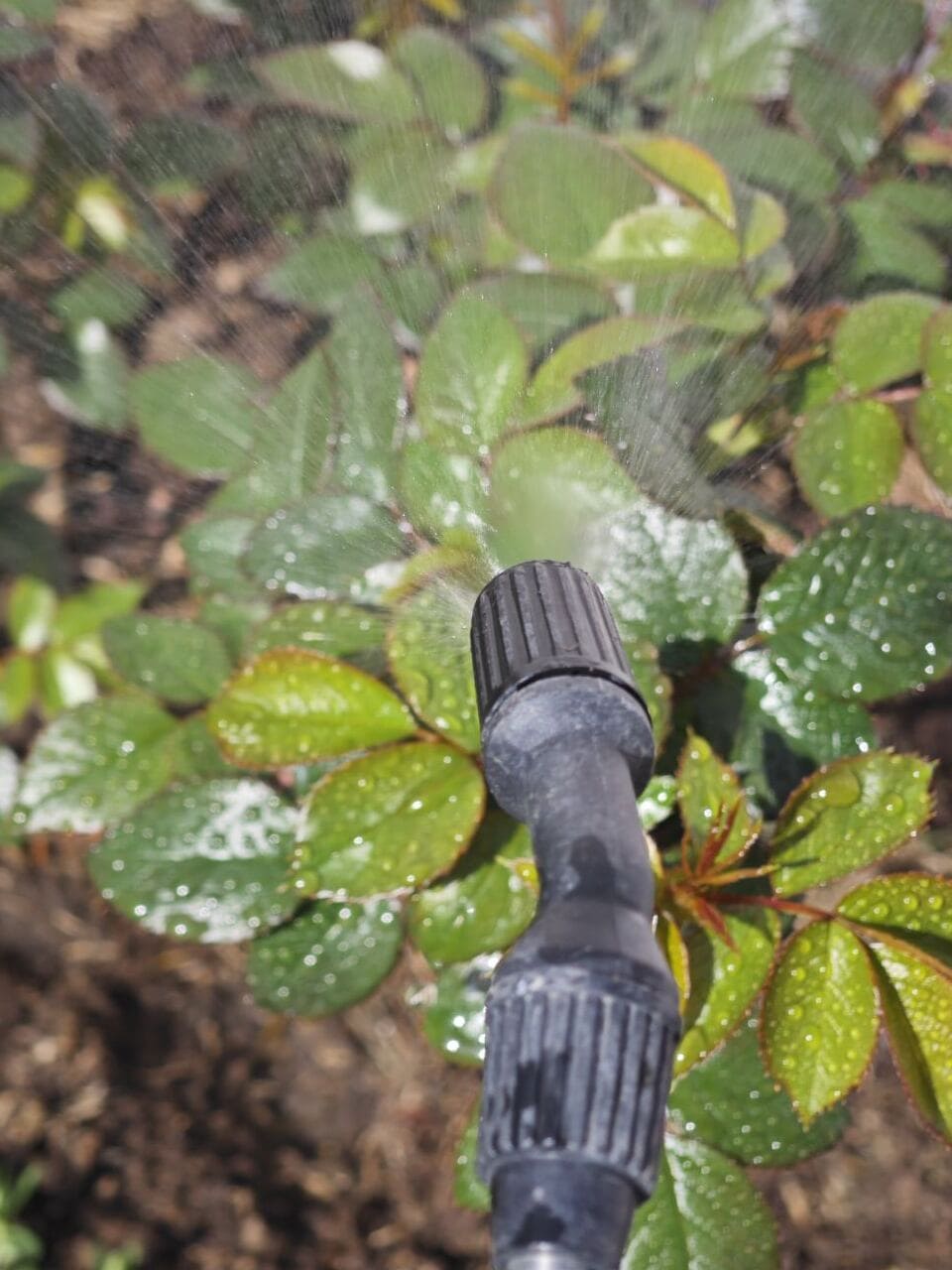
- Foliar Spray: Use the Solution in a spray bottle to mist the leaves. This boosts nutrient absorption and acts as a mild fungicide.
Combination with Other Ingredients
- Add a teaspoon of molasses or a bit of compost tea to the whey solution for an extra microbial boost.
- For pest management, include a small amount of neem oil in the foliar spray.
Combining Whey with Mineral Fertilizers
Add one teaspoon of mineral fertilizers to the whey solution. This method will provide optimal doses of mineral substances for plant feeding without overloading the soil or risking overfeeding the plant. In addition, it significantly reduces the consumption of mineral fertilizers in the garden. Spray the leaves of plants with this Solution.
Garden tips
Use Fresh Whey: Opt for unsweetened, unflavored whey to avoid introducing unwanted chemicals.
When to Use Whey on Roses
- Growing Season:
- Start applying whey in early spring when the plant begins to sprout.
- Continue until mid-summer for optimal growth and bloom performance.
- Frequency:
- Apply whey once every two to three weeks.
- Avoid overuse to prevent an imbalance in soil pH or excessive salt accumulation.
- Weather Conditions:
- Use whey early in the morning or late afternoon to prevent leaf burn during hot days.
- Avoid application before heavy rain to ensure nutrients aren’t washed away.
Rose gardening books


Explore rose gardening books and garden planner by Ann Devis. Get practical tips, organic techniques, and insights to create and maintain a stunning, thriving rose garden.

Precautions When Using Whey
- pH Monitoring:
- Whey is slightly acidic, so regular use can lower soil pH. If your soil is acidic, limit whey use and monitor it with a pH tester.
- Odor Control:
- Fermented whey can produce a pungent smell. Ensure proper dilution and clean up any spills.
- Avoid Overfeeding:
- Excessive nutrients can harm the plant. Stick to recommended schedules and concentrations.

Get Your Free Lunar Gardener's Calendar 2025!
Join the Lunar Gardening Revolution! Subscribe now to receive our exclusive Free Lunar Gardener’s Calendar for 2025. Harness the power of the moon to optimize your planting, nurturing, and harvesting.
FAQs About Feeding Roses with Whey
All types of roses, including hybrid teas, climbers, and shrubs, can benefit from whey. The nutrients in whey cater to roses’ universal needs.
Yes, diluted whey can benefit many garden plants, particularly those that thrive in slightly acidic soil conditions, like blueberries and hydrangeas.
Yes, excessive whey application can lead to salt buildup and nutrient imbalances. Always dilute whey and use it sparingly.
Yes, alternatives include compost tea, fish emulsion, and manure-based fertilizers, which are also rich in organic nutrients.
Blooming garden
Feeding roses with whey is a simple, natural, and effective way to enrich your garden. It transforms waste into a resource, promoting sustainability while enhancing the beauty of your blooms. Whether an experienced gardener or a novice, try incorporating whey into your rose care routine for stunning, healthier plants.
Let your roses bloom brighter, and your garden grows greener with the power of whey!
Want more gardening tips? Subscribe to our newsletter for monthly advice straight to your inbox!


