

By Ann Devis — science-minded, soil-loving rose geek with muddy knees and a notebook full of field notes.
Roses aren’t fragile princesses; they’re athletes. Given the right conditions, they outgrow pests, shrug off disease, and flower like they mean it. What gets in the way isn’t the plant—it’s the myths we inherit. Let’s retire five of the most persistent ones with precise science and practical steps you can use this week.
Myth 1: “Roses are chemical divas—you must spray on a schedule.”
Why it lingers: We’re used to seeing perfect exhibition blooms and assume they’re the result of constant spraying.
The science: Most foliar diseases (like black spot and mildew) depend on leaf wetness duration, poor airflow, and susceptible genetics. Reduce any of these three, and disease pressure drops—without blanket chemicals. Healthy plants also recruit their own bodyguards: a biodiverse garden attracts predators and parasitoids (hoverflies, lacewings, tiny wasps) that keep pests below damage thresholds.
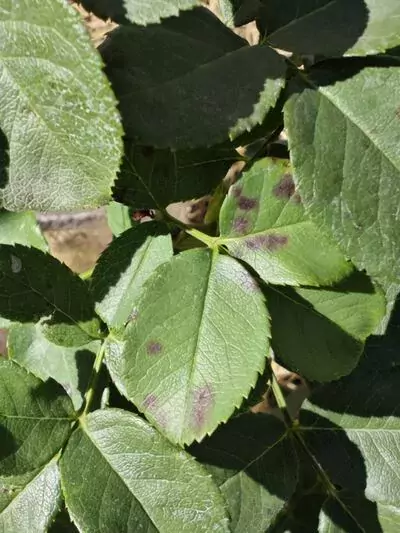
Do this instead (IPM in 6 quick moves):
- Choose genetics wisely. Start with disease-resistant cultivars and give them sun (see Myth 2).
- Airflow design. Space plants, prune crossing canes, and keep the bush center open so leaves dry fast after rain.
- Water the roots only. Morning, at soil level. Avoid wetting leaves in the evening.
- Mulch smart. A 5–8 cm organic mulch limits splash-up of spores and stabilizes moisture.
- Scout weekly. Pinch off the first infected leaves; sanitize pruners.
- Spot-treat only when needed. Use targeted, lower-impact tools (sulfur, potassium bicarbonate, horticultural oil/soap) on hot spots—don’t carpet-bomb the whole garden.
Field note:
In my border, simply thinning dense centers and switching to morning root-zone watering cut black spot by half within one season.
Myth 2: “Roses bloom fine in shade—sun is optional.”
Why it lingers: We’ve all seen a rose survive in the dappled corner and assume it’s happy.
The science: Bloom quantity and quality are powered by photosynthesis. Most garden roses require 6–8 hours of direct sunlight to develop strong buds, a high petal count, and a rich fragrance. In very hot climates, light afternoon shade (after 2–3 p.m.) protects pigments and prevents “balling.”
Do this instead:
- Aim for morning–midday sun. If your site is shady, choose once-blooming species, rugosas, or shade-tolerant shrubs—and adjust expectations.
- Keep foliage away from itself (airflow again) so the sun you do have actually reaches the leaves.
- In heat waves, add a temporary shade cloth to preserve cool-toned colors in lavender/“blue” cultivars.

Love song rose
Myth 3: “More fertilizer = more flowers.”
Why it lingers: Quick-acting fertilizers give a fast flush of soft growth that looks like success—until pests and disease follow.
The science: Excess nitrogen creates lush but weak tissues and delays lignification (maturing of stems). That tender growth is candy for aphids and thrips. Roses perform best with balanced nutrition and carbon-rich soils that feed microbes. Potassium (K) supports bloom quality; calcium strengthens cell walls; magnesium supports chlorophyll.
Do this instead (a balanced feeding plan):
- Soil test first. Don’t guess—correct, don’t overcorrect.
- In spring, apply compost (not manure-heavy “hot” mixes) and a balanced organic feed.
- Through summer, light, consistent feeding, not big spikes.
- From mid- to late summer, ease off nitrogen and emphasize K + Ca (e.g., kelp/ash where appropriate, calcium sources) for firmer petals and better end-of-season resilience.
- Foliar feeds? Use sparingly and early in the day; they supplement, not replace, soil health.
Quick experiment:
Keep one plant on high-N feed and a twin on balanced, lower-N with extra K/Ca. Track aphids, mildew, and stem strength for 6 weeks. The difference is striking.
Myth 4: “Prune once in early spring and you’re done.”
Why it lingers: Traditional guides focus on the big spring haircut.
The science: Disease organisms love stagnant, shaded, humid centers. One annual prune can’t handle a vigorous season. Summer thinning and sanitation alter the plant’s microclimate, reducing leaf-wetness periods and inhibiting disease spread.
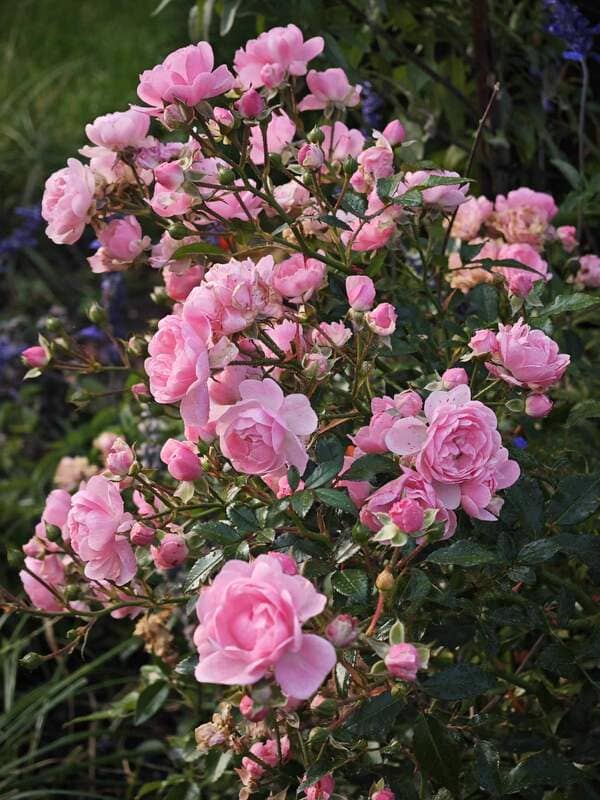
The Fairy rose
Do this instead (year-round rhythm):
- Early spring: Remove dead/damaged wood to healthy pith; shape for outward growth.
- During the season:
- Thin crossing or congested shoots (especially in varieties like ‘The Fairy’).
- Deadhead to the first strong outward-facing leaflet for faster repeats (or leave hips in late fall to signal dormancy).
- Remove lower leaves that touch the soil to reduce splash-up infection.
- Tools: Sharp, clean, alcohol-wiped between plants. Cut just above an outward bud; the cut angle matters far less than cleanliness and placement.
Myth 5: “Pests are inevitable—spray early, spray often.”
Why it lingers: Panic sets in when the first aphids appear, and we reach for broad-spectrum killers that also wipe out natural enemies.
The science: Most rose pests have short life cycles and numerous predators. If you avoid annihilating the food web, nature helps you. Also, insects cue into plant volatile signals from stressed, over-nitrogened, or water-stressed growth.
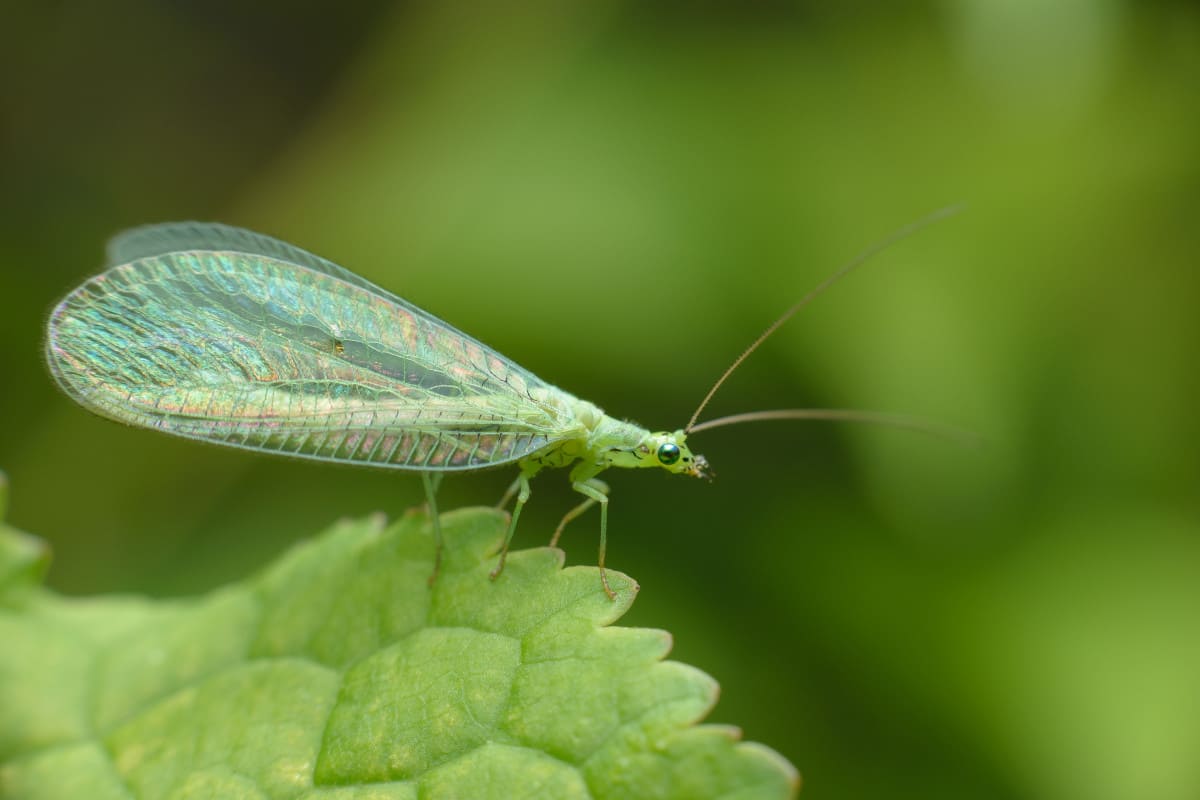
lacewing
Do this instead (a calm, effective playbook):
- Thresholds, not fear. A few aphids? Wait 48–72 hours and look for lady beetle larvae, hoverfly maggots, and lacewing eggs.
- Mechanical first. A strong water jet knocks aphids and spider mites off. Hand-pick sawfly larvae and caterpillars early.
- Ant control = aphid control. Ants farm aphids; manage ant access around bases.
- Attract the cavalry—plant insectary strips (alyssum, dill, fennel, yarrow, catmint, salvias). Provide shallow water and avoid nighttime lighting near beds.
- Targeted sprays only if needed. Use soap or neem oil on clusters; rotate modes; protect bloom-time pollinators.
Case in point:
When I replaced weekly “just-in-case” sprays with insectary plantings and spot treatments, aphid spikes dropped within two cycles and lacewings moved in permanently.
Quick Reference: The “Strong Rose” Checklist
- 6–8 hours of sun (with afternoon shade in extreme heat).
- Deep, infrequent watering at the soil level; consistent moisture under mulch.
- Open centers and clean cuts all season.
- Balanced feeding; reduce N after midsummer; support K, Ca, and Mg.
- Weekly scouting and prompt sanitation.
- Insectary companions to maintain your own living IPM team.
A final thought
Roses don’t need us to fight nature for them. They need us to work with nature—air, light, timing, and the quiet power of living soil. When you replace myths with mechanism-based practice, your garden becomes calmer, cleaner, and far more beautiful.
Ready to go deeper?
If your rose still underperforms—few buds, odd leaves, mystery dieback—I wrote a field-tested guide that solves exactly these problems.
👉 Why Doesn’t My Rose Grow and Bloom? 100 Reasons and Solutions
Real causes, clear fixes, and step-by-step checklists—so your roses finally do what you planted them to do: grow and bloom.
Rose gardening books

Explore rose gardening books and garden planner by Ann Devis. Get practical tips, organic techniques, and insights to create and maintain a stunning, thriving rose garden.

FAQ: Rose Care — Most-Asked Questions
Yes. Aim for 6–8 hours of direct sun. In very hot climates, light afternoon shade helps protect petals and fragrance.
Water deeply 1–2 times per week, in the morning, at the root zone. Adjust for heat, soil, and wind; keep soil evenly moist under mulch.
No. Use IPM: choose disease-resistant cultivars, prune for airflow, keep leaves dry, remove infected foliage, and spot-treat only when thresholds are exceeded
Use a balanced, slow-release rose fertilizer or organic feed that supplies N-P-K plus calcium and magnesium. Avoid high-nitrogen spikes that cause weak, disease-prone growth.
Stop high-nitrogen feeding 6–8 weeks before your first expected frost. In warm zones, switch late-season nutrition toward potassium and calcium.
Common causes include too little sun, over-shading/crowding, excess nitrogen, stress from drought or root competition, incorrect pruning timing, or immature plants
Cool, wet weather, combined with poor airflow, causes the outer petals to close shut. Prioritize morning sun, open the plant’s center, water at the base, and remove stuck buds before Botrytis spreads.
In early spring, shape for outward growth and remove dead/diseased wood. In season, deadhead to a strong outward leaflet and thin congestion to keep light and air moving.
Absolutely. Choose at least a 40–55 cm wide pot (larger for shrubs/HT), quality potting mix, full sun, consistent moisture, and slow-release nutrition.
A 5–8 cm layer of shredded leaves, composted bark, or straw. Keep mulch a few cm away from canes to avoid rot and reduce spore splash.
Use a firm water spray, pinch small clusters, control ants, and plant insectary companions (such as alyssum, dill, yarrow, and salvias) to attract predators. Soap sprays work for hotspots.
Slightly acidic: pH 6.0–6.5. Test first; correct gently rather than guessing.
Want more gardening tips? Subscribe to our newsletter for monthly advice straight to your inbox!


