
The dormancy mistake that weakens roses and ruins flowering
Every winter, I see the same worried questions in rose groups.
“My rose dropped its leaves. I panicked and brought it into the house. It started growing again — did I save it?”
I understand the fear. Roses feel personal. We don’t want to lose them.
But here’s the gentle truth:
When we try to save roses from winter, we often take away the one thing they truly need — dormancy.
And that’s when problems begin.
The biggest myth: “If a rose loses leaves, it’s dying.”
Dormancy is not stress — it’s how roses survive and bloom.
Roses are not evergreen houseplants.
They are deciduous shrubs with a natural biological cycle.
Winter is not something roses need protection from.
Winter is something roses are designed for.
When temperatures drop, a healthy rose:
- slows internal processes
- reduces sap flow
- naturally drops leaves
- hardens its canes
- stores energy for spring growth and flowering
This resting phase is called dormancy — and without it, a rose becomes exhausted.
Think of dormancy as sleep.
You can keep a person awake with light and coffee — but they won’t be healthy.
Roses work the same way.
This is one of the most searched rose questions in winter — and one of the most misunderstood.
A rose losing leaves in cold weather is normal.
It is not an illness.
It is not a failure.
It is not something to fix.
In winter:
- Leaves don’t feed the plant
- Leaves increase water loss
- leaves become unnecessary
A leafless rose in winter is often perfectly healthy.
How cold can roses actually tolerate?
This is one of the questions I hear most often, and the answer isn’t as scary as many people expect.
Cold tolerance in roses depends largely on the variety. While many modern garden roses are perfectly comfortable around 20–23°F , well-established plants often handle even lower temperatures during dormancy without damage.
Some roses are exceptionally cold-hardy. A good example is Canadian-bred roses, which were specifically developed to survive harsh winters and can tolerate extremely low temperatures with little to no winter protection once established.
This is why it’s so important to remember that not all roses are the same. Winter hardiness is not a general rule — it is a variety-specific trait.
Most reputable growers and breeders indicate the USDA hardiness zone for each rose variety. That zone rating tells you the lowest winter temperatures the rose is expected to tolerate in the ground. Before worrying about extra protection or drastic measures, always check the USDA zone listed for your specific rose.
In many cases, the rose is far more cold-tolerant than we give it credit for. What causes problems most often is not cold itself, but unnecessary interference with the plant’s natural winter rest.

This surprises many beginners.
Most garden roses can tolerate:
- 20–23°F without damage
- many established roses handle 14°F or lower
- Short cold snaps are rarely dangerous
What roses dislike far more than cold:
- warmth combined with moisture
- constant temperature swings
- interrupted dormancy
Cold alone is rarely the problem.
Do roses need winter protection? It depends on your zone.
USDA Zones 8–9
- Most roses do not need heavy winter protection
- Mulch is usually enough
- Roses should stay outdoors
- Bringing roses indoors is unnecessary and harmful
Zone 7
- Light protection during prolonged cold
- Focus on root insulation, not warmth
Zones 5–6
- Winter protection is important
- Apply after consistent cold sets in
- Avoid early or airtight covering
Protection is meant to prevent extreme stress, not eliminate winter.
📌 I explain this step by step here:
Why bringing roses into the house causes long-term damage
When a dormant rose is moved into a warm indoor space:
- It receives false spring signals
- stored energy is consumed too early
- Weak, pale shoots begin to grow
These winter shoots:
- are not structurally strong
- are vulnerable to disease
- Often die when moved back outside
By spring, the rose is already tired.
It may survive — but it often:
- blooms poorly
- starts the season stressed
- becomes more disease-prone
Green does not always mean healthy.
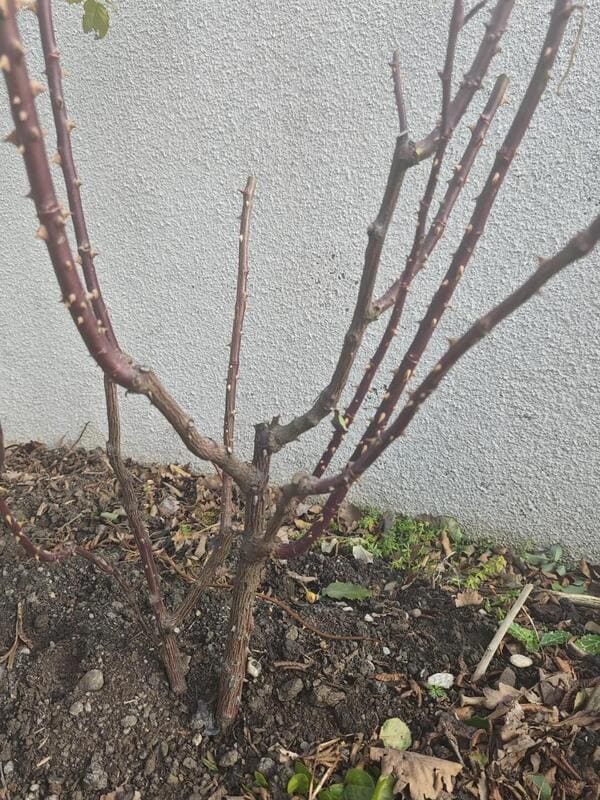
What a healthy rose looks like in winter
A rose doing well in winter may look unimpressive — and that’s okay.
Healthy winter roses:
- have few or no leaves
- show firm, mature canes
- have sleeping buds
- show no active growth
This quiet state is exactly what prepares them for strong spring growth.
If a rose has already been brought indoors
Don’t panic — just reduce damage.
- Move it to the coolest possible location (32–46°F)
- Reduce watering
- Stop feeding
- Avoid stimulating growth
- Provide light, not warmth
Sometimes, partial dormancy can be restored — but prevention is always better.
The most important thing to remember
Roses don’t need rescuing from winter.
They need permission to rest.
A rose that sleeps well in winter blooms generously in spring.
Want to understand your roses season by season?
If winter rose care feels confusing, you’re not alone.
Most problems I see in spring actually begin much earlier — when roses are misunderstood, overprotected, or pushed to grow when they should be resting.
That’s exactly why I wrote my books.
In them, I walk you through:
how roses really live through the seasons
what’s normal and what’s not
how to support strong growth and flowering without panic or guesswork
simple, practical care adapted to different USDA zones
These are not theory-heavy manuals. They’re based on real gardens, real mistakes, and years of observation.
👉 Explore my rose gardening books here:
Rose gardening books


Step into a calmer, more confident rose season. With Ann Devis’s rose gardening books and planner, you’ll get simple organic routines, proven tips, and checklists that keep your roses thriving – from first bud to last bloom.
FAQ
Yes. Dormancy is a natural and essential phase for roses, during which they rest, store energy, and prepare for spring growth.
Yes. Leaf drop in cold weather is normal and healthy. It does not mean the rose is dying.
No. Indoor warmth interrupts dormancy, weakens the plant, and can reduce spring flowering.
Most garden roses tolerate 20–23°F, and many established roses tolerate even lower temperatures when dormant.
Usually no. Mulch is sufficient. Roses in Zone 8 should remain outdoors.
Only after a consistent cold arrives should you cover too early; otherwise, it can cause more harm than good.


