
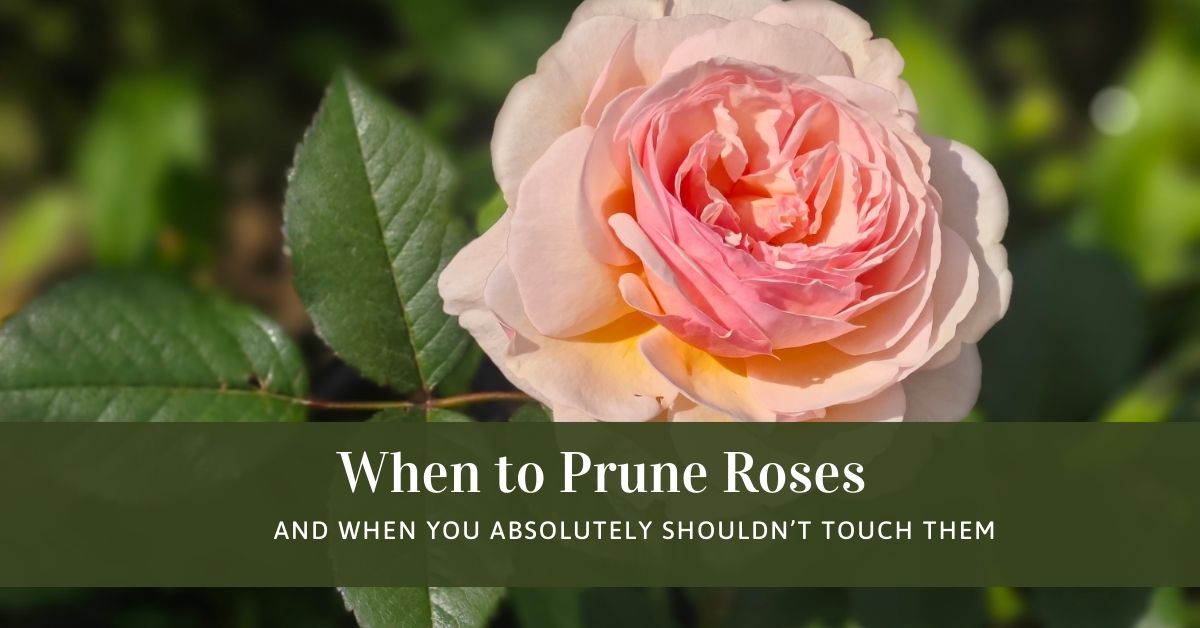
The best time to prune roses is when buds are swollen but not yet open, with daytime temperatures above 5–7°C (41–45°F) and nights consistently above –5°C (23°F). Pruning earlier risks frost damage, while pruning too late wastes the plant’s stored energy. Roses should not be pruned heavily in fall or during heat, and the exact pruning method depends on the rose type, as some bloom on old wood and others on new growth.
When to Prune Roses and When You Absolutely Shouldn’t Touch Them
Picture this: you grab your pruners in early March because “it’s spring pruning time,” only to watch your rose bush sulk all season or suffer winter dieback. Sound familiar? Most pruning disasters happen for one simple reason – we prune by the calendar, not by what the rose itself is telling us.
Roses don’t care about dates on your phone. They wake up and heal in response to temperature, dormancy signals, and their own biology. Ignore those cues, and instead of a vigorous, blooming beauty, you get a stressed, weakened plant fighting to recover.
This isn’t about turning your rose into a perfect ball for Instagram. It’s about smart, purposeful cuts that actually help the plant thrive. Let’s dive into when pruning is a game-changer, when it’s downright harmful, and how to make decisions that your roses will thank you for.
The Golden Rule: Every Cut Must Have a Real Purpose
Roses should only feel the blade for three solid reasons:
- Removing dead, damaged, or diseased wood (the #1 killer of roses)
- Improving structure and airflow to prevent fungal nightmares like black spot
- Redirecting energy into strong new flowering shoots, but only when the plant is primed and ready.
If your cut doesn’t fix one of these issues, skip it. Fun fact: Many roses actually suffer more from over-pruning than from neglect. Constant “tidying up” drains stored energy that could fuel spectacular blooms.
The Perfect Window for Serious Spring Pruning
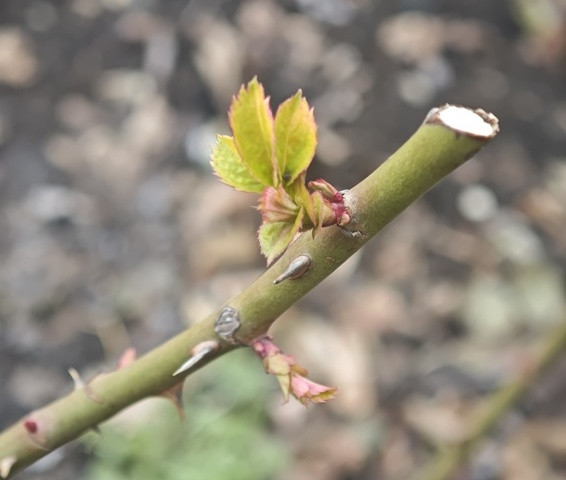
Timing is everything, and nature gives clear signals. The ideal moment for major pruning hits when these three conditions align:
- Nighttime lows have stayed consistently above –5°C (23°F) for at least 5–7 nights in a row (no sneaky late freezes!)
- Daytime highs hover around +5–7°C (41–45°F), kickstarting sap flow and helping wounds heal quickly.
- Buds are swollen and plump but not yet bursting into leaves (this is the sweet spot, the plant is waking up but hasn’t burned through its winter energy reserves yet)
Prune right then, and you channel all that stored power into vigorous new canes and bigger flowers. Agricultural extensions and rose societies worldwide agree: prune just before active growth explodes, not weeks too early, not after leaves emerge.
When Pruning Can Actually Harm Your Roses (Big Red Flags)
Sometimes the kindest thing you can do is put the shears away. Avoid pruning if:
- Nights dip below –7°C (20°F) – fresh cuts freeze easily, even on mild days.
- Days stay below +3°C (37°F) – the cambium layer (healing tissue) is basically asleep, leaving wounds wide open to infection.
- Wild temperature swings hit (warm +10°C days followed by –8°C nights) – this tricks the rose into starting growth, only for frost to kill it back hard (many “mysterious” spring diebacks trace back here).
Garden tips
In an unstable early spring, patience pays off. Wait for steady warmth, your rose will reward you.
Priority #1: Always Tackle the Bad Stuff First
No matter the season, start with sanitation – remove anything that’s actively hurting the plant:
- Dead wood (dry, brittle, brown inside – it’s gone forever)
- Damaged canes (cankers, cracks, sunscald, ring-girdling)
- Diseased parts (blackened bark, purple spots, fungal fuzz, oozing sores – cut back to clean, white tissue)
Only after this “emergency surgery” do you even think about shape or height.
What You Should NEVER Cut (Unless You Want Trouble)
These parts are gold – leave them alone:
- Strong, healthy green canes full of life
- Those fat, swollen spring buds (they’re future flowers!)
- Old but still-living framework canes on climbers and shrubs
- Unflowered shoots on once-bloomers (they’re loaded with next year’s potential)
Chopping living canes just to “neaten things up” forces the roots to waste energy rebuilding instead of blooming. It’s like firing your best employees because their desk looks messy.
Summer Pruning: Deadheading vs. Dangerous Cuts
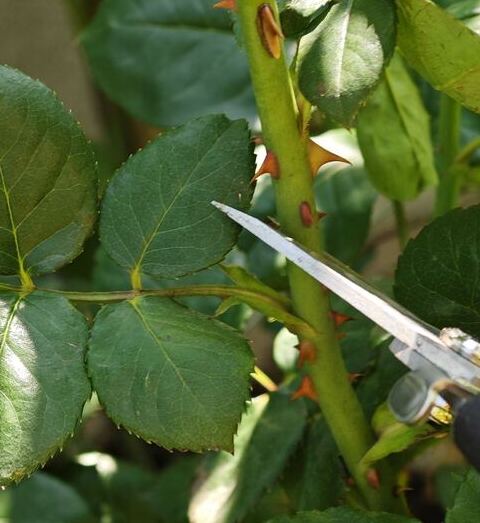
Deadheading spent blooms (cutting back to a strong set of leaves) is fine — even encouraged on repeat-bloomers. It stops seed production and pushes energy right back into more flowers.
But heavy summer pruning? That’s usually a bad idea. Shortening healthy canes or reshaping in heat above 28°C (82°F) ramps up water stress, shocks the roots, and often leads to weaker growth. Research shows roses recover more slowly from big summer cuts – so limit yourself to disease control or fixing storm damage only.
Fall Pruning: The Trap Many Gardeners Fall Into
It feels responsible to “prepare for winter,” but fall cuts often backfire spectacularly. Pruning triggers new shoots, and if nights stay above +5°C (41°F), those tender tips won’t harden off before frost hits. Result? Dieback deeper into the plant.
Studies on winter injury prove uncut canes actually help: they buffer cold swings and trap insulating air pockets. In the fall, stick to minimal fixes:
- Broken or storm-damaged canes
- Diseased wood
- Extra-tall whips that might snap under snow or wind
No major shaping. No heavy thinning. Messy is safer than sorry.
Know Your Rose Type or Pay the Price
This is non-negotiable. Different roses flower differently:
- Modern repeat-bloomers (hybrid teas, floribundas) push flowers on new wood → they love moderate-to-hard spring pruning.
- Many old garden roses and once-bloomers rely on old wood → prune lightly or after flowering.
- Climbers often bloom on both → gentle renewal pruning only.
Each type has its own structure and flowering logic. There is no universal pruning method.
Detailed, type-specific pruning guidance matters:
- Floribunda: 7 Pruning Techniques for Floribunda Roses
- Hybrid tea: 7 Proven Tips to Prune Hybrid Tea Roses for Stunning Blooms
- Climbing Rose: How to Prune Climbing Roses.
One-size-fits-all advice can wipe out a whole season’s blooms.
Lost Label? No Panic – Here’s the Safe Plan
If you don’t know the variety (super common!):
- Do sanitation only – remove dead/damaged/diseased
- Leave healthy structure intact – don’t shorten good canes.
- Watch and learn next season: blooms on old canes = old-wood type; on new basal shoots = more forgiving of pruning.
One year of observation beats one bad haircut.
The Ultimate Question That Stops 90% of Mistakes
Before every snip, ask yourself:
“What exact problem does this cut solve for the plant?”
If the answer is “it looks tidier,” “that’s what I always do,” or “it’s March,” – stop. Walk away.
Great pruning is precise, purposeful, and minimal. Poor pruning creates wounds, stress, and problems that linger for months.
If your roses constantly need “fixing,” the real issue is usually misdiagnosis – not your technique. Dive deeper with resources like “Why Doesn’t My Rose Grow and Bloom? – 100 Reasons and Solutions” for root causes, or track patterns in the Rose Garden Planner 2026 Log Book. For a full organic mindset, “Revolution in the Rose Garden” shows how to treat roses as living systems rather than fragile decorations.
Pruning shines when it’s your final smart tweak – never your knee-jerk first move. Your roses will bloom bigger, healthier, and happier for it.
Rose gardening books


Step into a calmer, more confident rose season. With Ann Devis’s rose gardening books and planner, you’ll get simple organic routines, proven tips, and checklists that keep your roses thriving – from first bud to last bloom.
FAQ
Right when the rose is just stirring from its winter nap — buds swollen and fat like little green promises, but leaves haven’t popped yet. In real life, that’s when nights stay reliably above –5°C (23°F) for a solid week or so, and days hit +5–7°C (41–45°F). Prune too early? Frost sneaks in and zaps fresh cuts. Too late? You’ve already wasted the plant’s stored energy on leaves instead of killer new shoots. Nature’s perfect timing — trust the buds, not the calendar!
Light cleanup? Sure – snip dead or diseased bits anytime you spot them. But heavy structural pruning? Hold your horses. If nights still plunge below –7°C (20°F), those nice new cuts can freeze solid and invite dieback deeper than you’d like. Wait until the rose is almost awake (swollen buds are your green light) – patience here saves heartbreak later.
Yes, but only the smart kind. Deadheading faded blooms (cut back to a strong set of leaves) is gold for repeat-bloomers — it tricks the plant into skipping seeds and pumping out more flowers. But hacking back healthy canes when it’s scorching above 28°C (82°F)? That’s asking for stress, wilting, and a grumpy root system. Save big cuts for emergencies like disease outbreaks or storm damage only. Summer is for enjoying blooms, not major surgery.
In most places – big nope. Fall pruning feels tidy and responsible, but it often backfires hard. Cuts wake up the plant, new shoots push out if days are still mild (+5°C+), then frost hits and kills them — sometimes taking healthy older wood with it. Studies and rose pros agree: uncut canes actually shield the bush better by buffering cold and trapping air like a natural blanket. In fall, limit yourself to quick fixes: broken canes, diseased spots, or super-tall whips that might snap in wind or snow. Leave the rest messy – messy is safe!
There’s no magic number like “always to 3 buds” – that’s a recipe for disaster if you guess wrong. It all depends on the rose type and how it flowers. Hybrid teas can handle a bolder chop for those big show blooms. Floribundas like balanced renewal. Climbers and many old garden roses? Barely touch the framework – heavy cuts steal next year’s flowers. Know your rose first, or play it safe with minimal shortening.
Always the troublemakers – in this order:
- Dead wood (brittle, brown inside – it’s zombie cane)
- Damaged canes (cankers, cracks, sunscald)
- Diseased growth (black spots, oozing, funky fungi – cut to clean white pith)
Sanitation first. Only then look at weak, crossing, or ugly shoots. Shaping? That’s dessert – not the main course.
They won’t die dramatically. Most roses are tougher than we think and will soldier on. But over the years, you get leggy chaos: poor airflow invites black spots and mildew, blooms get smaller and fewer, and the bush turns into a thorny jungle. Pruning isn’t mandatory for survival; it’s the upgrade for better health, bigger flowers, and less disease drama. Under-pruning beats over-pruning every time.
Nope, and if you do it, you’ll regret it. Most climbers flower on older wood, so hacking them back annually chops off future blooms. Instead, prune selectively: remove dead/weak/old canes, train new ones horizontally for more laterals (where the flowers explode), and shape gradually. Many thrive with light renewal every few years – treat them like long-term investments, not annual resets.
No stress – here’s the foolproof plan:
- Sanitize only: dead, damaged, diseased – gone.
- Leave healthy canes alone, no heavy shortening.
- Sit back and watch next season: blooms on long old canes? Old-wood type — go easy. Flowers bursting from fresh basal shoots? New-wood lover, it can take stronger spring cuts next time.
One season of detective work is way safer than a wrong guess.
Absolutely, and it’s heartbreakingly common. Biggest culprits:
- Spring-pruning once-bloomers (you just removed this year’s flowers)
- Hard cuts on climbers (bye-bye old-wood blooms)
- Chopping healthy flowering wood too late or too much
Wrong timing or ignoring the type can wipe out an entire season. That’s why knowing your rose (or observing it) matters more than any “standard” rule.
They need smart pruning – not constant or heavy-handed. Removing dead/diseased wood is non-negotiable for health. Beyond that, pruning should work with the rose’s natural habits, not against them. Most chronic issues (weak growth, disease, no blooms) come from overzealous “tidying” rather than neglect. Prune deliberately, sparingly, and purposefully – your roses will thank you with epic displays.


