
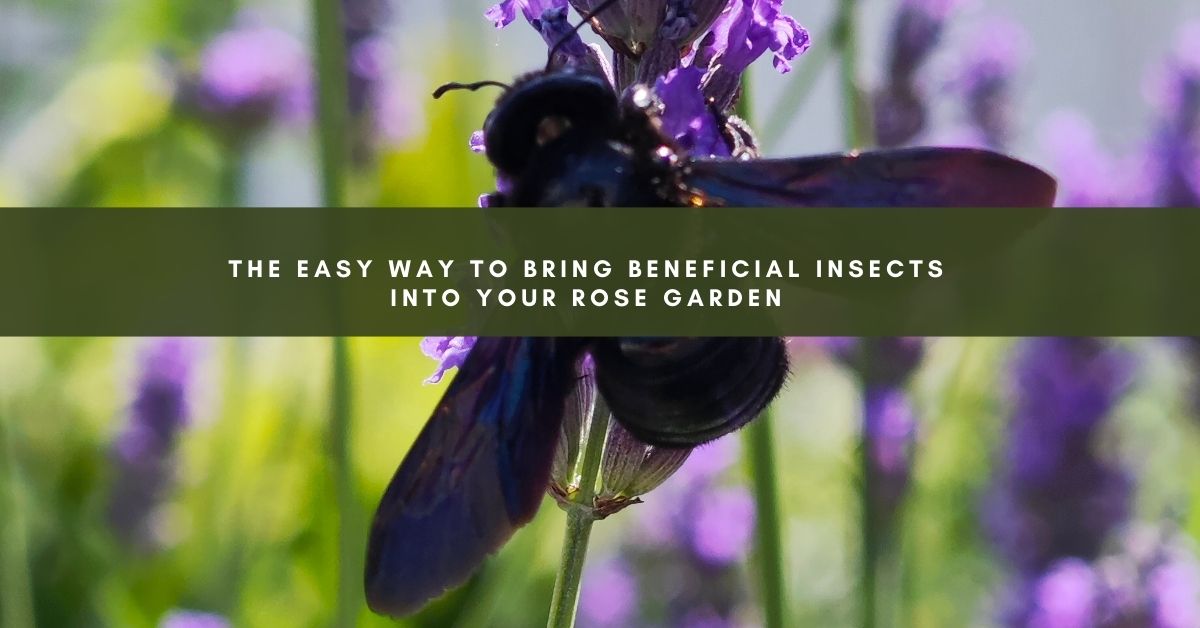
Healthy roses don’t just rely on sprays. They thrive when you stack the ecosystem in their favor so predators and parasitoids keep pests in check. The good news: you can attract a working army of beneficial insects without purchasing or releasing anything. You’ll give them three things—food, shelter, water—then let biology do the rest.
Below is the same plan we use in pro rose borders, simplified for home gardens and balconies.
The 80/20 of Beneficials
- Diversity beats gadgets: a mix of shrubs, perennials, and annuals with open, nectar-rich blooms from early spring to late fall fuels adult predators and parasitoids.
- Micro-pest pressure is good: leave a small, manageable amount of “prey” so beneficials stick around.
- Protect the helpers: avoid broad-spectrum insecticides; if you must treat, use spot applications at dusk and away from flowers.
1) Food: Plant an “Insectary” That Blooms All Season
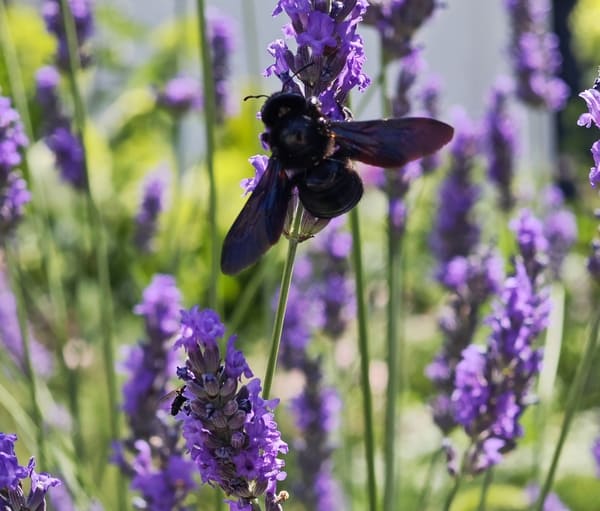
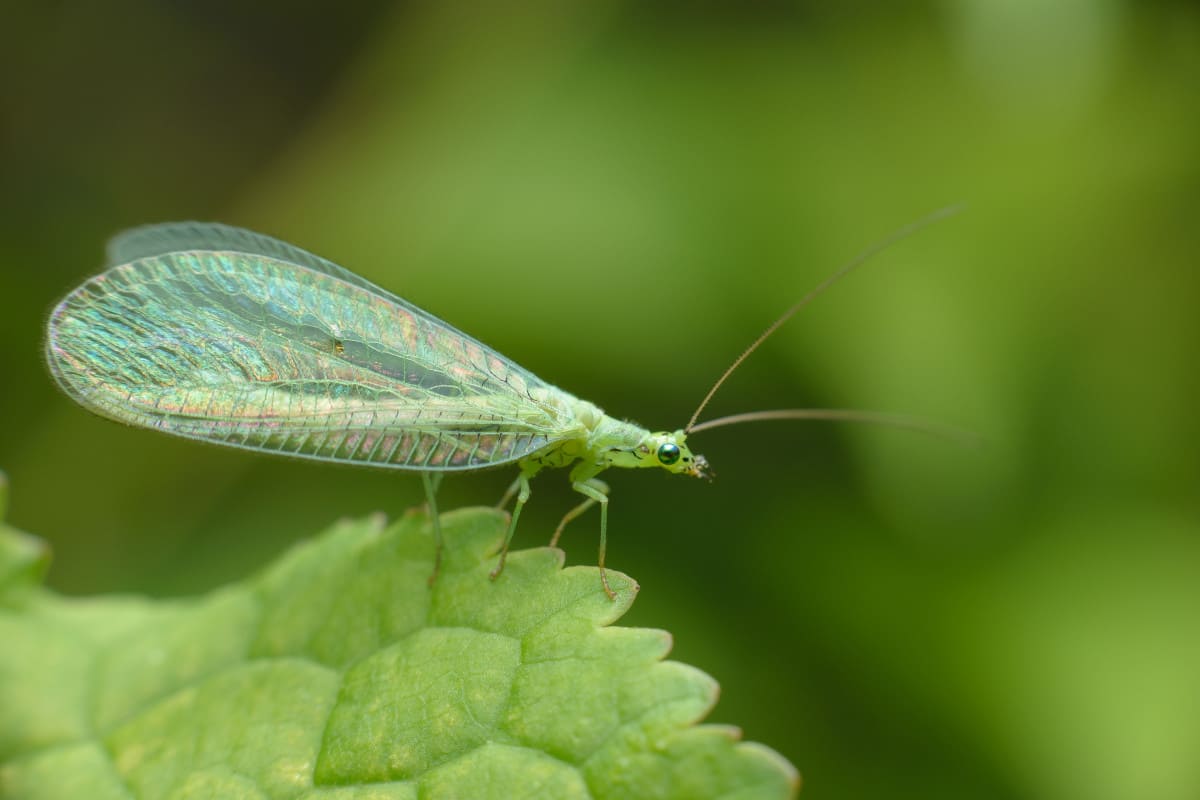
Beneficial insects (adult lacewings, hoverflies, tiny parasitoid wasps, and many beetles) need nectar and pollen to live long and reproduce. If nectar dries up, their populations crash—even if pests are present. Plant a small palette of 8–12 species with different heights and bloom windows.
Spring (Mar–May): sweet alyssum (Lobularia), phacelia (Phacelia), thyme (Thymus), cilantro/coriander (let it flower).
Summer (Jun–Aug): catmint (Nepeta), lavender, culinary sage (Salvia officinalis), yarrow (Achillea ‘Moonshine’), calendula, nasturtium.
Fall (Sep–Nov): echinacea, rudbeckia, late asters, fennel (keep the umbels).
Garden tips
Prioritize plant families that consistently feed natural enemies—Apiaceae (umbels: dill, fennel, coriander), Asteraceae (yarrow, asters, daisies), Lamiaceae (mint family: thyme, sage, lavender, catmint).
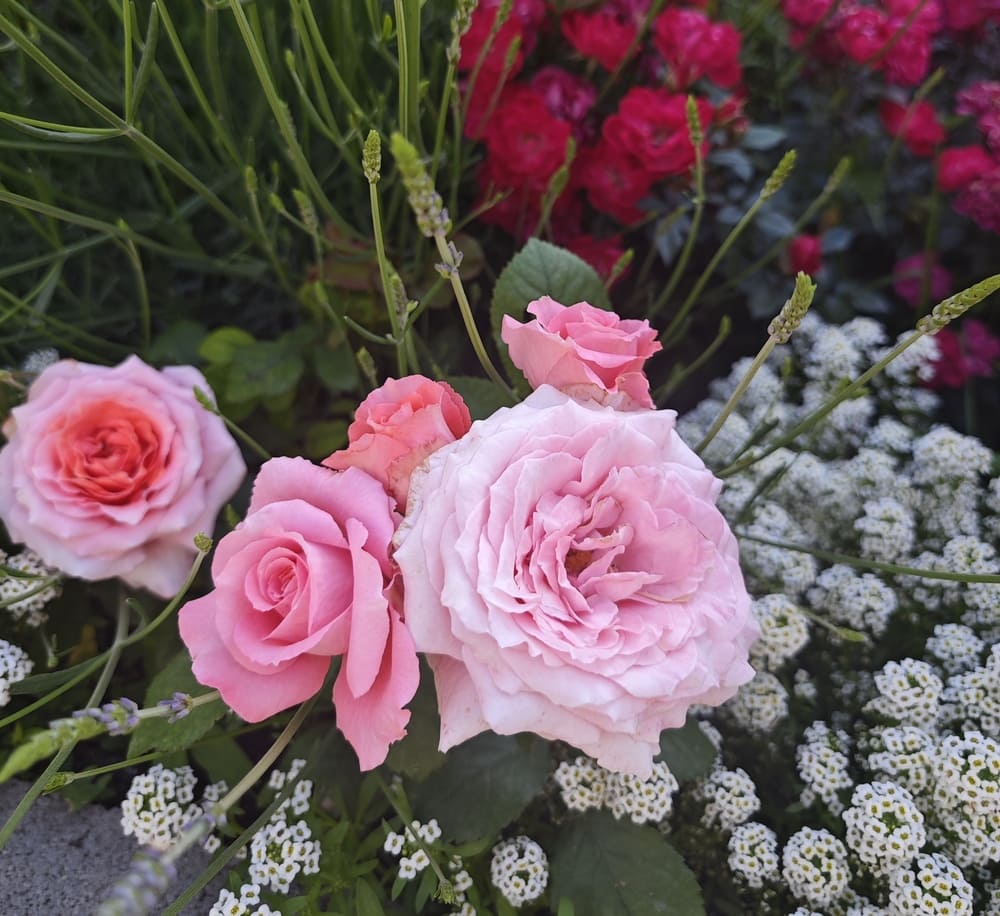
Roses + insectary, side-by-side:
- Tuck alyssum and thyme between rose canes.
- Edge with catmint/lavender/sage at 14–16 in (35–40 cm) spacing.
- Dot dill/cilantro/fennel every 2–3 ft (60–80 cm) and let them bloom; umbel flowers are magnets for parasitoids.
- Native shrubs and turf edges contribute to overwintering sites and structure.
2) Shelter: Give Beneficials Places to Live & Overwinter
Most of your helpers nest or overwinter on site. Build habitat and resist “perfectly clean” beds.
- Leaf litter & stems: leave 10–20% of leaves in quiet corners; delay spring cleanup so cocoons and pupae can emerge. Leave some hollow stems 8–12 in (20–30 cm) tall over winter.
- Ground predators (carabid beetles, rove beetles): maintain a 2–4 in (5–10 cm) mulch band, a rocky edge with crevices, and a log or bark “refuge” on the bed margin.
- Native bees & tiny parasitoid wasps: keep a couple of bare, sunny soil patches (~16×16 in / 40×40 cm) for ground nesters. If you use a bee/bug hotel, maintain it (clean/replace tubes yearly); unmanaged hotels can harbor pests and parasites.
3) Water: Simple “Puddling” Stations
Place a shallow dish filled with clean pebbles so insects can land without drowning; refresh every 2–3 days. These “puddling” stations support bees, butterflies, and beneficial wasps—great near the rose walk and in the insectary border.
4) Light: Go Amber, Go Gentle
Night lighting pulls moths and other nocturnal insects off-course. If you need lights near your beds, use shielded, amber/yellow LEDs and minimize brightness and spill. It’s better for insects and your garden at night.
Two Ready-to-Plant Layouts (Work for Most Zones—Adjust Varieties Locally)
A) Border Booster (1 × 3 m)
- Front strip: alyssum + thyme (two rows).
- Midline: catmint ‘Six Hills Giant’ at 40 cm spacing; cilantro interplanted to bolt.
- Back strip: yarrow ‘Moonshine’ + fennel in clumps; chives every 25 cm on the edge.
B) Pocket Insectary (1.2 × 1.2 m) inside a rose bed
- Four lavenders in a cross.
- Salvias between.
- Perimeter nasturtium + calendula.
- Phacelia reseeded in the middle through spring/summer.
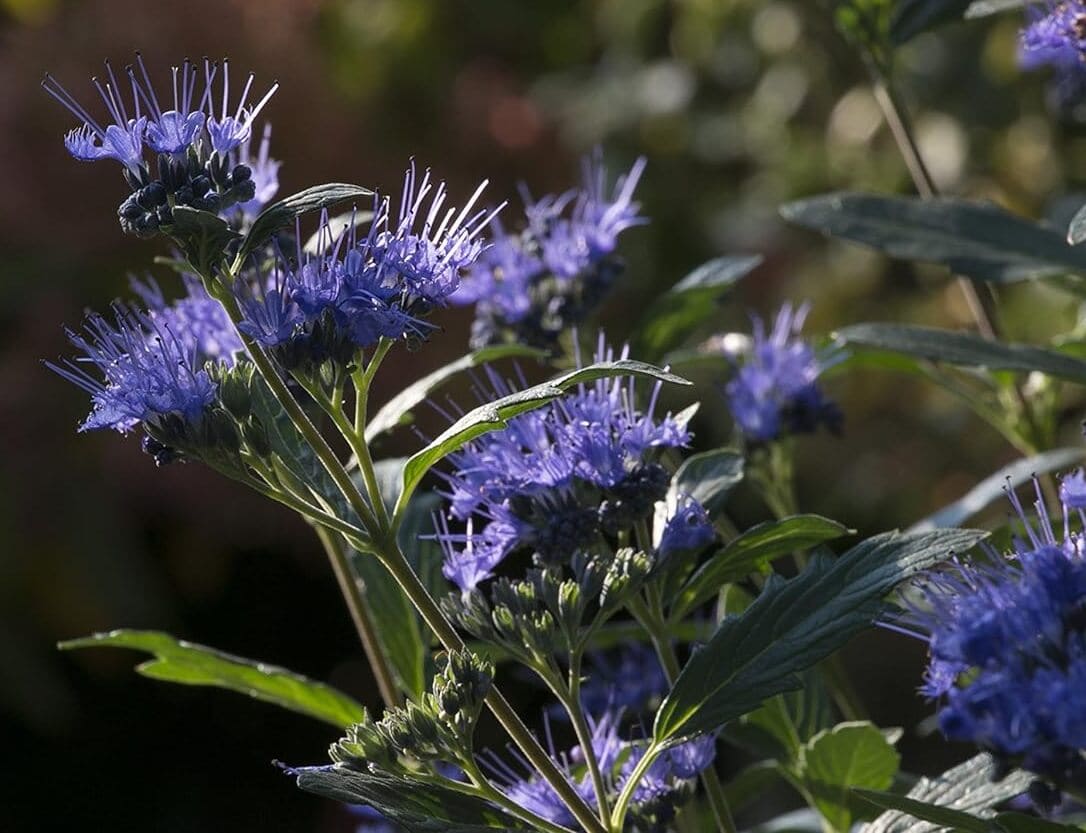
Free Download: Two color-perfect plant kits (USDA 6–9, 5–6 hrs sun) that attract beneficial insects and protect your roses – includes layouts, spacing, bloom windows, and a 1-page habitat checklist.
A Year in the Life (quick calendar)
- March–April: sow phacelia/alyssum/cilantro; plant lavender/catmint/sage; set up bare soil patches & a handful of hollow stems under eaves.
- May–June: don’t deadhead every umbel—let dill/cilantro flower; shear catmint/lavender after first flush to rebloom in ~3–4 weeks.
- July–Sept: succession-sow alyssum; keep water dishes clean; avoid blanket sprays—spot treat at dusk only if needed.
- Oct–Nov: leave some stems standing; keep 10–20% leaf litter in quiet corners; avoid heavy fall cleanup so beneficials overwinter.
Rose gardening books

Step into a calmer, more confident rose season. With Ann Devis’s rose gardening books and planner, you’ll get simple organic routines, proven tips, and checklists that keep your roses thriving – from first bud to last bloom.

FAQ: People Also Ask
They’re predators (lady beetles, ground beetles, hoverfly larvae, lacewing larvae) and parasitoid wasps that reduce aphids, thrips, sawfly larvae, and caterpillars. Adults need nectar/pollen—so planting insectary flowers directly increases their survival and reproduction.
Umbels (dill, fennel, coriander), daisies/yarrow/asters (Asteraceae), and mint-family herbs (thyme, sage, lavender, catmint) are reliable. Use local/native options when possible; Xerces provides regional lists.
Native plants often attract more and more specialized beneficials and pollinators. Mixing natives with proven ornamentals is a great strategy for most gardens.
They can—with maintenance. Use the right hole diameters, keep them dry and clean, and replace tubes annually. Poorly managed hotels can concentrate parasites or invasive wasps. Many species also nest in bare soil and hollow stems, which require no maintenance.
Use a shallow saucer with pebbles, refreshed every 2–3 days; add a bit of sand to one dish for “puddling” minerals. Place one near roses and one in the insectary.
Yes. Many beneficials overwinter in leaf litter or inside old stems; delay spring cleanup until consistently warm, so you don’t throw away next year’s allies.
Excessive bright/blue-white light at night disrupts insect behavior. Choose amber/yellow LEDs and shield fixtures to reduce attraction and mortality.
Often, within 4–8 weeks of continuous bloom and water. Populations build through the first season and get stronger in the second, especially if you leave stems and leaf litter for overwintering.
Use spot treatments at dusk, avoid flowers, and treat only when thresholds are met. Save the broad-spectrum chemicals—your garden’s food web is doing the heavy lifting.
One-Page Checklist (save/print)
- Plant 8–12 insectary species spanning spring, summer, and fall (umbels + mint-family + daisies).
- Tuck alyssum/thyme among roses; edge with catmint/lavender/sage; dot dill/cilantro/fennel, and let them bloom.
- Provide two puddling dishes with pebbles; refresh every 2–3 days.
- Leave 10–20% leaf litter in quiet corners; keep some hollow stems standing over winter. Delay spring cleanup.
- Create bare soil patches for ground-nesting bees; if you install a bee hotel, maintain it yearly.
- Use amber/yellow, shielded LEDs outdoors; dim or switch off lights near beds at night.
- Avoid broad-spectrum insecticides; if needed, spot-treat at dusk and away from blooms.
- Keep a succession-sowing habit for alyssum/phacelia; shear catmint/lavender after each flush to keep nectar coming.


