

My fall mantra: I’m not chasing a last, flashy flush. I’m banking energy, firming tissues, and cleaning the microclimate so spring is easier for both me and the roses.
My Fall Philosophy
In my USDA Zone 6 garden, the weeks between late August and the first real cold snap are a quiet period of training. When I support photosynthesis, feed the soil biota, and lean into potassium/calcium/silica from gentle, biology-friendly sources, roses enter winter with firmer leaves, sturdier canes, and far fewer disease spores lurking. It’s calmer, cleaner, and honestly more fun.
1) I Start Belowground: Soil Life First (biota > everything)
What I do (every two weeks):
I water in a beneficial microbe solution (ABT/EM)—1–2 liters per bush at the root zone only. Then I refresh mulch to 3–5 cm (grass, shredded leaves, clean hay), keeping mulch off the canes so they don’t stay wet.
Why now:
The soil is still biologically active while the nights are cooling. Seeding the right microbes now helps roots absorb nutrients and crowd out pathogens before winter. Fresh mulch stops spore splash and buffers moisture; gentle potassium support helps firm tissues without pushing soft growth.
Important note
I never combine EM-type products and ash at the same time. High alkalinity can harm EM microbes. I separate them by time.
How it works
How it works (beginner-friendly):
- EM/ABT are friendly bacteria/yeasts that release mild acids and enzymes, unlocking tied-up nutrients and making the rhizosphere more protective.
- Mulch is microbe food and a moisture buffer (less stress = sturdier plants).
- K support (from ash infusions, peels, humates) helps tighten tissues and move sugars;
How I use (my bio-first toolkit)
- EM/ABT concentrate — label dilution, every 2 weeks, root zone only, on already-moist soil so microbes move in instead of washing away.
Ready-made EM option:
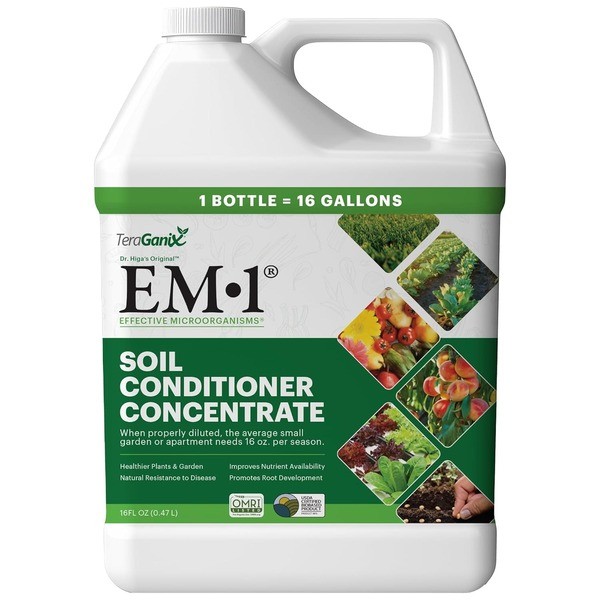
TeraGanix EM-1 Soil Conditioner (I use EMs; this is a solid labeled choice).
- Mycorrhizae + Trichoderma — I use them especially at planting/transplanting or on weak bushes as a root dip or slurry drench; fall is a great time to help roots colonize before dormancy.
Ready-made bio option:
Ecto Root Dip (mycorrhizal + Trichoderma) — mix per label for a quick dip or base drench.
DIY gentle K & carbon
- Humates (liquid humic/fulvic) — per label as a soil drench to feed soil biology and improve CEC.
- Ash infusion (“ash tea”) — 1 Tbsp/L, steep 24 h, pour off the clear top, use as a light drench (alkaline; see schedule rule below).
- Banana peel infusion — 1–2 peels in 1 L of water, steep for 24–48 hours, strain, and soil drench near the drip line.
Scheduling rule that I follow:
I do not apply EM/ABT and ash on the same day. High pH can harm EM microbes. I alternate:
- Week A: EM/ABT drench (on moist soil).
- Week B: Ash tea or humates/peel infusion.
- Keep at least 5–7 days between EM and any alkaline input.
2) What I Spray (and Why): Foliar Immunity
Whey elixir
What I do: Whey 1:5 with water. I spray every 10–14 days during damp spells.
Why now: Cool, moist weather invites the growth of mildew. This elixir helps leaves resist infection while I improve airflow.
How it works: Lactic microbes in whey can crowd out fungal spores on leaf surfaces; calcium reinforces the pectin “cement” in cell walls.
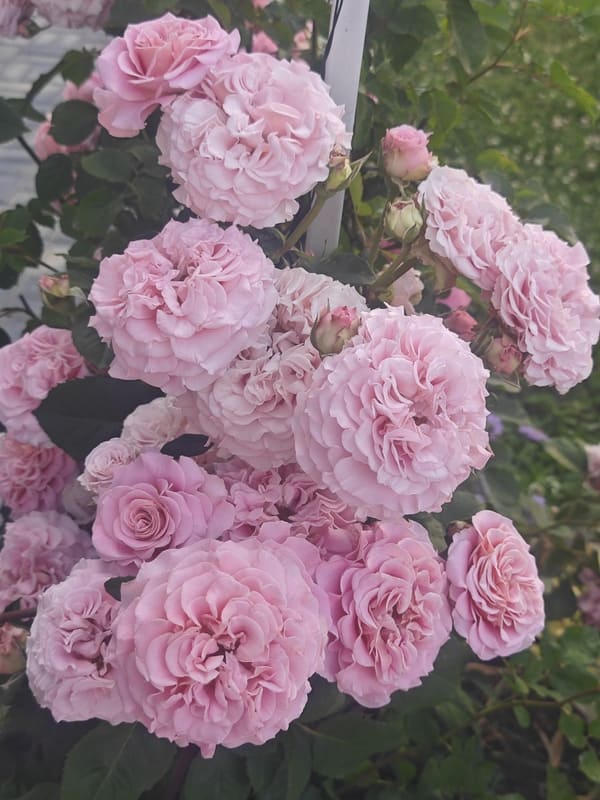
Ashley rose
Garden tips
Spray in cool hours (dawn/dusk), spot-test first, and avoid open blooms.
Horsetail decoction (silica)
What I do: 200 g dried horsetail simmered in 2 L for 30 minutes; dilute to 10 L. Spray every 2–3 weeks.
Why now: Silica helps leaves toughen as nights cool; small, regular doses beat rare, heavy ones.
How it works: Horsetail is rich in soluble silica and phenolics that make the cuticle less penetrable to fungi.
Oat enzyme (ferment)
What I do: Oats 1:5 in water, steep 2–3 days until lightly foamy; strain. Water the roots once a month. This is an excellent treat for soil biota.
Why now: A gentle immunity nudge without forcing tender, green growth.
How it works: Short ferments release enzymes and friendly metabolites that prime defenses and feed beneficial microbes on roots.
Rose gardening books


Step into a calmer, more confident rose season. With Ann Devis’s rose gardening books and planner, you’ll get simple organic routines, proven tips, and checklists that keep your roses thriving – from first bud to last bloom.

Kelp (seaweed) — my all-season tonic
How I use: Drench or apply as a light foliar spray every 2–3 weeks at the label rate. It supports roots and sugar storage without spiking nitrogen.
Ready-made options:
3) Formation & Sanitation:
What I do: Before autumn rains, I remove diseased/damaged shoots (sawfly, rust), strip all damaged leaves, and clear thin twigs up to 30 cm above the soil. In Zone 6, I deadhead to a strong outward bud until mid-September, then I stop so hips set (a natural “time to rest” signal). No hard fall pruning; I leave shaping for late winter/early spring. In October, I may remove very weak/immature shoots but leave sturdy canes for spring.
Why now: Fall rains + fallen leaves = pathogen hotels. Clean plants dry faster and carry fewer spores into winter.
How it works: Removing infected leaves/twigs cuts inoculum; opening the center shortens leaf-wetness duration—the #1 driver for foliar disease.
4) Light & Air: How I Keep Leaves Dry
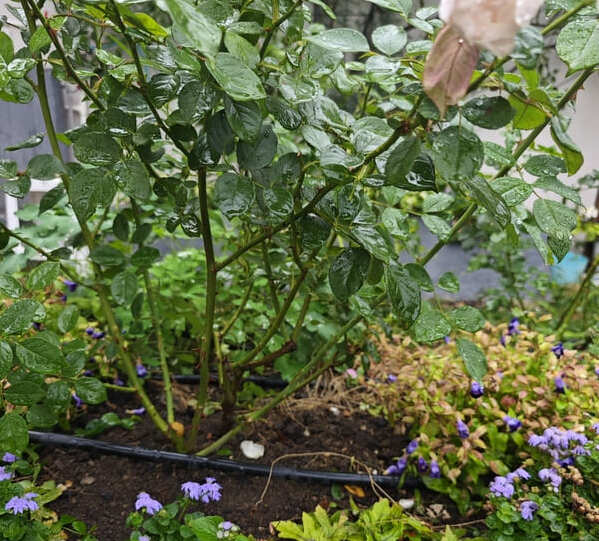
What I do: Trim back neighboring groundcover plants if they have grown too large and are crowding the space around the rose. For example, alyssum grows very large in the fall and takes up as much space as it can, which prevents air from flowing freely and traps moisture. We don’t need that now, do we?
Why now: Shorter days and a lower sun angle mean the leaves dry more slowly. Morning sun + air movement = fewer spores to germinate.
How it works: You change the microclimate: faster drying = reduced risk of disease without the need for broad sprays.
5) Pests & Disease: My Calm Weekly Walk
What I do:
Once a week I make a slow pass through the rose beds and check the undersides of leaves and soft tips for sawfly larvae, caterpillars, leafhoppers, and aphids. First response is mechanical: a firm water jet to dislodge clusters, or hand-pick where practical; I remove any badly infested leaves.
Why now:
Late broods can siphon energy exactly when roses are storing carbohydrates for winter. Early intervention prevents pests from overwintering and exploding next spring.
How it works:
Mechanical control (water jet/hand-pick) cuts pest numbers immediately and doesn’t harm allies.
Targeted, biology-friendly foliar care (whey/horsetail) changes the leaf surface conditions without blanket-killing.
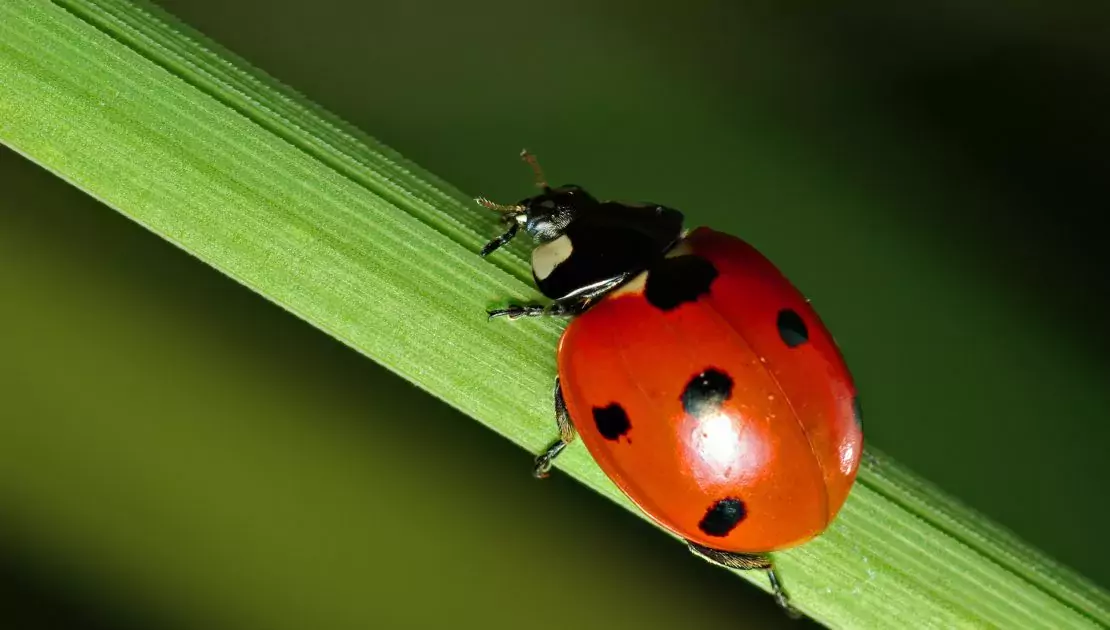
And because I don’t use chemical pesticides or broad-spectrum fungicides, I preserve populations of beneficial insects—lady beetles, lacewings, hoverfly larvae, and tiny parasitoid wasps—so the garden’s natural enemy web rebounds and carries most of the control for me.
6) My Fall Schedule (Month by Month)
September
- Week A: EM/ABT drench (1–2 L per bush) on moist soil.
- Week B: Ash tea or humates/banana-peel infusion (never the same day as EM; keep 5–7 days apart).
- Foliar: Whey every 10–14 days; horsetail every 2–3 weeks (rotate).
- Kelp: Apply a drench or light foliar spray every 2–3 weeks.
- Cuts: Light post-bloom trimming only; no big cuts.
October
- No high-N pushes.
- Keep EM/ABT on the 2-week rhythm (alternated with ash tea/humates week).
- Stay with K, Ca, and silica (horsetail) support; continue kelp.
- Sanitation sweep: remove damaged leaves, thin congested centers, tidy bases.
- I may remove very weak/immature shoots; I do not hard-prune.
Mindset shift: Fall is for strength, not show. When I honor that, spring thanks me with cleaner foliage and faster bud build-up.
What I Use vs. Ready-Made Alternatives
My personal toolkit (DIY + biologicals I actually use)
- EM/ABT drenches (bio) — label dilution; never the same day as ash.
TeraGanix EM-1 Soil Conditioner
- Mycorrhizae + Trichoderma (dip/drench) — especially for transplants or weak plants.
Ecto Root Dip (Mycorrhizal + Trichoderma)
- Kelp (drench/foliar every 2–3 weeks).
Grow More Seaweed Extract | GS Plant Foods Liquid Kelp
- DIY gentle K & carbon — humates per label, ash tea, banana-peel infusion (all timed away from EM).

Kate rose
Ready-made alternatives for readers who don’t want to DIY
Espoma Potash 0-0-60 — concentrated K (use sparingly and water in).
Sulfate of Potash 0-0-50 (OMRI) — water-soluble K with sulfur for an easy drench.
Low-N slow release in September (optional) — if someone prefers labeled, hands-off feeding, they can use a P/K-leaning formula lightly in September only.
Pro Tips I Wish Someone Told Me
- Leaves lying on mulch are disease bridges—I remove or raise them.
- I never foliar-spray above 29 °C / 85 °F, and I don’t soak blooms.
- Stop high-N feeding 6–8 weeks before the first frost.
- A thin, airy center dries in hours; a dense center stays wet all day (that’s where trouble starts).
- Do avoid mixing sulfur and oils within 2–3 weeks of each other.
- Never apply EM/ABT and ash on the same day; keep 5–7 days between them.
FAQ: Fall Rose Prep
Nope. I do sanitation and light thinning only. Save shaping for late winter/early spring.
In Zone 6, I stop mid-September so hips form and tell the plant to wind down.
Yes—if you don’t overlap timing. I alternate: Week A EM, Week B ash/humates/peel infusion. Keep 5–7 days between applications.
Choose a single labeled option and go light: SOP 0-0-50 for a soluble drench or Espoma Potash 0-0-60 as a light side-dress (always water in). If you prefer “set and forget,” a low-N slow release in September only is fine
Open the center, keep leaves dry, then rotate whey 1:5 . I have replaced all fungicides with this product. I have noticed that fungal diseases in my garden have decreased by 90% due to regular use of sprays with whey.
I apply every two weeks while the soils are still active. Once soil temps drop for real, biology slows—and so do I.
Bottom Line (from my garden bench)
When I treat fall as strength-building – not performance time – my spring is a joy: firmer tissues, fewer spots, faster bud set. Quiet work now, big show later. And if you stick with biota-first habits. EM/Trichoderma/mycorrhizae, kelp, humates, gentle K sources with smart timing – your roses will thank you every season after.


