
Quick Take (for busy gardeners)
Two Approaches — What They Actually Deliver
Classical (traditional)
What you do: Autumn clean-up + slight shortening to reduce wind-rock and snow damage; major shaping in late winter/spring.
What you get: Fewer winter breaks, an orderly shrub, minimal stress when temperatures are falling.
Biological (soil- and plant-health first)
What you do: Conserve photosynthesis and carbohydrate reserves. In autumn, remove only what is unhealthy or clearly problematic; tie in strong canes; shorten only if breakage risk is real. Delay big shaping until the plant is dormant or just before spring growth.
Why it works: In fall, roses reallocate sugars into roots and canes. Heavy pruning now can reduce those reserves. A small number of clean cuts + good airflow = healthier immunity and less disease pressure later.
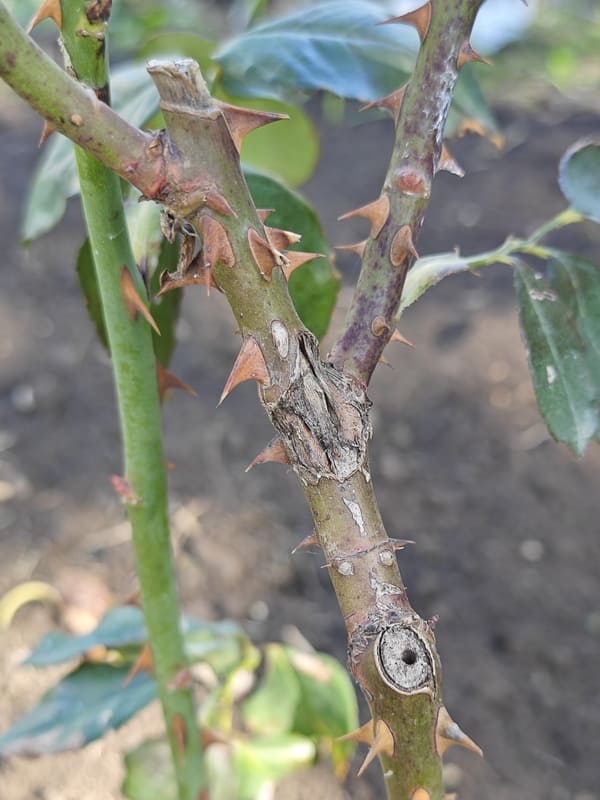
Core Autumn Rules by Rose Type
General technique for all types
• Sterile, sharp tools; cut at a slight angle ~¼ in (5–7 mm) above an outward-facing bud.
• Remove first: dead, diseased, damaged, crossing/rubbing, and whiskery twigs thinner than a pencil.
• Open the center a bit so it “breathes,” but save big redesign for late winter/spring.
Hybrid Tea / Floribunda / Grandiflora (bush roses):
Sanitary pruning only; lightly reduce very long canes if wind/snow is an issue. Shape in late winter/spring.Shrub & English (incl. Austins):
Minimal autumn cuts. Remove weak “feathery” tips; keep the center airy; lightly lower height in windy sites.Climbing & Ramblers:
Autumn = sanitation + remove spent, very old canes at the base. Do not hard-shorten this year’s strong basals—they are next season’s bloomers. Train and tie them.Groundcovers & Minis:
Sanitation + slight leveling if needed; form in late winter/spring.Standards (tree roses):
Sanitation, then secure the head to a sturdy stake; postpone real shaping to late winter/spring.
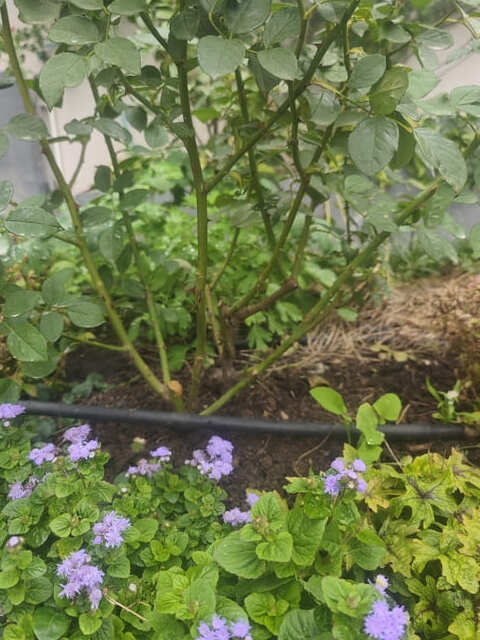
Step-by-Step Biological Sanitary Routine (with USDA notes)
Timing window.
Start when growth has clearly slowed but before severe storms. Avoid heavy fall cuts; do major shaping in late winter/early spring.Tools & hygiene.
Bypass pruners, loppers, pruning saw; clean and disinfect (e.g., 70% alcohol). Clean wounds lower infection risk.The 4D sweep (Dead–Diseased–Damaged–Duplicate).
Cut back to healthy tissue (pith looks clean and light). Remove crossing/rubbing shoots to prevent future wounds.
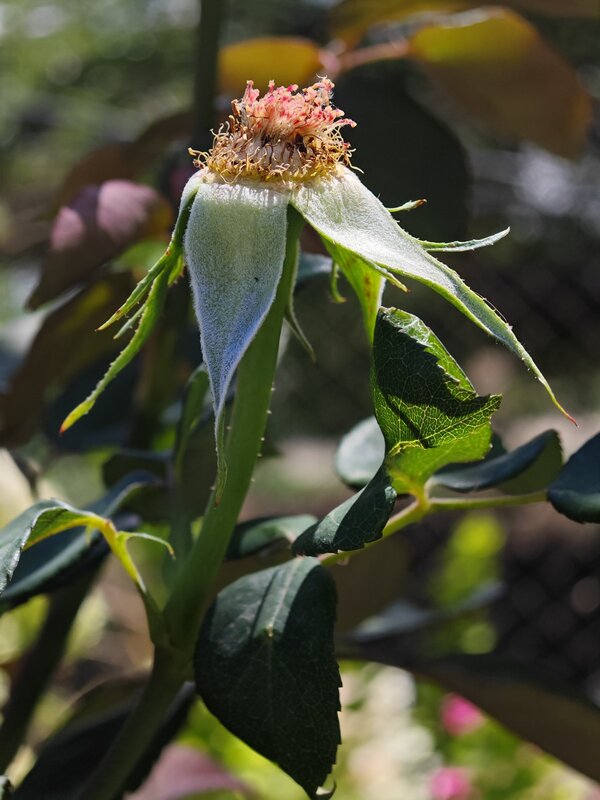
Wind & snow logic.
In stormy/snowy gardens, lightly drop overall height on tall bushes and tie in long canes to a stable support to reduce rocking and snapping.Thin “whiskers.”
Remove weak, spindly tips (thinner than a pencil). Keep strong, straight canes; let the center breathe.Clean ground.
Rake out infected leaves/twigs; don’t leave disease reservoirs. Mulch when soil is cold (in cold zones) or as conditions allow (mild zones).Save the big cuts for dormancy.
Postpone structural redesign until late winter/early spring so you don’t rob the plant of fall carbohydrate banking.
USDA zone notes
Zones 3–5 (cold): Sanitation + prune down to the planned cover height (roses are generally covered for winter). Tie in/bundle canes, then cover. Structural shaping in spring after hard-freeze risk dips.
Zones 6–7 (moderate, many “mild” winters): Sanitation + tie in strong long canes; shorten only where breakage is likely. Do the structural work at end of winter.
Zones 8–10 (warm): Often sanitation and light leveling are enough. Schedule structural pruning for your local “least active” window.
How to Decide Which Canes to Keep
| Sign | What to do | Why |
|---|---|---|
| Mature, hardened cane with light-brown bark | Keep; tie in if needed | It’s already “ripe” and will flower well next spring. |
| Green, soft cane with leaves at the tip | Shorten back to mature wood | The soft tip will winter-kill anyway. |
| Very long, thin cane that bends under its own weight | Reduce by ⅓ and tie in | Preserves resources while preventing breakage. |
| Strong upright cane from the center | Tie upright | This is future framework for the bush. |
| Crossing or rubbing canes | Remove the weaker one | Fewer wounds and less congestion in spring. |
My own rule of thumb: a keep-worthy cane is straight, healthy, doesn’t clog the center, and is not thinner than a pencil.
FAQ
Yes—sanitary pruning almost always helps: remove dead/diseased/damaged/crossing and too-thin growth; lightly shorten only what might break. Do major shaping late winter/early spring.
There’s no universal number. In windy/snowy sites, bring tall shrubs down a little (often to ~24–32 in / 60–80 cm) and tie in long canes. In calmer, mild gardens, you can often skip height cuts.
If you apply a dormant spray immediately, you don’t need an extra sealant. If you’re not spraying, seal cuts thicker than a pencil with a proper pruning wound dressing or grafting wax; leave smaller cuts unsealed.
Remove only leaves showing disease symptoms. Keep healthy foliage until natural drop—those leaves still support carbohydrate storage for winter.
Healthy ones—yes, preferably in a hot compost. If disease is present, don’t leave infected debris under bushes.
In autumn, focus on sanitation and training: tie in this year’s strong basal canes. Reserve any removal of old canes at the base—and final length decisions—for late winter/early spring, when the plant is dormant and the framework is easier to judge.
Micro-Checklist
- Tools sharp, disinfected
- 4D pass done (dead/diseased/damaged/duplicate)
- Long canes tied; oversized tips only lightly reduced
- Litter and infected leaves cleared away
- Major reshaping scheduled for late winter/early spring
Keep Learning with My Books
If this guide helped, you’ll love these reader-favorites:
Why Doesn’t My Rose Grow and Bloom? 100 Reasons and Solutions — “The guide rose lovers return to season after season.” Clear diagnostics, step-by-step fixes, and prevention.
Sustainable Secrets for a Thriving Rose Garden — Practical organic methods, soil-first immunity, EM/mycorrhiza, and gentle pest strategies that actually work.
Rose Garden Planner & Log Book — Seasonal task lists by zone, feeding/pruning trackers, bloom logs, notes, and checklists to stay organized all year.
Small Garden Design Secrets: Small-Space Gardening & Container Planting Tips to Create a Green Oasis on Patios, Balconies & Courtyards — Smart layouts, container recipes, and low-maintenance design moves for tiny spaces.
If my books make your garden better, a quick review means the world and helps other rose lovers find the right help, too. Thank you! 🌹
Rose gardening books


Explore rose gardening books and garden planner by Ann Devis. Get practical tips, organic techniques, and insights to create and maintain a stunning, thriving rose garden.