
Why This Method Works
This simple planting method is built on regenerative gardening principles.
If your soil is already alive, airy, and structurally healthy, you don’t need oversized textbook holes.
Unnecessary digging can damage:
- fungal networks
- microbial corridors
- worm channels
- natural drainage pathways
- Soil aggregates that your garden has spent years forming
That’s why I always plant roses with minimal disturbance to the soil.
1. Dig a Hole Only the Size of the Roots
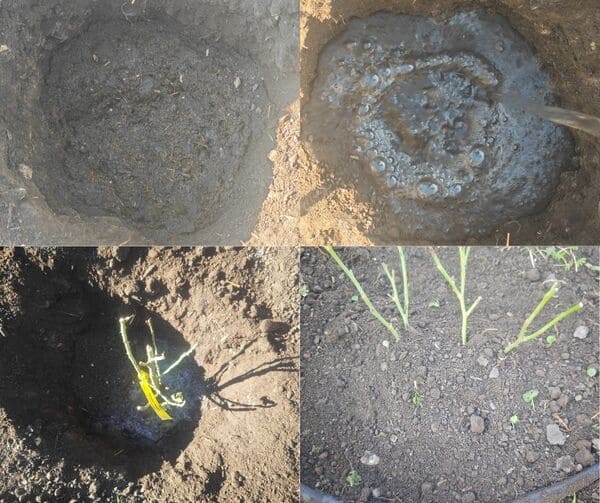
I dig the planting hole exactly the size of the root system (or root ball if it’s a potted rose).
✔ When a big hole is necessary:
Only in difficult soil:
- heavy clay
- compacted ground
- poorly structured soil
- low organic matter
In those cases, you’re essentially building a fertile layer for the rose to live in.
But when the soil is already structured and full of life?
A big hole only breaks what nature and you have worked to create.
If you’re planting bare-root roses, read my dedicated, step-by-step guide here:
2. Do the Drainage Test — The Bucket of Water
This is my non-negotiable step.
- Pour a whole bucket of water into the freshly dug hole.
- Watch how quickly it disappears.
✔ What the timing tells you:
- 5–10 minutes: perfect drainage
- Longer / standing water: This is a bad location for roses
Poor drainage = weak, diseased roses.
Good drainage = deep, confident roots.
While the first bucket drains, I pour a second watering can into the hole.
This ensures I’m planting into moist soil, not dry dust.
3. Planting the Rose — Simple & Effective
If the rose is in a pot, I gently slide it out without breaking the root ball.
Then I place the rose directly into the moist hole and follow this sequence:
Step-by-step
- Lightly cover the roots with soil.
- Add a generous bucket of compost; do not skimp.
- Gently press (don’t stomp!) to eliminate air pockets.
- Backfill soil to the correct level.
- Finish with mulch.
That’s it.
No rituals, no stimulants, no complicated mixes.
Just respect for the soil and the plant.
4. Should You Bury the Graft Union? (My Honest Experience)
This topic causes more debates than pruning!
I always bury the graft union about 1 to 1.5 inches below soil level.
✔ Why I do it
- Soil protects the graft from heat and cold damage.
- It prevents drying out in summer.
- It shields young graft tissue during winter freezes.
Some gardeners claim that burying the graft encourages rootstock suckers.
But here is the truth:
👉 Rootstock suckers can appear in both cases — buried or not buried.
And they appear rarely.
If a wild sucker does emerge, I simply cut it off at the base—problem solved.
Here’s my full guide on how to tell wild suckers from true rose growth:
👉 https://rosehomegarden.com/manage-rootstock-growth-on-rose/
4. Time & Philosophy of This Method
The entire planting takes about 15 minutes.
No magic powders.
No complicated “rose planting rituals.”
No digging big craters.
Just:
✔ the right-sized hole
✔ drainage check
✔ water
✔ compost
✔ mulch
✔ living soil
There are hundreds of planting methods, and every gardener has their favorite.
This one is mine – simple, efficient, biological, and deeply respectful of the soil.
🌸 Love Nature, Beauty & Slow Gardening?
Join my Rose Home Garden newsletter — a gentle space for monthly organic ideas, seasonal rose care, and soulful garden inspiration.
🎁 Bonus Gift: Get your Two Color-Perfect Insectary Kits — flower-bed plans that attract bees, lacewings & butterflies while harmonizing your garden’s color palette.
Let your garden bloom with inspiration 🌿
FAQ Planting Roses
Plant the graft union:
- 1-2 inches below soil level in colder climates
- At or slightly above soil level in warm climates
- I personally bury it 1–1.5 inches deep for protection.
Do not scrape paraffin. It prevents drying and contains copper sulfate for protection.
Yes, but enlarge the hole and amend with compost.
Avoid planting directly into raw clay.
If you prefer organic methods, please avoid synthetic fertilizers.
Use only compost or gentle organic materials.
Yes . 6–12 hours in clean water before planting.
Yes. Mulch stabilizes moisture, protects microbes, and supports soil biology.
Start your journey to confident, natural rose gardening with my full collection of rose-care guides.
Rose gardening books
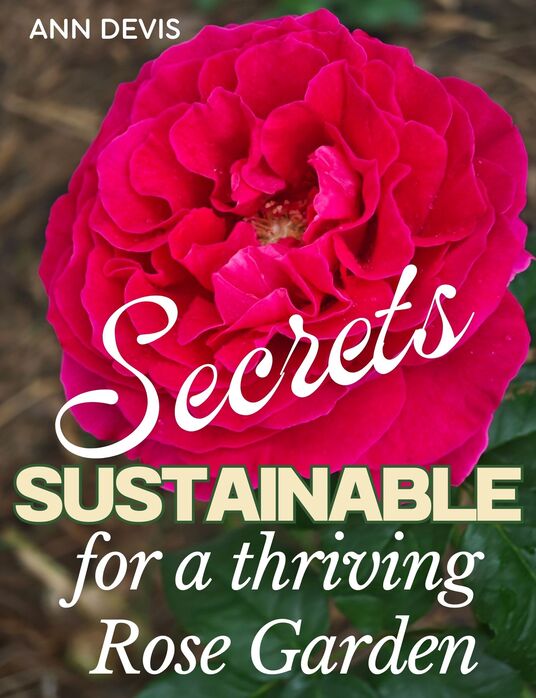
Explore rose gardening books and garden planner by Ann Devis. Get practical tips, organic techniques, and insights to create and maintain a stunning, thriving rose garden.