Some winters pass without much fuss. The roses go dormant, nothing dramatic happens, and by March, everything still looks alive. Then spring drags on. Buds hesitate. Blossoms are thin or late. And you’re left scratching your head because winter didn’t seem especially harsh.
That’s usually the clue.
In my garden, disappointing bloom seasons almost always trace back to winter — not because it was extreme, but because the care didn’t match the conditions or the rose itself. Roses are forgiving plants, but winter is when they quietly decide how much energy they’ll have for flowering. If that rest period is disrupted or misunderstood, a rose can come through winter alive and still disappoint you all summer.
Winter mistakes don’t announce themselves. They show up months later.
The Real Issue: Ignoring Zone, Temperature, and Rose Variety
Roses don’t care what month it is. They respond to soil temperature, moisture, how long cold lasts, and how they’re genetically built to handle it. That’s why winter care can never be one-size-fits-all.
USDA zone matters. Minimum winter-temperature issues are just as much of a concern. And so does the type of rose you’re growing.
Many gardeners are surprised to learn that a rose bred for cold climates behaves very differently in winter than a tender hybrid tea. Canadian-bred roses are a perfect example. Many of them are designed to overwinter without any shelter at all, even at temperatures down to –20°C (–4°F), once fully dormant. Covering those roses too early — or unnecessarily — often does more harm than good by trapping moisture and interrupting dormancy.
Meanwhile, tender hybrid teas or grafted roses with sensitive rootstock may need protection at temperatures where a hardy shrub rose wouldn’t even blink.
When someone isn’t sure of their USDA zone, I suggest starting with two simple questions:
How cold does it get consistently in winter? And what kind of rose is this — a hardy shrub, a Canadian variety, an own-root rose, or a grafted one?
As a general guideline, roses only need winter shelter when temperatures stay consistently below about 20°F (–6°C) and the variety itself isn’t bred for deep cold. That combination is what matters, not the calendar or a generic rule.
Pruning Roses in Fall Because It Feels Like Preparation
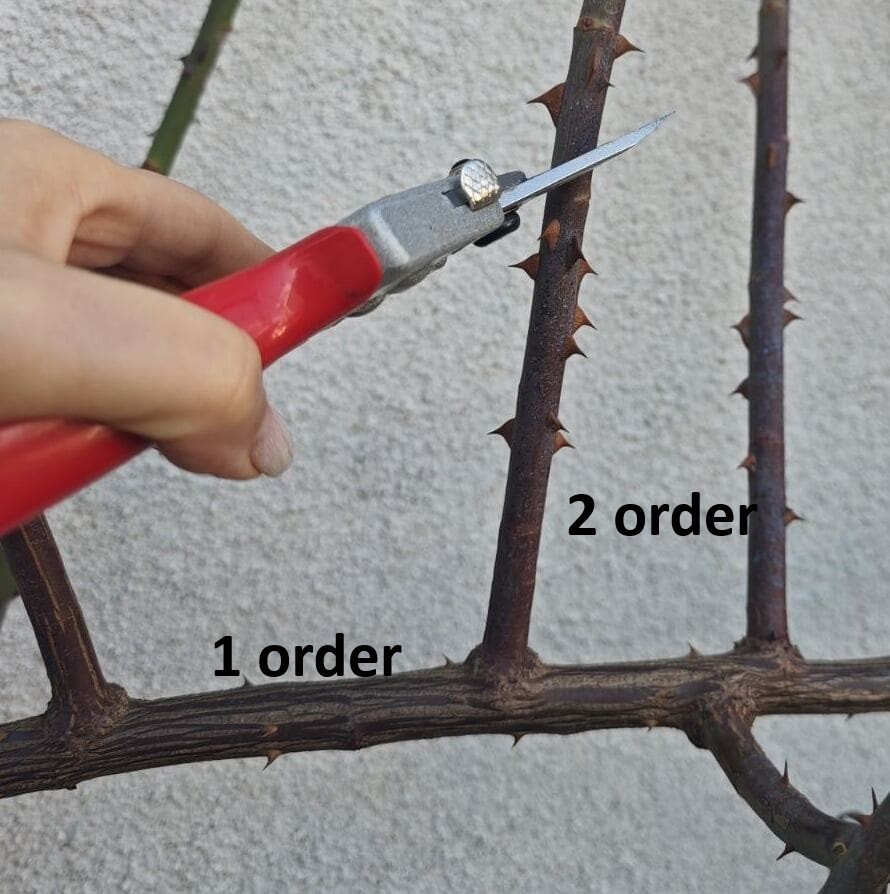
Fall pruning feels productive. The garden looks neat, and it feels like you’re helping the rose get ready for winter. In reality, it’s one of the easiest ways to weaken a rose before cold weather even settles in.
When roses are cut back early, they lose natural protection. In colder climates, shortened canes are repeatedly exposed to freeze–thaw cycles, which cause cracking and deep dieback. In milder climates, fall pruning often triggers new growth during warm spells — growth that has no chance of surviving winter intact.
In my own Zone 6 garden, I don’t prune roses hard in fall. I remove only what’s clearly dead, broken, or diseased. Real pruning waits until spring, when the rose shows me what it’s ready to do.
In Zones 3–5, taller canes help trap insulating snow. In Zones 6–7, restraint prevents unnecessary stress. And in Zones 8–9, pruning should be done late winter, just before active growth begins—not months earlier.
Sheltering Roses Too Early — or When They Don’t Need It
This is one of the most common and damaging winter mistakes I see.
I don’t cover roses in my Zone 6 garden. Many gardeners do, and many run into problems because of it. Heavy winter shelter is meant for roses facing prolonged, deep cold that their genetics aren’t built to handle.
Hardy shrub roses, Canadian roses, and wide, wide-rooted own-root varieties can overwinter perfectly well without shelter at temperatures that would seriously damage more tender types. When these roses are covered too early, before the soil freezes, the crown stays wet, airflow stops, and proper dormancy never really settles in.
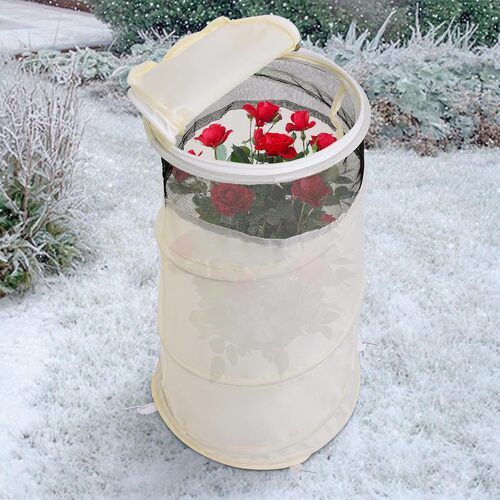
One mistake that consistently causes trouble is using plastic film or wrap as winter protection. Plastic traps condensation and blocks oxygen. Roses wrapped in plastic often rot not from cold, but from suffocation.
When winter shelter is genuinely needed, it should be applied only after the ground freezes, and it should always be breathable. And in many gardens, especially with hardy varieties, the best winter protection is simply leaving the rose alone.
Mulching Too Much or With the Wrong Materials
Mulch is helpful. Too much mulch is not.
For winter, most roses need about 2–4 inches of loose, breathable organic mulch over the root zone. That’s enough to buffer temperature swings without cutting off oxygen. Once mulch piles reach 6 inches or more, especially in clay or poorly drained soil, roots start to struggle.
A simple test helps beginners: pull the mulch back with your hand. If it feels compacted, soggy, or smells sour, it’s too much.
The material matters just as much as the depth. Dense, fine materials — wet sawdust, peat-heavy mixes, tightly packed leaves — hold water and block air. I stick with compost, shredded bark, or loose leaf mold. These protect roots without suffocating them.
Mulch should cushion the soil, not bury it.
Letting Winter Water Sit Around the Roots
Not all winter damage comes from cold. In many gardens, it comes from water that doesn’t move.
When rain or melting snow sits around rose roots for weeks, slow rot begins. You won’t see it right away. The rose may leaf out normally. But when the bloom season arrives, the plant struggles because the root system never fully recovers.
I pay attention to drainage long before winter. If a bed stays soggy in January, I already know summer flowering will suffer. Spring fertilizer can’t undo winter root stress — it just hides the problem for a while
Feeding Roses Late Because They Still Look Green
This mistake shows up most often in Zones 7–9.
Green leaves don’t mean a rose is ready to grow. Late-season feeding, especially with nitrogen, encourages soft growth at exactly the wrong time. Even mild cold damages that tissue, and the rose enters dormancy without fully hardened canes or stored energy.
I stop feeding well before frost in colder zones. In warmer zones, I’m cautious even longer. Winter is for resting and storing energy, not for pushing growth.
Ignoring Winter Sun and Wind
Cold isn’t the only winter stress roses deal with.
Bright winter sun warms canes during the day, then freezing nights abruptly lock that warmth away. Over time, this expansion and contraction cause cracking and dieback, especially on roses planted against walls or fences.
Wind makes it worse. Dry winter winds pull moisture from canes even when temperatures aren’t extreme. In exposed spots, I’ve had better results leaving canes longer and offering light wind protection rather than cutting roses back and leaving them bare.
Assuming Survival Means the Rose Is Healthy
This is where a lot of disappointment begins.
A rose can survive winter and still be too depleted to bloom well. When roots struggle, when canes die back repeatedly, or when stored energy is spent on repairs instead of bud formation, the plant limps through spring.
That’s when gardeners say, “It lived, but it never really took off.”
By then, the outcome was decided months earlier.
What I Watch for Before Spring Even Arrives
By late winter, I can usually tell how my roses will perform. I look for firm canes with green tissue under the bark. I check the crown area for any sour smell. I notice whether the soil drains cleanly or stays heavy and cold.
When something looks off, I don’t blame the weather. I look at what the rose experienced, its zone, its winter temperatures, and its variety, and whether my care matched all three.
Winter may feel quiet, but it’s anything but passive.

FAQs
No. Roses need protection only when winter temperatures stay consistently below about 20°F (–6°C) and the variety isn’t bred for deep cold.
Often no. Many Canadian roses can overwinter without shelter at temperatures down to –20°C (–4°F) once fully dormant.
In Zones 8–9, prune in late winter just before active growth begins.
No. Feeding during dormancy interferes with natural rest and weakens spring growth.
Many varieties, like Climbing Iceberg and Zephirine Drouhin, offer continuous or repeat blooms throughout the growing season.
Using the same winter care for every rose, without considering temperature, USDA zone, or variety.
A Quiet but Important Next Step
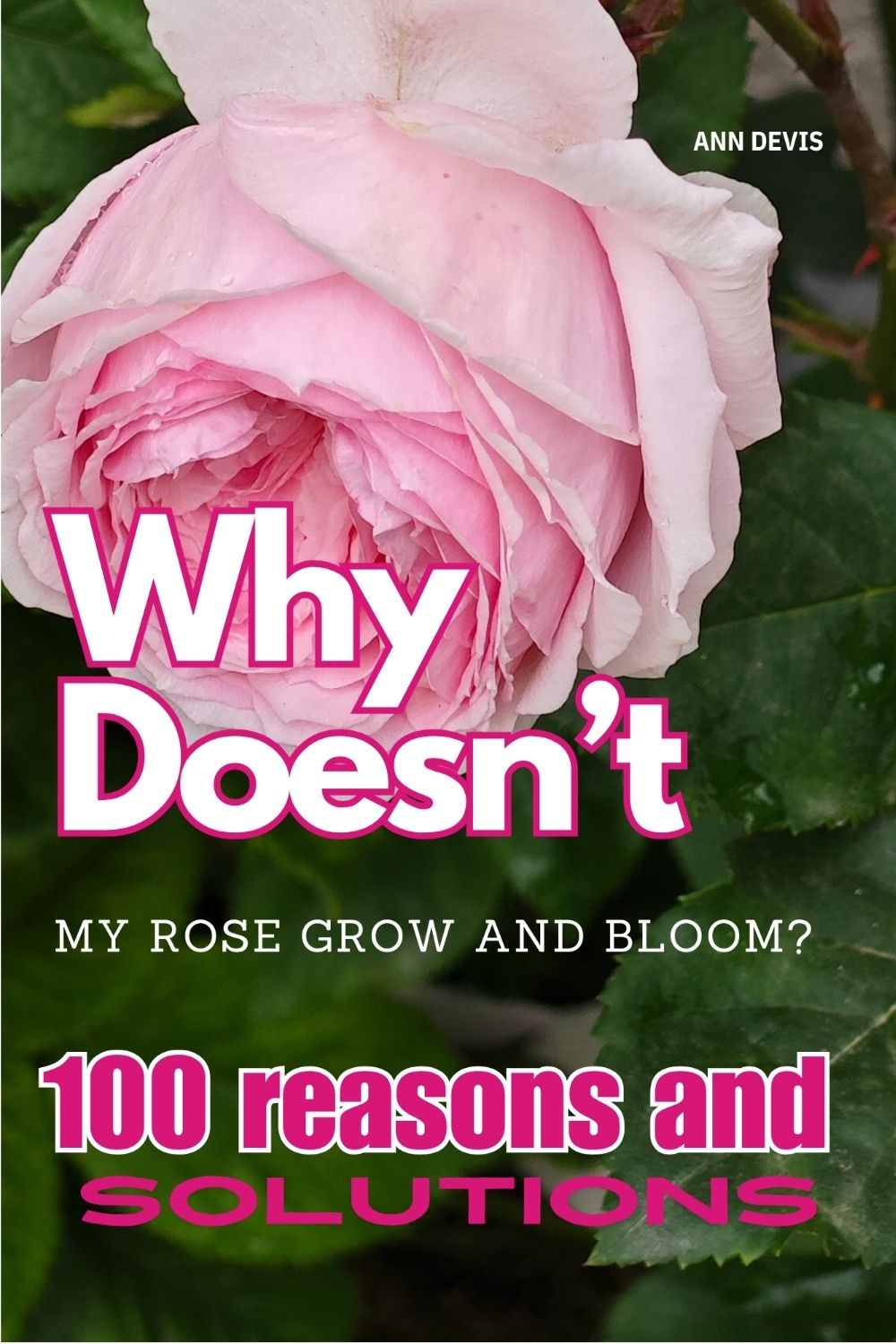
If you’ve ever wondered why a rose looks healthy but never quite blooms the way it should, winter care is often the missing chapter. I explain these cause-and-effect problems in Why Doesn’t My Rose Grow and Bloom? – 100 Reasons and Solutions, where winter mistakes are directly tied to summer results.
I also rely on the Rose Garden Planner 2026 – Log Book to track winter temperatures, rose varieties, pruning timing, and bloom performance year after year. Patterns become apparent when you write them down.
And if you want a deeper understanding of roses through soil health, climate, and long-term resilience, Revolution in the Rose Garden – Organic Rose Gardening explains the approach I use in my own beds.
Winter doesn’t look busy. But it decides far more than most gardeners ever realize.
Rose gardening books

Step into a calmer, more confident rose season. With Ann Devis’s rose gardening books and planner, you’ll get simple organic routines, proven tips, and checklists that keep your roses thriving – from first bud to last bloom.