
Aerated Compost Tea for Roses: A Practical Guide for Gardeners
Aerated compost tea is essentially “living water” for your plants. You take high-quality compost, place it in water, and saturate it with oxygen using an aquarium pump. Within 24 hours, billions of beneficial bacteria and fungi multiply in the water. Research shows that a single gram of this tea can contain up to 1,972 micrograms of bacterial biomass — dozens of times more than ordinary soil.
In regions with heavy clay soils, this method is particularly valuable. Clay is dense, starved of air, and suffocates roots. The microbes in the tea break up soil structure, creating pores for air and water. With regular application, clay stops being rock-hard; it becomes crumbly and loose, allowing rose roots to penetrate deeply.
How Aerated Compost Tea Can Help Your Plants
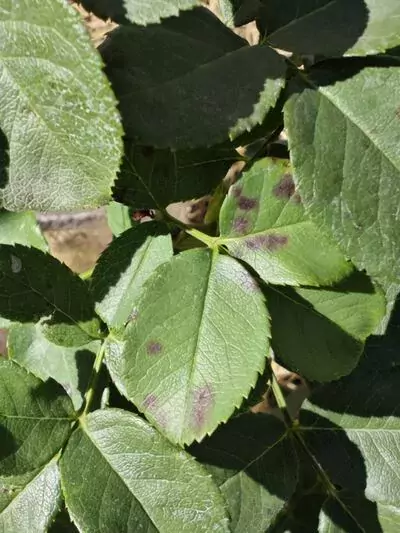
Black spot and powdery mildew plague nearly everyone growing roses in humid climates. Chemical treatments often prove ineffective, and roses can develop resistance; the results fade over time. Aerated tea works differently. When you spray the leaves, beneficial microorganisms immediately colonize the entire surface. Harmful fungi that cause spotting have nowhere to establish themselves — all the niches are occupied, and nutrients are taken. Research on grapevines showed that compost tea reduced leaf damage from pathogens to less than 1% of the surface area.
Weak growth and sparse flowering often stem not from lack of fertilizer, but from nutrients being locked away. In clay soil, nourishment remains trapped in inaccessible forms. The microbes in tea release enzymes that break these chemical bonds. Nitrogen, phosphorus, and potassium become soluble and reach roots exactly when the rose needs them. A study on beets found that weekly compost tea application increased leaf yield by 110% compared to untreated plants. For roses, this translates to more blooms, richer petal color, and stronger fragrance.
Heavy soil turning to concrete after rain is a familiar headache. Clay dries into crusts, and roots tear when they try to push deeper. The microbes produce natural polysaccharides, a biological “glue” that binds fine particles into crumbs. Air pockets form between these crumbs. The soil breathes, water no longer stagnates around roots, and rot disappears.
Heat stress and sudden temperature swings challenge plants in hot climates. Roses treated regularly with tea withstand these trials more calmly. The microbiome on leaves and roots synthesizes compounds that help the plant retain moisture and recover faster from damage.
How to Make Aerated Compost Tea at Home
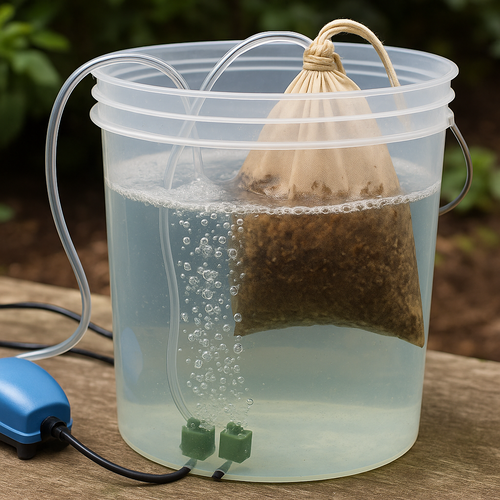
Equipment: a 10-liter bucket, an aquarium pump, a mesh bag or old stocking, quality compost, humic acids (I add organic humic fertilizer, seaweed extract, nettle infusion — whatever is at hand).
Process: Fill the bucket with water and let it sit for 24 hours to allow chlorine to dissipate. Place 300–500 grams of compost in the bag and submerge it. Add two tablespoons of humic fertilizer and seaweed extract as food for the microbes. Turn on the pump so bubbles actively froth the water. Let the pump run for 24 hours at 18–24°C.
The finished tea should smell like fresh earth. Any odor of rot, acetone, or rotten eggs signals anaerobic processes; discard this tea, it is harmful.
I made a video about how I make aerated compost tea. You can see it here.
How to Apply for Roses
Frequency depends on soil conditions. If the clay is dense, the soil is depleted, and roses often fall ill, start with weekly applications. Within one season, this can dramatically change the situation. Once the soil becomes loose and plants are established, 1–2 times per month is sufficient to maintain results.
Foliar spray: Dilute the tea 1:5 with water. Apply in the morning or evening, avoiding bright sun. Cover the upper and lower leaf surfaces; this is where pathogens settle, and the ground around the bushes. Reapply after rain, as water washes away the protective layer.
Root drench: Dilute 1:5. Pour 2–3 liters under each established bush. For young seedlings, 1 liter is enough. Frequency remains the same from weekly to a couple of times monthly, depending on initial conditions.
When planting new roses, dip the roots in undiluted tea for 10–15 minutes before planting. This accelerates establishment and protects against rot during the critical first weeks.
Scientific Facts Worth Knowing
A 2023 study demonstrated that compost tea increased above-ground plant biomass by 84% compared with controls when applied optimally. Compost tea works more slowly than chemical fertilizers, but the effect accumulates. Each year, the soil grows richer, not poorer, as happens with chemicals. For roses, this means a more vigorous bush, thicker stems, and larger buds.
Soil microbiome after regular tea application shows a 6% increase in microbial carbon biomass within the first month. This indicates that the more active the soil food web, the more microbes are present, and the more intensive the cycling of nutrients.
The Golden Rule
This is a living product. Within 5 hours of stopping aeration, microbes begin to suffocate; anaerobic processes kick in rapidly. Brew it, use it the same day. Do not store in sealed bottles; do not save for tomorrow.
Results will not appear overnight. First improvements become noticeable after 3–4 weeks of regular applications. Full transformation of heavy clay soil takes a season or two. But your roses will reward you with abundant flowering, rich fragrance, and healthy foliage without chemical treatments.
If You’re Trying to Figure Out What Your Plants Are Really Telling You
If you’ve started brewing compost tea because your roses keep getting black spot, growing weak stems, or refusing to flower abundantly, you’re in familiar territory. Those signs usually point back to soil health, microbial life, and consistent care—not a lack of chemical products. That’s why I wrote Why Doesn’t My Rose Grow and Bloom? – 100 Reasons and Solutions. It’s meant to help you understand what’s actually happening underground and inside the plant, so you can fix the cause instead of guessing at treatments.
One thing that speeds this learning curve up more than anything else is keeping notes. When you write down when you brewed tea, how you applied it, and how your roses responded, patterns show up surprisingly fast. I designed the Rose Garden Planner 2026 – Log Book for exactly that — so each season teaches you something useful instead of starting from scratch.
And if you’re aiming for fewer mystery problems altogether, building soil biology is where things start to settle down. Healthy soil rich in beneficial microbes, regular applications of aerated compost tea, and simple organic inputs solve more issues than most people expect. Revolution in the Rose Garden – Organic Rose Gardening brings those ideas together in a practical way that works in real home gardens, not just on paper.
Rose gardening books


Step into a calmer, more confident rose season. With Ann Devis’s rose gardening books and planner, you’ll get simple organic routines, proven tips, and checklists that keep your roses thriving – from first bud to last bloom.

FAQ
You cannot store it. Use the tea within 4–6 hours after you stop aeration. Once the pump turns off, oxygen levels drop rapidly, and within 5 hours anaerobic processes begin. Pathogenic bacteria like Salmonella thrive in oxygen-depleted environments. If your tea smells sour, like acetone, or like rotten eggs, discard it immediately.
Only if you remove chlorine first. Chlorine and chloramine kill beneficial microbes. Let tap water sit for 24–48 hours to allow chlorine to evaporate, or use rainwater. Chloramine does not evaporate easily and may require a commercial dechlorinator. Well water often contains only 4 mg/L dissolved oxygen when first pumped — run your aerator for 1–2 hours before adding compost to saturate it properly.
For foliar spraying on roses, dilute 1:5 or 1:10 with water. For soil drench, use 1:5. When planting new roses, apply undiluted tea as a root soak for 10–15 minutes. You can dilute tea up to 4–5 times its original volume while maintaining benefits, which helps cover larger areas.
Eggshells can gently raise soil pH because they contain calcium carbonate, but the effect is mild and gradual. They are not a substitute for lime when major pH correction is needed.
Finished tea should smell sweet and earthy, like fresh soil. The color should be coffee-brown with bubbles on the surface. If it smells bad, looks cloudy, or has a foul odor, anaerobic bacteria have taken over — do not use it .
Never. UV radiation kills microbes rapidly. Apply early in the morning or late afternoon. After rain, reapply because water washes the protective microbial layer off leaves.
For problem soil — dense clay, depleted earth, or diseased plants — apply weekly. One season of weekly treatments can transform poor soil. Once soil becomes loose and plants strengthen, reduce to 1–2 times monthly for maintenance.
Molasses, kelp, fish emulsion, and humic acids feed microbial multiplication. A typical recipe per 5 gallons includes 2 tablespoons molasses, 2 tablespoons liquid seaweed, and 2 teaspoons fish emulsion. However, organic certification requires pathogen testing if you add sugars, as they can fuel harmful bacterial growth if oxygen drops.
Non-aerated tea is simply a compost extract — steeping compost in water without bubbling. It extracts fewer microbes and may go anaerobic quickly. For roses in disease-prone humid climates, aerated tea is strongly recommended because it breeds the aerobic beneficial organisms that outcompete pathogens.
Not immediately. First improvements appear after 3–4 weeks of regular applications. Full transformation of heavy clay soil takes one to two seasons. Compost tea builds soil health gradually — each year the soil grows richer, unlike chemical fertilizers that provide quick greening but degrade soil over time.
Use fully decomposed, thermophilic compost that reached temperatures high enough to kill pathogens. If animal manure is an ingredient, proper composting is critical. Partially aged materials or raw manure can harbor dangerous bacteria and should not be used for tea intended on edible plants or roses.
No, the chemicals will harm the microbial life you just brewed. If your lawn or garden has been treated with synthetic chemicals, expect to apply compost tea multiple times over several seasons to rebuild the damaged soil food web


