
What nettle tells you about your soil
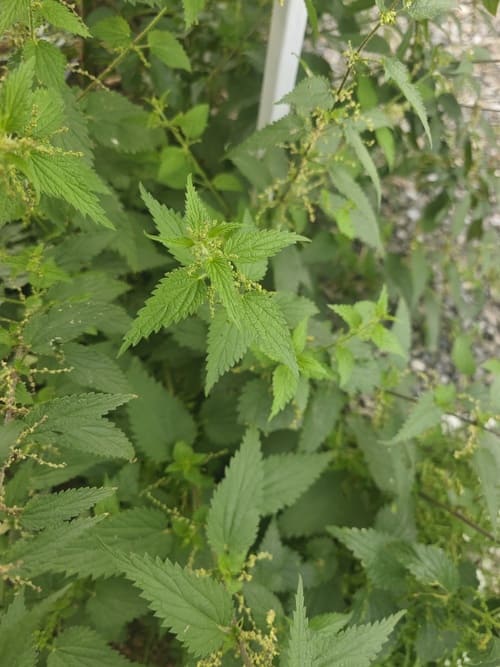
- High nitrogen and phosphorus. Nettle thrives on fertile, well-fed soil. If it’s growing lush right next to your roses, your soil is already rich.
- Neutral to slightly alkaline pH (about 6.5 to 7.5). Nettle struggles in acidic soil. If it won’t grow, your soil may be too acidic for optimal rose performance.
- Moisture and structure. Nettle prefers moist but not waterlogged ground with a рыхлый structure. Its roots can reach 1 to 1.5 meters deep, loosening compact layers and creating channels for water and air.
Why nettle works
- Readily available nitrogen. Fresh nettle can contain up to 25 percent protein. During fermentation, these proteins break down into amino acids and ammonia, which roses absorb more easily than many mineral salts. This is especially valuable in spring when roots are just waking up.
- Silicon in organic form. Nettle is one of the best plant sources of silicon. Silicon strengthens cell walls, making leaves and stems more resistant to fungal diseases and pests. Roses with adequate silicon are less prone to powdery mildew.
- Iron and chlorophyll. High iron content supports chlorophyll production. After nettle feeding, roses often develop a deep, dark green foliage, a sign of active photosynthesis.
- Plant hormones. Auxins and cytokinins stimulate cell division. For roses, that means stronger root development after planting, better branching, and improved rooting of cuttings.
- Formic acid and sulfur compounds. These help explain its repellent effect on aphids and mites when used as a spray. It doesn’t kill outright, but it disrupts colonies and reduces feeding.
- B and K vitamins. Their direct uptake by roses from infusions isn’t strongly proven, but the soil and compost microbiology clearly benefits from them.
How and when to harvest
Ways to use nettle in a rose garden
- Fermented nettle tea
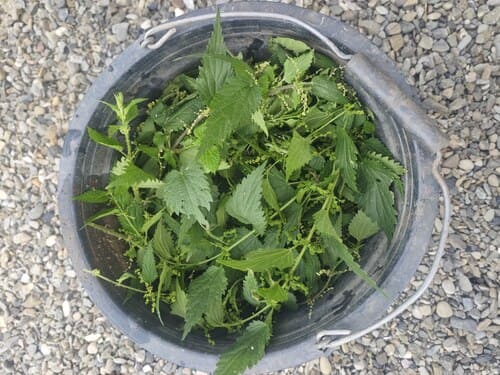
The classic method. Use 1 part chopped nettle to 10 parts water, ferment for 7 to 14 days in warmth, stirring occasionally.
- Spring feeding. Start only after buds have begun to swell, and growth is visible. Otherwise, nitrogen just sits in the soil and may attract pests.
- Dosage. Mature bush: 2 to 3 liters of diluted 1:10 solution at the root. First-year plant: about 0.5 liters at 1:20.
- Balance. Nettle is nitrogen-heavy and pushes leafy growth. For flowering, alternate with phosphorus and potassium sources such as bone meal or composted banana peels. Otherwise, you’ll get lush foliage with few buds.
2. Cold infusion
Cover nettle with water, seal, and leave in the shade for 2 to 3 weeks. The result is milder, less concentrated, and with little odor. Good for regular summer watering when fermented solutions may be too strong.
3. Green manure
Bury fresh nettle in trenches 15 to 20 cm deep during autumn digging. It will break down over winter and provide a strong nutrient boost in spring. Keep at least 30 cm away from rose roots to avoid temporary nitrogen lock during decomposition.
Garden tips
Don’t overdo nitrogen. Too much nettle in mid to late summer leads to soft growth that won’t harden before winter.
Nettle mulch
Often overlooked, but very effective. Apply a 5 to 8 cm layer around the base of roses.
- Suppresses weeds by blocking light
- Retains moisture, crucial in hot weather
- Feeds the soil gradually as it breaks down
- Attracts earthworms that improve soil aeration
Compost activator
Nettle speeds up composting. Its nitrogen and moisture help break down carbon-rich materials like straw and dry leaves. Layer it between dry materials to accelerate the process by a couple of weeks.
Foliar spray against pests
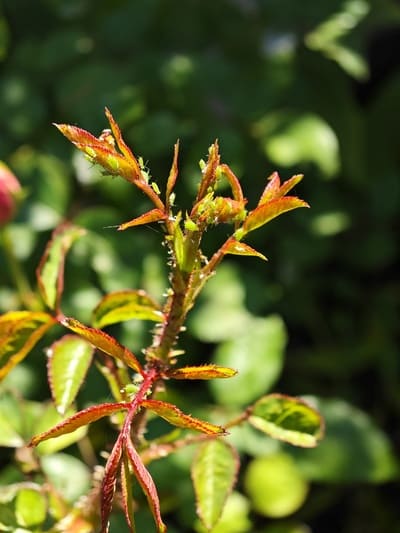
Dilute infusion 1:20, strain well, and add a drop of liquid soap for adhesion. Spray in the evening or on cloudy days to avoid leaf burn. It helps reduce aphids and mite activity. Not a cure-all, but a solid preventive tool in an organic garden.
Seasonal schedule for roses
- March to April. Do nothing. Soil is cold, and biology is inactive, so nitrogen won’t be used.
- May. First feeding after buds wake up. Dilution about 1:15, applied to the roots to kickstart growth.
- June. Before the first bloom, use a 1:10 infusion plus a small amount of ash per bucket to support bud formation.
- July. Early month, nettle at 1:10. Late month, switch to phosphorus and potassium sources like ash or banana compost. This prevents excessive leafy growth.
- August. Final light feeding at 1:20. After that, focus on potassium to help shoots mature.
- September to November. Use fresh nettle as mulch or add it to compost for next season.
Garden tips
Avoid feeding diseased plants. If a rose is already affected by fungal disease, extra nitrogen can accelerate the problem. Treat first, then feed.
Less obvious but useful tricks
- Water indicator. Nettle wilts faster than roses when the moisture is low. If nearby nettle is drooping, your roses likely need water too.
- Cat deterrent. Fresh nettle mulch discourages cats from digging around rose bases.
- Bird support. If you leave some plants to set seed, they’ll attract birds like tits and sparrows, which help control aphids in summer.
A superhero for your garden
Already using nettle and still seeing yellow leaves, weak stems, or roses that won't bloom?
Rose gardening books


Step into a calmer, more confident rose season. With Ann Devis’s rose gardening books and planner, you’ll get simple organic routines, proven tips, and checklists that keep your roses thriving – from first bud to last bloom.