Lavender-Blue Varieties With Care Tips That Really Work
Question: What are the most famous blue roses?
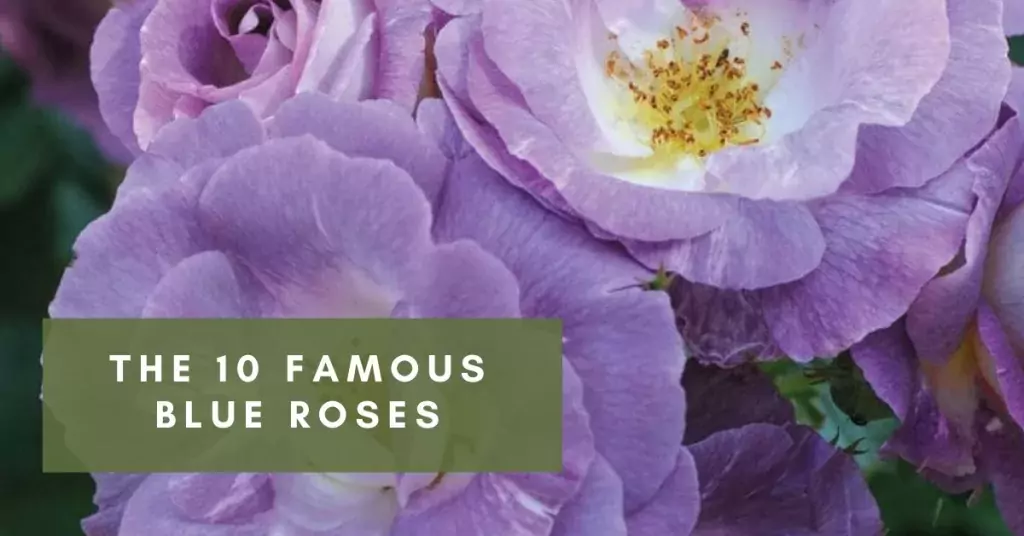
Short answer: True blue pigment doesn’t exist in roses. What gardeners call “blue roses” are actually lavender, lilac, mauve, and smoky-purple varieties. Under cool light — especially in spring, fall, and morning sun — these roses can appear surprisingly blue.
Breeders have chased the dream of a blue rose for decades. What they achieved instead is a fascinating group of roses with cool, elusive tones that shift with light, temperature, and care. Below are ten of the most iconic blue-toned roses, plus practical tips to help their color look its best in real gardens — not just catalog photos.
| Rose | Color Tone | Fragrance | Type | USDA Zones | Best Use |
|---|---|---|---|---|---|
| Blue Moon | Silvery lavender | Strong | Hybrid Tea | 5–9 | Cut flowers |
| Blue Girl | Soft lavender | Light | Hybrid Tea | 5–9 | Elegant beds |
| Blue Nile | Mauve-blue | Strong | Hybrid Tea | 6–9 | Fragrance gardens |
| Ebb Tide | Smoky purple | Very strong | Floribunda | 6–9 | Color accents |
| Rhapsody in Blue | Violet-blue | Medium | Floribunda | 6–9 | Mass planting |
| Blue For You | Lavender-slate | Medium | Floribunda | 5–9 | Containers |
Before choosing a variety, it helps to understand one thing:
- Light matters more than genetics. Morning sun + light afternoon shade = cooler tones.
- Season matters. Spring and fall blooms are richer and bluer than midsummer flowers.
- Feeding matters. Too much nitrogen pushes pink tones; balanced feeding keeps color cool.
Think of blue roses as optical magic, not a fixed color.
1. Blue Moon (Mainzer Fastnacht)
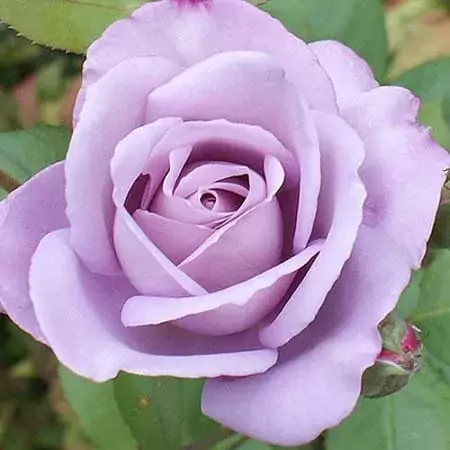
The classic lavender-blue hybrid tea
Blue Moon is one of the most famous blue-toned roses ever bred, and for good reason. Its large, elegant blooms open slowly from tall buds, releasing a strong, refined fragrance. This is a rose grown as much for cutting as for the garden.
Why gardeners love it
- Silvery-lavender blooms with classic hybrid tea form
- Strong fragrance, excellent for bouquets
- Long, sturdy stems
What to know
- Color shifts with light: cooler in morning sun, pinker in heat
- Prefers light shade and good airflow
- Can be prone to black spot in humid climates
At a glance
- Introduced: 1964, Germany (Mathias Tantau)
- Height: 70–100 cm (28–40 in)
- Bloom size: 10–11 cm
- Fragrance: Strong
Soft lavender elegance with reliable health
Blue Girl produces large, refined blooms in a clear lavender tone. While not deeply blue, it’s valued for its clean color, tidy growth, and better disease resistance than many early blue hybrids.
Why gardeners love it
- Large, double flowers with smooth petal form
- Compact, well-shaped shrub
- Generally healthy foliage
At a glance
- Introduced: 2008, France (Sauvageot)
- Height: 60–70 cm (24–28 in)
- Fragrance: Light
- Best for: Small gardens and mixed borders
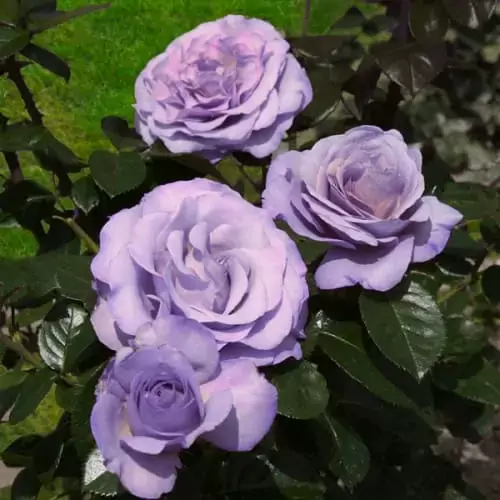
3. Blue Nile Rose:
Award-winning fragrance and dramatic blooms
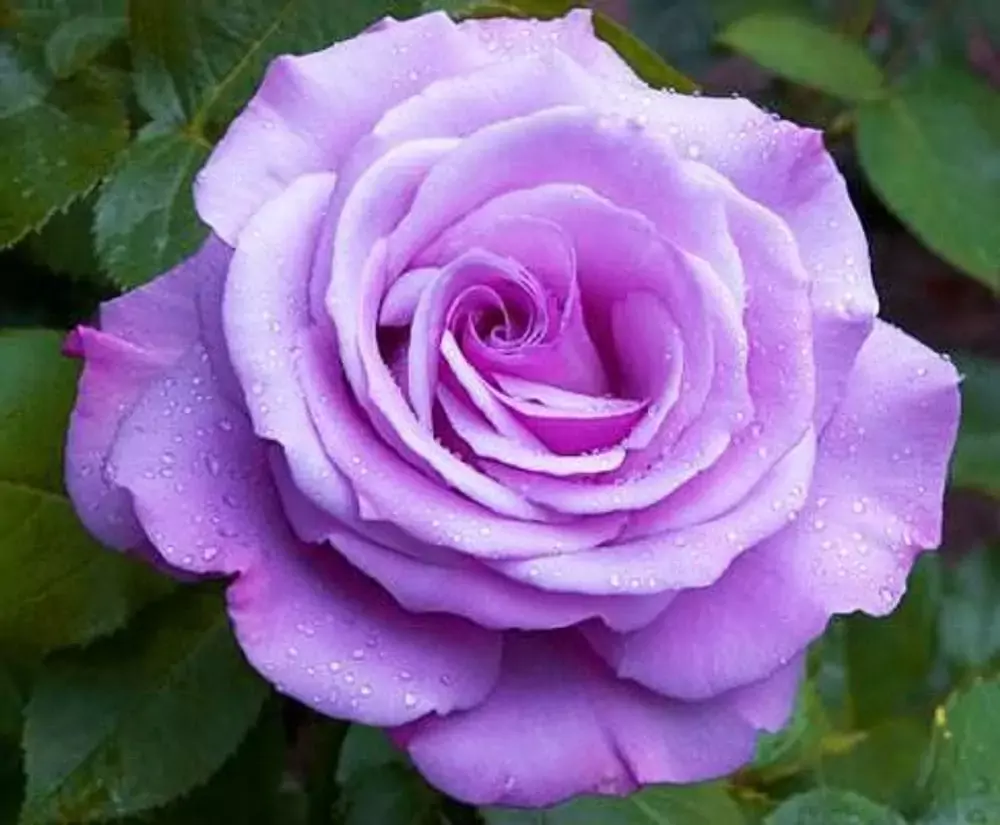
Blue Nile is a powerhouse hybrid tea known for its intense scent and elegant, fully double flowers. In cool weather, its mauve-blue tones are especially striking.
Why gardeners love it
- Strong citrus-tea fragrance (award-winning)
- Large, classic blooms
- Excellent as a cut rose
Good to know
- Size depends heavily on pruning and climate
- Taller and more vigorous in warm regions
At a glance
- Introduced: 1981, France (G. Delbard)
- Height: 75–150 cm (30–60 in)
- Fragrance: Strong
Smoky purple drama with old-rose character
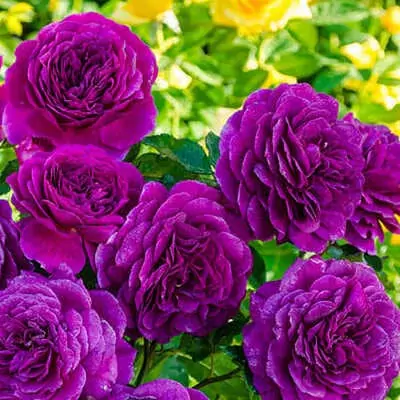
Ebb Tide stands out for its deep, smoky plum-purple color and intoxicating clove fragrance. It takes time to establish, but once settled, it becomes a garden showpiece.
Why gardeners love it
- Rich, antique-style blooms
- Powerful fragrance
- Strong visual impact
At a glance
- Introduced: 2001, USA (Tom Carruth)
- Height: 70–90 cm (28–36 in)
- Best for: Borders and feature plantings
5. Rhapsody in Blue Rose:
One of the closest roses to true blue
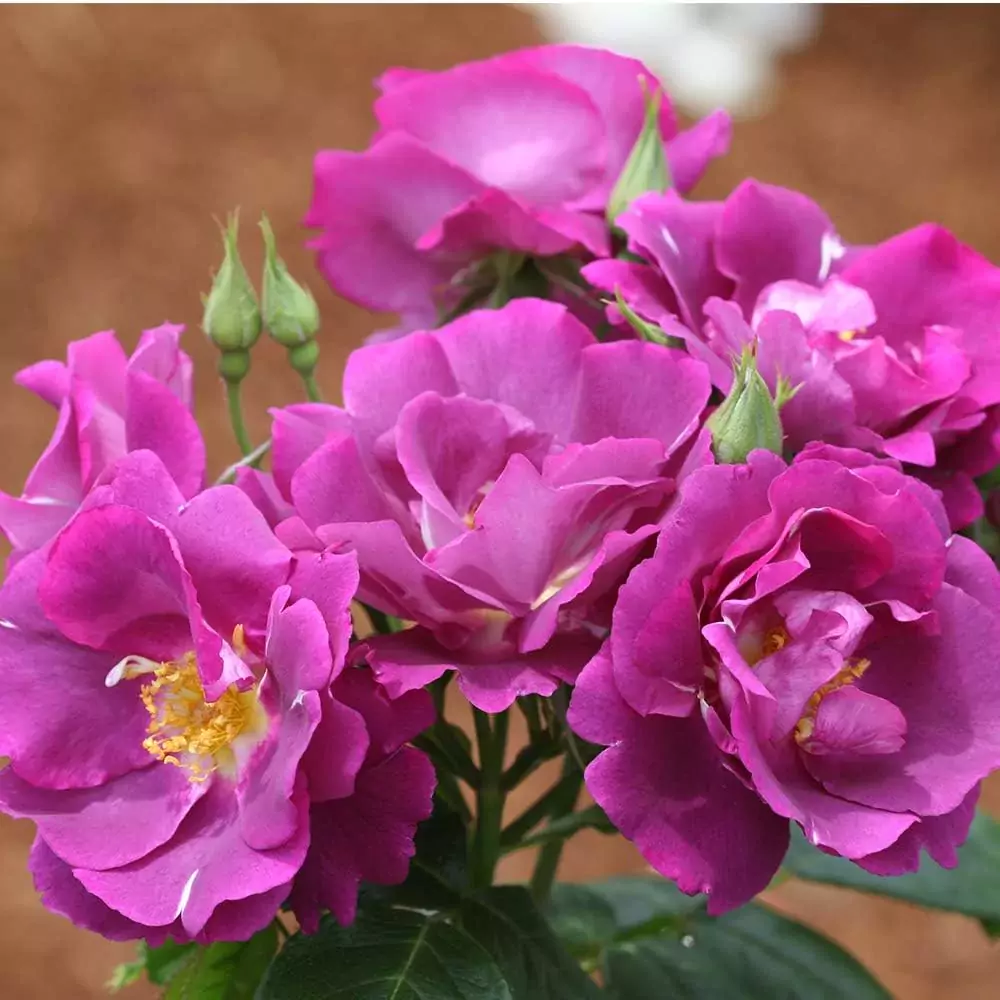
This floribunda is often cited as the “bluest” rose available. Semi-double blooms open violet-purple with bright stamens and fade to soft lavender-gray.
Why gardeners love it
- Unusual color with high visibility
- Blooms in clusters
- Excellent landscape performance
At a glance
- Introduced: 2000, UK
- Height: 70–120 cm (28–48 in)
Fragrance: Mild
6. Blue for You Rose:
Compact, modern, and container-friendly
Blue for You is a favorite for small gardens and pots. Its semi-double flowers show a slate-lavender tone with golden stamens and a silver reverse.
Why gardeners love it
- Free-flowering and long-blooming
- Healthy, bushy growth
- Excellent for containers
At a glance
- Introduced: 2001, UK (Peter J. James)
- Height: ~90 cm (35 in)
- Fragrance: Light to medium
7. Plum Perfect™ (Sunbelt®)
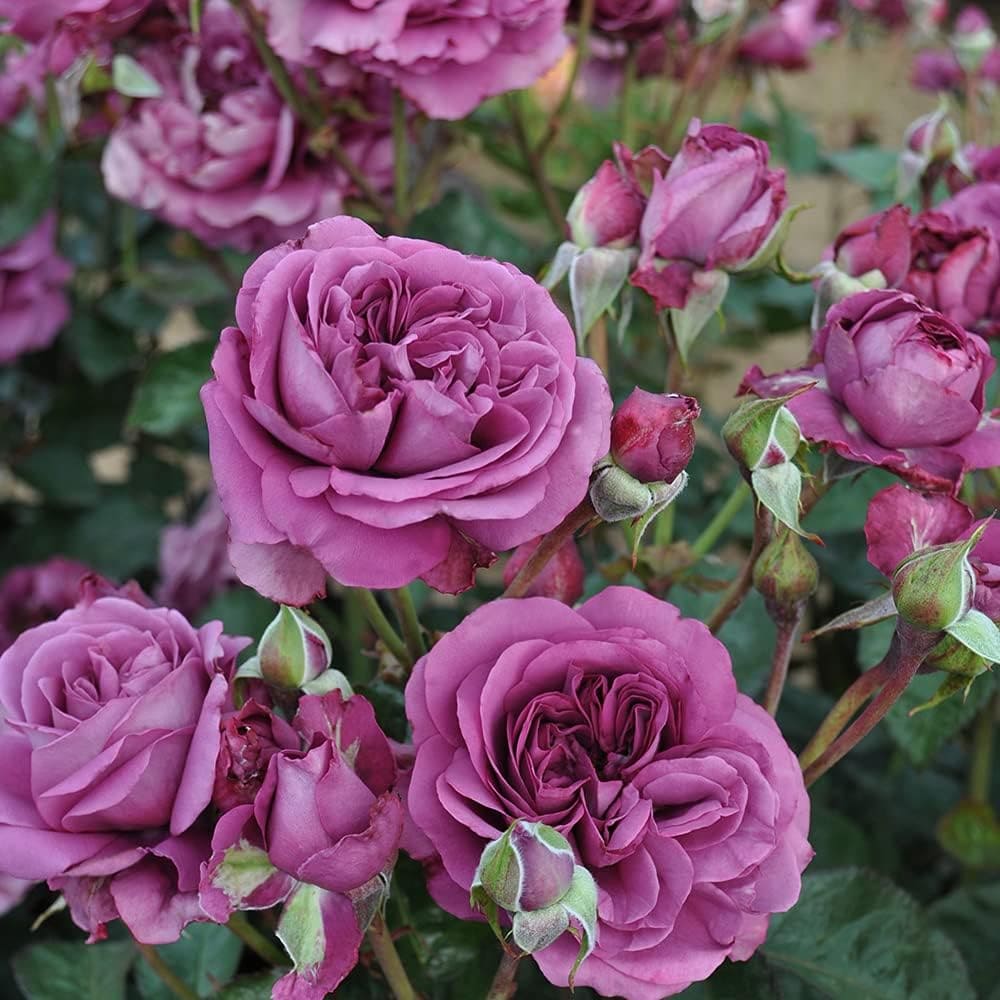
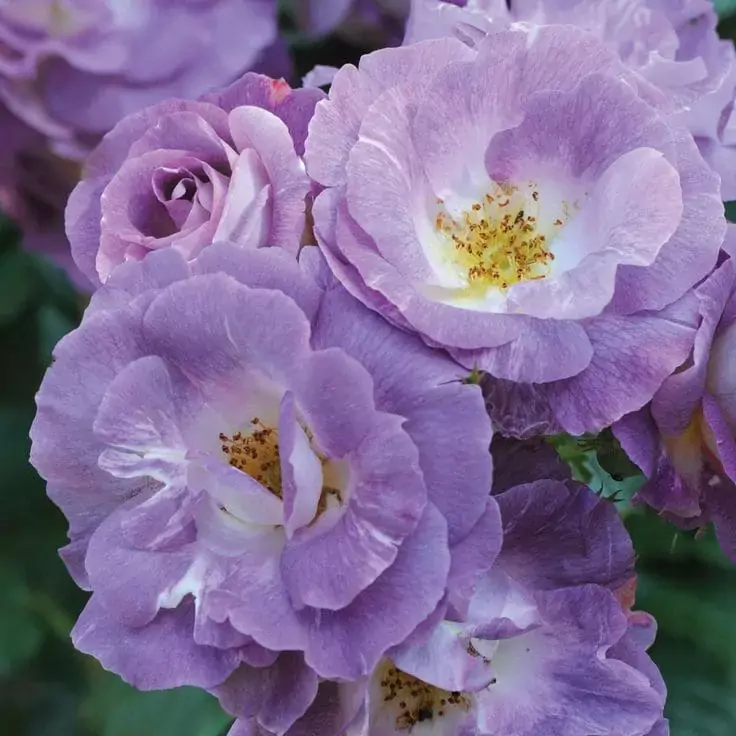
A color-saturated crowd-pleaser, Plum Perfect blankets the bush with rich plum-purple to misty lavender blooms that read “blue-toned” in cool light. Flowers are very full with ruffled petals and repeat steadily from spring to frost on a compact, healthy plant—great for beds, borders, and large containers.
At a glance (grower facts)
Type: Floribunda (Sunbelt® collection)
Height × width: ~90–120 cm × 60–90 cm (3–4 ft × ~3 ft), naturally bushy and upright. Blooms: Very full (often 40+ petals), cluster-flowered; pointed buds open to old-rose, ruffled form.
Color: Intensely plum-purple/mauve; holds well in heat and sun.
Fragrance: light to medium, sweet; some growers note hints of raspberry and cassis.
Foliage & health: Medium-green, glossy leaves; bred for heat/humidity performance with excellent black spot resistance.
Hardiness: USDA Zones 5–9/10 (reports vary by nursery); continuous rebloom.
Design & use
Its saturated purple-plum reads as a cool accent among silvers (lavender, artemisia) and makes yellow, apricot, or white roses glow. Compact size and clean foliage suit high-visibility spots and patio pots.
Care tips for best “blue-plum” color
Morning sun + light afternoon shade in hot summers helps petals keep their cool tones.
Feed moderately; emphasize potassium and calcium for firm petals and disease resilience.
Keep the center airy (light thinning) to maintain that Sunbelt® health advantage in humid climates.
Breeding & naming history
Breeder/cultivar code: Kordes (Germany); cultivar code ‘KORvodacom’.
Pedigree & selection: Bred within the Kordes program in the late 1990s; selections continued through the 2000s before commercial release (documentation notes differing year references across patents).
8. Chateau Myrtille:
Japanese refinement with blueberry tones
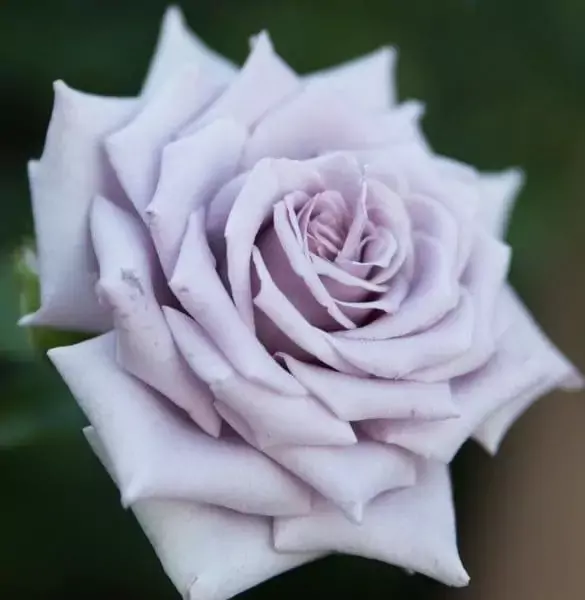
This rose offers soft ash-blue blooms with a nostalgic form. As flowers age, petals curl into a star-like shape, giving the plant a distinctive character.
Why gardeners love it
- Unique color and petal form
- Subtle fragrance
- Good disease resistance
9. Terra Limburgia (ORYlila, Oryblue):
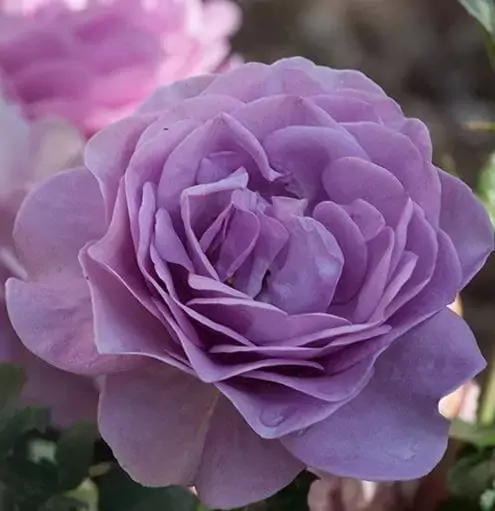
Terra Limburgia (ORYlila, Oryblue) – A Floribunda rose with large, double flowers in a pinkish-blue shade. It has a medium fragrance. The compact bush features matte, dark green foliage. It may be susceptible to powdery mildew.
Color: Blue Number of flowers per stem: 3-5 Fragrance: Medium Flower size: 8 cm Average number of petals: 30 Height: 70-80 cm Width: 40-60 cm This rose is named in honor of the 10th anniversary of Dutch radio L1 in Limburg. Breeder: Jozef Orye, Belgium, 2004.
10. Afrika Star:
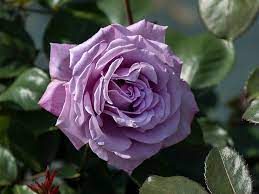
Afrika Star, bred by Mrs. Olga West in Zimbabwe in 1965, is a captivating rose with light lilac-blue blooms. These fragrant flowers have an average petal count of 40 and grow on sturdy stems. This rose stands at a height of 120 cm with a width of 60 cm. It’s known for its resistance to powdery mildew and black spot, making it a robust choice for gardens in zones 6 to 9.
How to Make Blue-Toned Roses Shine
- Light: Morning sun, combined with light afternoon shade, keeps tones cool and petals firm.
- Season: Expect richer color in spring/fall; mid-summer blooms open smaller and faster.
- Feeding: Avoid heavy nitrogen; favor balanced feeds with extra potassium and calcium.
- Airflow: Prune open centers to deter black spot and mildew.
- Moisture: Water deeply and mulch; consistency drives repeat bloom.
Garden tips
Blue roses reward observation, not force. I never judge their color by photos, only by how they look at 8 a.m. in spring light. That’s when the magic happens.
Want to learn more about rose care?
Explore our most-read, step-by-step guides:
- Planting Roses — soil preparation, spacing & aftercare
- Rose Pruning — shape, airflow & timing by season
- Rose Diseases — identification, prevention & remedies
- Fertilizing Roses — organic schedules & proven formulas
- Pests in the Rose Garden (IPM) — eco methods that work
- Seasonal Rose Care — month-by-month checklist
Want to Go Deeper?
If this guide helped, you’ll love my rose-care books – practical, organic, and written for real gardens, not theory.
They include planting layouts, seasonal checklists, and proven methods I use in my own garden.
👉 Explore Rose Gardening Books by Ann Devis
Rose gardening books

Step into a calmer, more confident rose season. With Ann Devis’s rose gardening books and planner, you’ll get simple organic routines, proven tips, and checklists that keep your roses thriving – from first bud to last bloom.
FAQ: Blue Roses, Answered
Not yet. Garden “blue roses” are lavender-mauve to slate-purple selections that read as blue in the landscape.
‘Blue Nile’ and ‘Ebb Tide’ are standouts; ‘Blue Moon’ also offers classic perfume.
Yes—compact floribundas like ‘Blue for You’ and mini-climber Starlet® ‘Melina’ thrive in large pots with a sturdy trellis and rich, well-drained mix.
Temperature and light shift pigments. Shade and heat push blooms toward pink; bright light and cool nights bring out slate-lavender tones.
No. pH supports health, but won’t change a rose’s genetic color.
Bookmark this guide to compare heights, fragrance, and bloom style when you plan your next planting.
Want to explore more rose varieties?
If you enjoy learning about unusual colors like blue and lavender roses, you may like browsing my full rose variety collection.
It includes detailed descriptions, growth habits, fragrance notes, and practical observations from real gardens — not just catalog summaries.


