
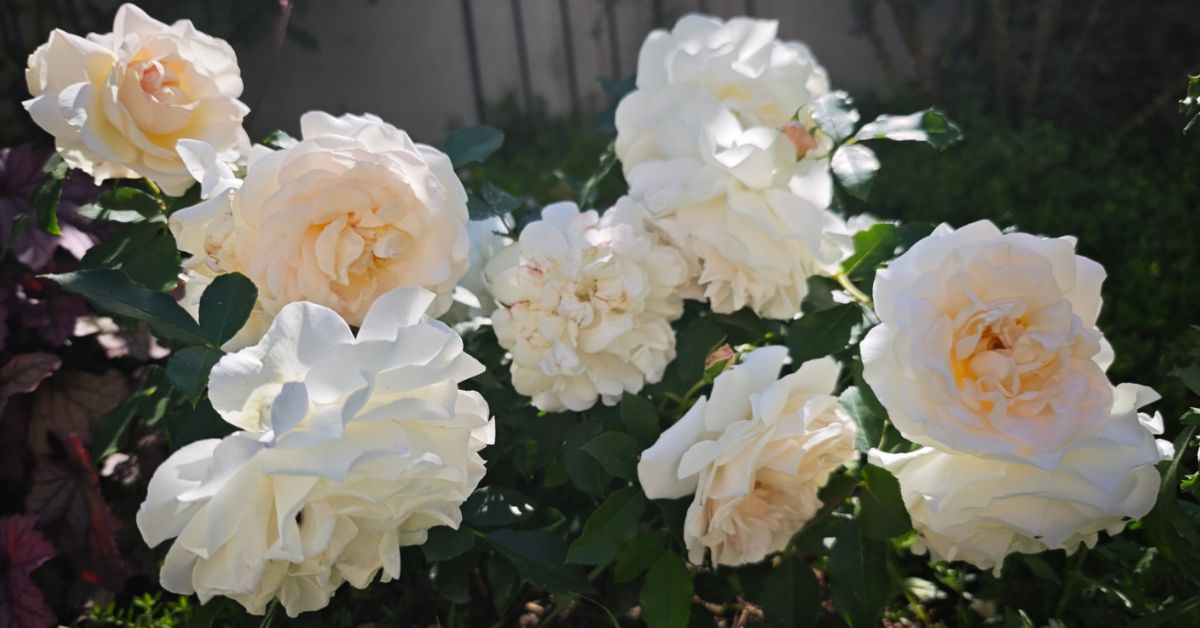
If you’ve been growing roses for any length of time, you know the cycle all too well: leaves spotted with black dots, powdery white coating on buds, stems rotting at the base, and you reaching for a fungicide spray. Again. And again.
What if I told you there’s a fungus that actually wants to live in your rose garden one that actively hunts down the pathogens trying to destroy your plants, wakes up your roses’ own defenses, and makes their roots grow stronger, all without a drop of chemistry?
That fungus is Trichoderma, and after years of using it in my own garden and recommending it to thousands of growers in my community, I believe it’s one of the most powerful tools an organic rose gardener can have. Let me show you exactly what it is, how it works, and most importantly, how to use it correctly so you actually get results.
What Is Trichoderma? (And Why Should Rose Growers Care?)
Trichoderma is a beneficial fungus. It lives naturally in healthy soils all over the world in garden beds, forests, meadows, and yes, even in Antarctic soils. It’s not a pathogen; it doesn’t harm plants, people, or animals. It’s simply a very good competitor that happens to be on your side.
There are dozens of species of Trichoderma, but the ones you’ll most commonly find in products for gardeners are:
- Trichoderma harzianum — the most researched and widely used; especially good at protecting roots and fighting soil diseases
- Trichoderma viride — powerful enzyme producer; effective against a range of fungal diseases
- Trichoderma asperellum — particularly good at stimulating the plant’s own immune defenses
Here’s what makes Trichoderma different from a fertilizer, a spray, or even other beneficial microorganisms: once you introduce it into your rose’s root zone, it moves in permanently. It sets up home, feeds on natural root secretions, and keeps multiplying. You’re not applying a product that wears off. You’re establishing a living ally that works around the clock.
Over 250 commercial Trichoderma-based biofungicides are now available worldwide, and the science behind them is decades deep and consistent. Cornell University’s Professor Gary Harman spent 15 years developing the now-famous T-22 strain, which became one of the first biological fungicides on the market. The research is extensive and peer-reviewed: Trichoderma works.
How Trichoderma Protects Your Roses
Trichoderma doesn’t rely on a single trick. It protects your roses through several different mechanisms at the same time, which is why it’s so much more resilient than a chemical fungicide that a pathogen can eventually “work around.”
Here’s what’s actually happening in your soil when Trichoderma is at work:
1. It Hunts Down and Destroys Fungal Pathogens
Think of Trichoderma as a predator in your soil. When it encounters harmful fungi — Fusarium, Pythium, Rhizoctonia, Botrytis — it physically wraps around them and releases a set of powerful enzymes that dissolve the pathogen’s outer layer. The harmful fungus is essentially digested from the outside in.
Scientists call this mycoparasitism, but you can think of it simply as: Trichoderma eats the bad guys.
Research confirms that this is the core of how T. harzianum operates, and its enzyme activity is the key to controlling a wide range of plant diseases.
2. It Produces Natural Antibiotics
Beyond physically attacking pathogens, Trichoderma also releases natural chemical compounds into the soil — substances that suppress the growth of harmful fungi even before direct contact. These aren’t synthetic chemicals; they’re compounds that Trichoderma has evolved over millions of years specifically to outcompete its rivals.
Think of it as Trichoderma constantly broadcasting a “do not enter” signal in the soil around your rose roots.
3. It Takes Up Space — and Denies It to Pathogens
Trichoderma is an extremely aggressive colonizer. It moves into the root zone and occupies it so thoroughly that harmful fungi can’t find space or food to establish themselves. This is called competition, and it’s one of the simplest yet most effective forms of biological defense.
This is exactly why timing matters so much: you want Trichoderma to arrive before the pathogens do. Prevention is always easier than cure.
4. It Trains Your Rose to Fight on Its Own
This is the one that I find most exciting — and that took scientists years to fully understand.
When Trichoderma moves into the root zone, it sends signals to the rose plant that essentially say: danger may be coming, get ready. The plant responds by switching on its internal defense systems and keeping them at a higher level of readiness. Scientists call this Induced Systemic Resistance, or ISR — but what it means for you, practically, is this: a rose that has Trichoderma in its soil will react to a disease attack faster and more strongly than one that doesn’t.
When black spot lands on the leaves, when Botrytis creeps into the buds, when powdery mildew tries to take hold — a Trichoderma-primed rose already has its shields up. Research confirms that plants treated with Trichoderma show significantly stronger resistance to diseases like Botrytis and other fungal attacks compared to untreated plants.
Your rose isn’t just protected from outside. It’s been made stronger from within.
5. It Helps Your Roses Grow Better
Cornell University research showed a consistent pattern: Trichoderma particularly helps plants that have been weakened by stress, disease, or poor soil conditions — restoring their natural vitality. It does this in a few ways:
- It unlocks nutrients in the soil (phosphorus, zinc, iron, manganese) that are often chemically “stuck” in forms roots can’t absorb — and converts them into forms the plant can actually use. For roses growing in heavy clay or compacted soils, this is a real game-changer.
- It encourages more root hair development, which means a bigger surface area for absorbing water and nutrients. You’ll see this in practice as more vigorous spring growth, better establishment after transplanting, and more generous, longer-lasting flowering.
- It produces natural growth hormones that stimulate root development.
Which Rose Diseases Does Trichoderma Help With?
Let me be specific about what Trichoderma actually does and doesn’t do for common rose diseases.
Root Rot and Soil Diseases (This Is Its Strongest Area)
Trichoderma’s most powerful effect is underground, in the root zone. The soil pathogens it most reliably controls include:
- Fusarium — causes root rot, crown rot, and wilting from the base up
- Pythium — causes root rot, especially in wet or waterlogged soils.
- Rhizoctonia — causes black rot at the crown and base of stems.
- Phytophthora — root rot in poorly drained spots
- Armillaria (honey fungus) — lab studies show complete inhibition by T. atroviride.
If your roses are in heavy soil, if you’ve had repeated root rot problems, or if you’re planting into a bed where roses have grown before (replant disease is a real and common problem), establishing Trichoderma in the root zone is one of the most valuable things you can do.
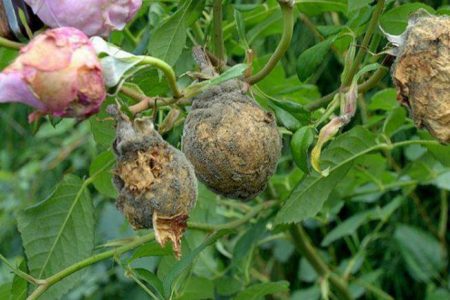
Gray Mold — Botrytis cinerea
Botrytis causes the rotting of petals, dieback of young shoots, and bud loss during cool, wet weather. It’s one of the most painful rose diseases to deal with because it strikes right at the flowers.
Research published in a specialist rose disease journal showed that spraying roses with T. harzianum once a week produced a meaningful reduction in gray mold development on rose branches. And this is exactly why I apply Trichoderma not only as a soil drench but also as a foliar spray — directly onto the leaves, stems, and around the base of each bush — at least twice a month throughout the season. Giving Trichoderma a presence on the above-ground parts of the plant adds a direct layer of protection right where Botrytis strikes.
Black Spot
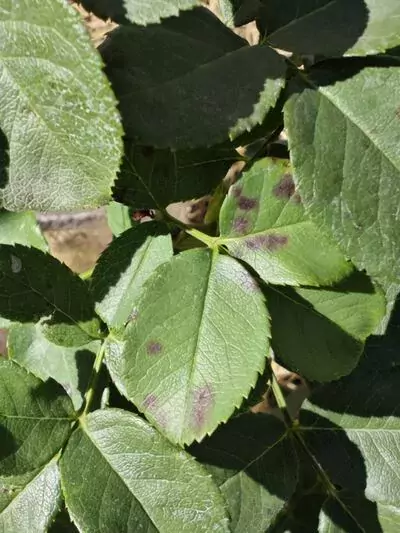
Black spot (Diplocarpon rosae) is the disease most rose growers battle most constantly. Trichoderma is not a direct killer of the black spot fungus in the way some other biological agents are, but its role in strengthening the rose’s own immune system means Trichoderma-treated roses are more resilient — they get infected less easily, and when they do get infected, they recover faster. Research consistently shows that roses with healthier root biology have lower disease rates across all foliar diseases, including black spot.
Powdery Mildew
Studies have shown that Trichoderma soil applications and root treatments can induce resistance to powdery mildew. T. atroviride in particular performed comparably to sulfur in some controlled experiments. The mechanism is the same ISR effect: the plant’s own immune response, trained and ready, recognizes powdery mildew earlier and fights it more effectively.

How I Use Trichoderma: My Practical Routine
Here’s exactly what I do – not a generic protocol, but my actual practice after years of trial and refinement.
The Two Application Methods I Use Together
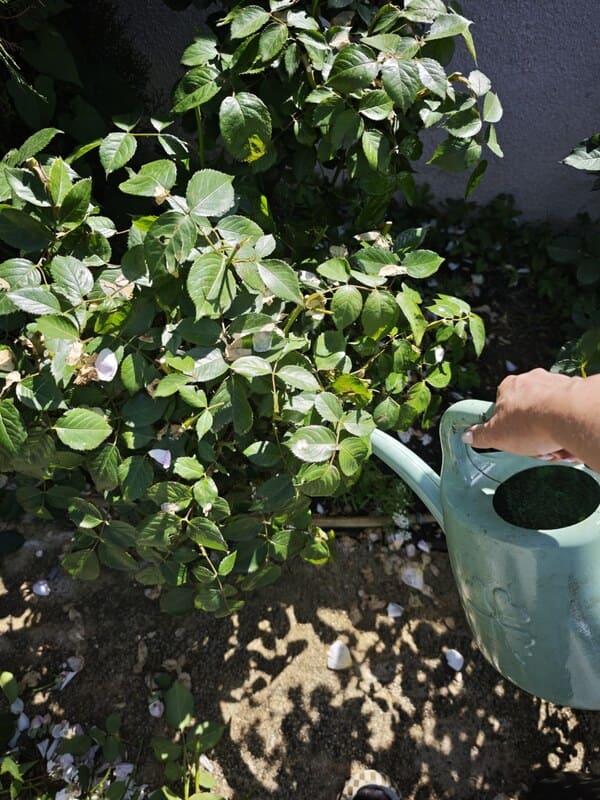
Method 1: Soil drench around the root zone. I dissolve Trichoderma in water and drench the soil around the base of each rose bush, covering the whole root zone. This is where Trichoderma does its deepest work — colonizing roots, building the immune defense system, fighting soil pathogens.
Method 2: Foliar spray on leaves, stems, and the soil surface. I also spray the prepared solution directly onto the leaves and stems of each rose, and over the soil around the bush. This gives Trichoderma a presence on the above-ground plant surfaces where Botrytis, powdery mildew, and other foliar diseases can land and take hold.
I do both at least twice a month throughout the growing season. Not once at planting and forgotten — consistently, regularly, throughout spring, summer, and into autumn.
Choosing the Right Product
Trichoderma products come in two main forms:
Powder (wettable powder, WP): Dry spores that you dissolve in water. Easier to store, longer shelf life. This is what I use and what I recommend for most home gardeners. ➜ Available on Amazon here
Liquid concentrate: Spores already in suspension; convenient but requires refrigeration and has a shorter shelf life.
Whatever you buy, check the CFU count. CFU stands for “colony-forming units” — it’s simply the count of living spores per gram. The higher the number, the more active organisms you’re getting. Look for at least 1×10⁸ CFU/g (that’s 100 million spores per gram). This number should be clearly stated on the label.
The Golden Rule: Mix with Compost, Not Just Water
Tipping Trichoderma powder straight into dry soil is the single most common mistake I see, and it wastes your product. Trichoderma spores are living organisms — they need moisture and food to wake up and start colonizing.
The most effective method: mix your powder with well-decomposed compost (vermicompost is ideal), let the mixture rest in a cool, shaded spot for 5–7 days with a little moisture. During this time, the Trichoderma colonizes the compost, and by the time you apply it, you have a far richer, more active inoculant than you started with — with populations 10 to 100 times higher than in the raw powder. That translates into much better establishment in your rose beds.
For foliar applications, dissolve the powder in water and spray, but always apply in the early morning or evening, never in full midday sun, which kills the spores.
When to Apply
Spring start-up: Begin as growth resumes, before disease pressure arrives. Prevention is always more effective than cure.
At planting or transplanting: Apply directly into the planting hole, in contact with the roots. This is your single best opportunity; the fungus moves in from day one and sets up before any pathogen can.
Ongoing maintenance: At least twice a month throughout the growing season — soil drench plus foliar spray. Don’t skip autumn: a late-season application helps Trichoderma establish over winter and gives you a head start in spring.
Temperature: Trichoderma is most active when the soil is between 20–30°C. It can work at lower temperatures too, just more slowly. Avoid applying to waterlogged or completely dry soil.
Three Things That Kill Your Trichoderma
1. Chemical Fungicides
Chemical fungicides don’t distinguish between harmful fungi and beneficial ones — they kill Trichoderma right along with the pathogens. If you’re using chemical sprays, either stop (which is what I’d encourage) or wait at least two weeks after any chemical application before introducing Trichoderma. Once you commit to a biological approach, the chemicals become unnecessary anyway — the whole point is to build a system that doesn’t need rescuing.
2. Copper-Based Products
Even in organic gardening, copper sprays (Bordeaux mixture, copper hydroxide) are common, but copper is highly toxic to soil fungi, including Trichoderma. If you use copper on foliage, apply it carefully and keep it away from the soil. Maintain a clear gap between any copper application and your next Trichoderma application.
3. Midday Sun and Dry Storage
Never apply Trichoderma in direct midday sun — UV light kills spores quickly. Always apply in early morning or evening, or on an overcast day. Store your product in a cool, dark location; a refrigerator is ideal.
How Trichoderma Fits Into a Complete Organic Rose Program
Trichoderma is one piece of a larger system, not a standalone solution. Here’s how I use it alongside other biological inputs — carefully, because compatibility matters:
Humates and seaweed extracts work beautifully alongside Trichoderma. They feed soil biology, improve soil structure, and provide the trace minerals that support a healthy root environment. Apply them separately or in rotation with Trichoderma.
Bacillus subtilis is an excellent biological agent for foliar diseases like black spot and powdery mildew — but I never mix it with Trichoderma in the same solution. Bacillus subtilis is too aggressive and can suppress Trichoderma when combined. I use them on separate days, in alternation.
Chitosan is another valuable tool for stimulating plant immunity — but I apply it separately too, because it has a different acidity level (pH) from Trichoderma, and mixing them can reduce Trichoderma’s effectiveness. Keep them on different days in your schedule.
Regular compost is non-negotiable. Trichoderma thrives in biologically rich, organic soil. Compacted, depleted soil with no organic matter suppresses it. Feed your soil, and your Trichoderma population feeds itself.
The result of this whole approach is a garden where the biology maintains itself — beneficial fungi and bacteria outcompete pathogens, the plants’ own immune systems stay primed and resilient, and you reach for sprays less and less often. Until eventually, you stop reaching for them at all.
That’s not a promise. That’s what I’ve watched happen, season after season, in my own garden.
The Bigger Picture
Every morning I walk through my garden through the dew, before the day properly starts, and I’m reminded of why this matters. A garden that depends on chemistry is one crisis away from collapse. A garden built on biology can carry itself.
Trichoderma is not magic. It’s decades of solid science translated into a practical tool any rose gardener can use. But when you see it working, when you notice your roses bouncing back faster, when you get through a wet spring without the usual Botrytis disaster, when you realize you haven’t reached for a fungicide in two seasons — it does feel a little bit like magic.
I’ve watched growers in my Rose Gardening community make this transition. It takes a season, sometimes two, to rebuild the biology that years of chemical use have suppressed. But once it happens, the garden shifts. Fewer crises. More resilience. Roses that look like they want to be alive.
Ready to Go Deeper?
If this article has sparked a desire to understand not just what to apply but how the whole system works together, then I wrote a book for you.
“Revolution in the Rose Garden: Growing Roses Organically” is your practical guide to creating a self-sustaining, vibrant ecosystem right in your backyard. It covers soil biology, biological preparations, organic nutrition, integrated disease management, and the complete seasonal care program I use in my own garden.
It’s time to break the chemical addiction and build a garden that feeds itself.
Rose gardening books


Step into a calmer, more confident rose season. With Ann Devis’s rose gardening books and planner, you’ll get simple organic routines, proven tips, and checklists that keep your roses thriving – from first bud to last bloom.
Get Started: Trichoderma for Your Rose Garden
Ready to bring Trichoderma into your rose care routine? Here’s a high-quality product I recommend for home growers:
Look for a clear CFU count of at least 1×10⁸ per gram on the label. Store in a cool, dark place (refrigerator is best). Mix with compost before applying to soil. Spray in the early morning. Apply at least twice a month. And be patient — you’re not fixing a problem, you’re building a system.
Your roses will thank you.
FAQ
Trichoderma is primarily preventive. For an existing soil disease, it can slow the spread and protect healthy roots, but it won’t rescue a plant overnight. For active foliar disease (heavy black spot, Botrytis in bloom), deal with the immediate crisis first using appropriate biological treatments, and use the Trichoderma applications to build long-term resilience.
Yes. Trichoderma is completely safe for plants, animals, soil fauna, and humans. It has no history of toxicity. In fact, by building a healthier soil ecosystem, it supports earthworm populations and overall garden biodiversity.
It takes 2–4 weeks for Trichoderma to establish properly in the root zone. The immune-priming effect develops over 3–6 weeks. Visible growth benefits typically show up within one full growing season. This is not a quick fix — it’s an investment in a system that compounds over time, getting better and better each year as the population builds.
Yes. Add a small amount (around 1/4 to 1/2 teaspoon per liter) to your compost tea and apply as a soil drench while fresh — within a few hours of brewing.
Absolutely. Mix it into your potting medium at the start of the season. For established potted roses, apply as a diluted drench. Reapply every 3–4 weeks during active growth, since containers have less organic matter and Trichoderma populations can deplete faster than in open garden soil.
Organic rose gardener and author.
I share practical, soil-first methods tested in my own garden to help roses grow strong, healthy, and bloom naturally without chemicals.
Ann Devis