
Notes from a gardener who feeds the soil, not the chemistry.
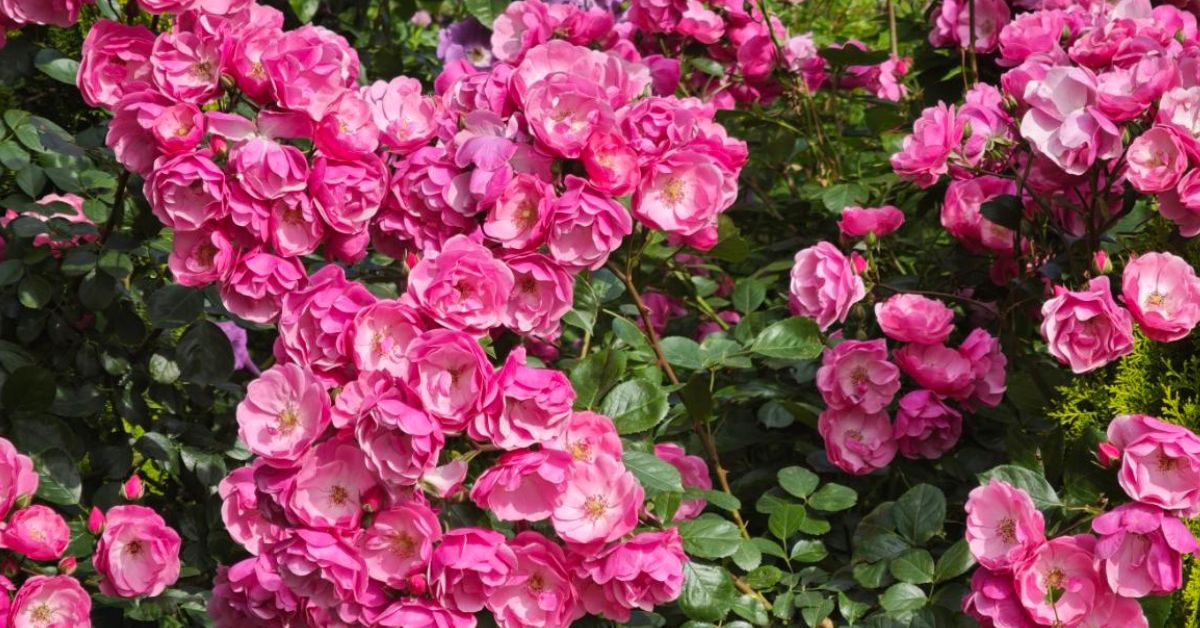
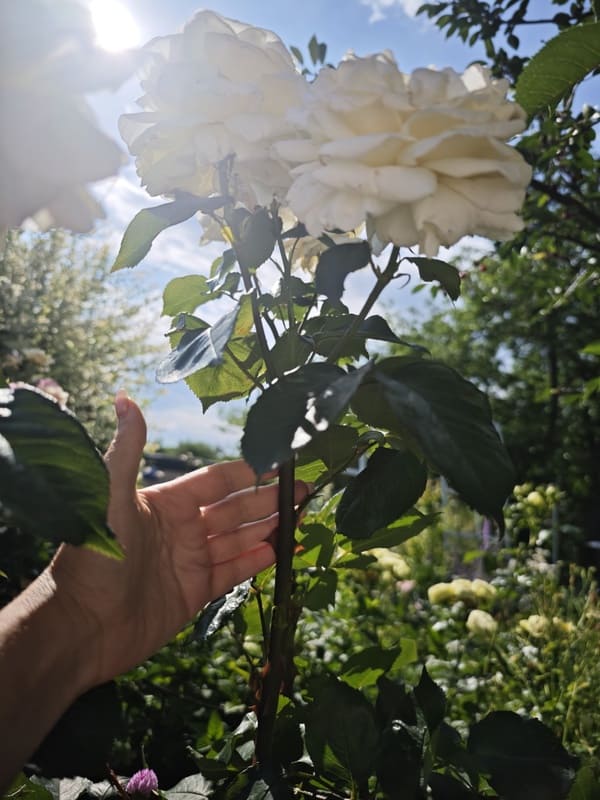
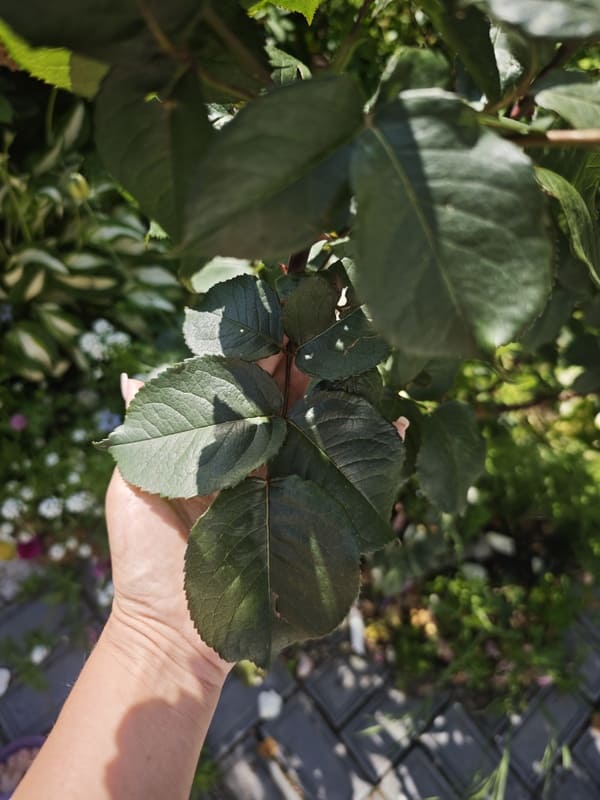
Picture this: you’re standing in your rose garden. The bushes are towering, with lush, glossy foliage, each leaf the size of your palm. The blooms are massive and intensely fragrant. The canes are thick, woody, and sturdy, with the structural integrity of a grapevine. Not a single aphid dares to settle on the leaf tissue that is too dense for their stylets to pierce. Not a single spider mite shows any interest in the plant, which is simply too healthy for its immune system to be overwhelmed. This isn’t a fantasy. This is my rose garden. And I haven’t used NPK in years.
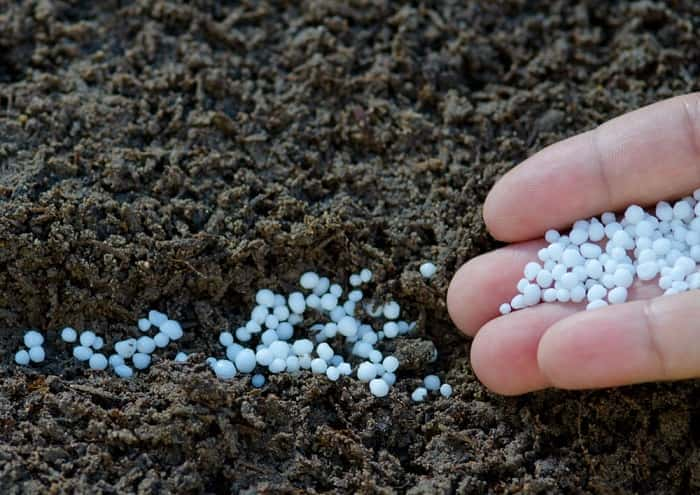
To understand why this is possible, we first need to pull back the curtain on what actually happens when you sprinkle those white “20-20-20” granules onto your beds.
The Truth About NPK: Why Synthetic Fertilizers Are Just Salt
Open any bag of NPK and check the label. Ammonium nitrate is a salt of ammonia and nitric acid. Potassium chloride is a salt of potassium and hydrochloric acid. Ammonium sulfate is a salt of ammonia and sulfuric acid. These are all inorganic salts, and each has its own “salt index,” a measure of how much it raises the soil solution’s salinity. For context, common table salt (NaCl) has an index of about 150. Ammonium nitrate is 104.7. Potassium chloride is 116.3. These numbers confirm that in terms of salinity, NPK is only a step away from your dinner table, except in this case, the “table” is your rose garden.
Don’t take my word for it. Look at history. Over two millennia ago, long before chemical formulas were even a thing, people knew that salt killed the earth. The Bible describes how Abimelech, after capturing Shechem, “destroyed the city and sowed it with salt.” The Romans did the same to Carthage after the Third Punic War, salting the fields to ensure nothing would ever grow there again. You didn’t need a degree in chemistry to understand that salt on the land equals death to the land. That principle hasn’t changed in 2,000 years. The only difference is that now, we mass-produce these salts and call them “fertilizers.”
What happens underground when you use NPK
When NPK granules hit the soil, they dissolve. The salt concentration in the soil moisture spikes instantly, creating osmotic stress—the same effect you remember as a child if you ever put salt on a slug. Water is pulled out of the cells of microorganisms, earthworms, and plant roots. The cells dehydrate, membranes collapse, and life perishes. It doesn’t happen all at once; it’s a slow, grinding attrition, season after season.
Earthworms, the architects of any healthy soil, can’t withstand this assault. A cubic meter of healthy soil contains between 50 and 500 earthworms, each processing up to five kilograms of earth per year, mixing organic matter with minerals and creating aeration channels. NPK kills off 50–90% of them. A 2024 meta-analysis of 116 scientific papers showed that high doses of NPK reduce soil microbial diversity by 15–42%, microbial biomass by 35–45%, and key metabolic activity by 40–55%. All that remains are the primitive, opportunistic bacteria that don’t fix nitrogen, don’t protect roots, and don’t build soil structure.
In short, you’ve replaced a symphony orchestra underground with a single drum. There’s noise, but there’s no music.
The NPK Vicious Cycle: Seventy Years of Degradation
Over the last seven decades, the intensive use of mineral fertilizers in global agriculture has triggered a catastrophe most people never think about. According to the FAO, up to 80% of agricultural land in many countries is now degraded. The soil has lost its organic matter, its structure has collapsed, and its microbiome has been decimated. Farmers who once reaped generous harvests from rich soil are now forced to increase their NPK dosages every year just to maintain previous levels because the soil’s natural fertility is exhausted. They are hooked on a chemical needle. Without the next dose, the yield collapses. And alongside the chemicals, heavy metals such as cadmium, arsenic, lead, and uranium impurities found in the phosphorites used to produce NPK — are leached into the soil.
But the most terrifying part isn’t what happens in the field. It’s what happens beyond the garden gate.
From NPK to Neurotoxins: The Chain Reaction
Nitrates and phosphates from NPK don’t stay in your soil. They are washed away by rain, seep into groundwater, and run off into rivers, lakes, and reservoirs. That’s where the second act of this ecological tragedy begins.
Excess phosphorus and nitrogen in water bodies stimulate the explosive growth of cyanobacteria, or blue-green algae. This is known as “eutrophication,” or an algal bloom. The water gets covered in a toxic, foul-smelling green slime. Fish suffocate. The ecosystem dies. But that’s not all.
Cyanobacteria release BMAA (β-N-methylamino-L-alanine), a neurotoxin that binds to proteins in the brain and causes damage. A study from Dartmouth University found that people living near water bodies affected by algal blooms had a 25 times higher risk of developing ALS (Lou Gehrig’s disease). A 13-year South Korean study identified a direct link between the intensity of algal blooms and the prevalence of Parkinson’s and Alzheimer’s disease within a five-kilometer radius of the affected water. BMAA causes the same pathological changes in the brain that we see in dementia.
The chain is complete: NPK in your garden → nitrates and phosphates in the water → cyanobacterial blooms → BMAA → neurodegeneration. And it all starts with your bag of fertilizer.
Why NPK has no place in your private garden
Let’s be honest. Chemical fertilizers might be “justified” with a mountain of caveats on massive industrial monoculture plantations where the goal is to feed millions and the economics dictate volume over quality. But in your private garden? In your rose patch with twenty, fifty, or a hundred bushes? Where do you plant for yourself, your family, and the sheer beauty of it?
There is no place for NPK here. And there is no need.
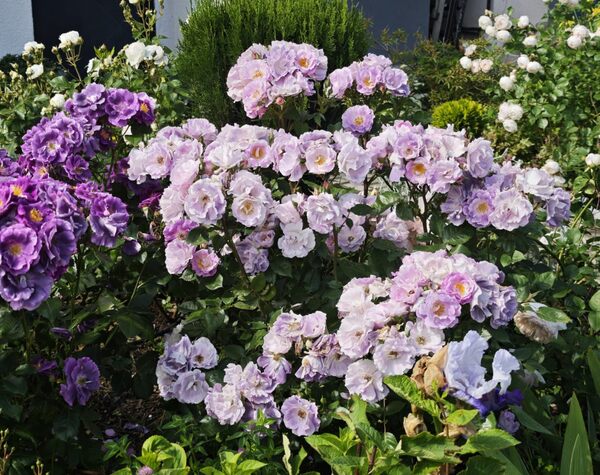
I know this from personal experience. My roses are strictly organic. No supplemental nitrogen, phosphorus, or potassium from a bag. The result? Palm-sized leaves are dense, glossy, and anatomically perfect. Huge blooms with a rich fragrance you simply won’t find in roses grown on “chemicals.” The canes are thick, woody, and resilient. My roses are virtually disease-free; their immune systems are so robust that pathogens have nowhere to take hold. And pests? Aphids avoid my bushes; the leaves are too tough, their stylets can’t pierce the epidermis. Spider mites don’t care that the plant is simply too healthy for stress to open the door for them.
This isn’t magic. It’s simple: when the soil is alive, and the plant receives nutrition through natural mechanisms – mycorrhizae, microbial synthesis, chelated complexes, it becomes strong. When you feed a plant synthetic salts, you weaken it. And a weak plant is the perfect victim for disease and pests.
My Organic Arsenal
Instead of bags of NPK, here is what I keep in my garden shed. These are accessible, cheap (often free), and they work better than any chemical – not instantly, but in the long run, by building a healthy ecosystem that feeds itself.
- Compost (The Foundation): Fallen leaves, grass clippings, kitchen scraps (no meat or oils), shredded cardboard, wood ash. Pile it up, turn it, and in six months, you have black gold. I apply two to three buckets per bush in the spring, tilled into the topsoil. It provides NPK plus essential micronutrients, humic acids, and beneficial microbes.
- Vermicompost: Compost processed by worms. It contains ten times more microbes than regular compost. I add a handful to the planting hole or make a 1:10 tea for watering.
- Humates (Humic and Fulvic Acids): My natural chelating agents. I apply these as a foliar spray – critically, leaves absorb minerals 20% more efficiently than roots. Most importantly, the leaf takes only what it needs, unlike roots, which are forced to take in a “salt bomb” from the soil. Foliar feeding with humates is precision therapy, not carpet bombing.
- Seaweed Extract (Ascophyllum nodosum): A biostimulant that activates the plant’s defense mechanisms. Rich in micronutrients, phytohormones, and polysaccharides. I spray this with humates every two weeks during peak growth.
- Trichoderma: A beneficial soil fungus that competes with pathogenic fungi, produces antibiotics, and stimulates root growth.
- EM (Effective Microorganisms): A cocktail of beneficial bacteria, yeast, and lactic acid bacteria. I add this to compost tea or foliar sprays to speed up decomposition and suppress pathogens.
- Nettle Tea: Fresh nettles steeped in water for two weeks. It’s a quick source of nitrogen, potassium, iron, and zinc. I use it every few weeks for watering or for spraying.
- Horsetail Decoction: A source of silica. It strengthens cell walls, making leaves impenetrable to pests and pathogens.
- Cover Crops (Green Manure): Lupin, mustard, or phacelia. I sow these between my rose bushes, then chop and drop them into the soil. Lupin fixes atmospheric nitrogen – up to 150 kg per hectare – in an organic form that doesn’t leach or pollute the water.
- Bone Meal: A slow-release source of phosphorus and calcium. One handful in the planting hole lasts two to three years. No cadmium, no synthetic additives.
Ready to stop the chemical cycle and start a garden revolution?
Moving away from NPK isn’t just about changing what you pour on your soil; it’s about changing how you view your entire garden. When you prioritize healthy soil, active microbes, and natural inputs, the mystery problems that plague most rose growers start to disappear. My book, Revolution in the Rose Garden – Organic Rose Gardening, is your practical roadmap to creating a self-sustaining, vibrant ecosystem right in your own backyard. It’s time to stop the “chemical addiction” and build a garden that feeds itself.
Rose gardening books

Step into a calmer, more confident rose season. With Ann Devis’s rose gardening books and planner, you’ll get simple organic routines, proven tips, and checklists that keep your roses thriving – from first bud to last bloom.
The Golden Rule: Feed the soil, not the plant
Everything I’ve described operates on one simple principle. I don’t give my roses ready-made “fast food” in the form of salts. I feed the soil — the organic matter, the microbes, the humic acids. The soil, in turn, feeds the rose. The plant isn’t “addicted” to synthetic salts. It works for its own nutrition – it secretes root exudates, attracts beneficial microbes, and builds a powerful symbiosis.
The result? A strong, healthy, self-sufficient plant that doesn’t know what “chemical dependency” is. A plant that thrives even if you go on vacation for a month, because the soil is doing the work.
The soil is a living organism. Feed it, and it will feed everything else.
FAQ
Not at all. In fact, after an initial transition period where the soil regains its natural balance, your roses will likely produce more resilient, long-lasting, and intensely fragrant blooms. The key is to support the soil microbiome so that the plant receives a steady, natural supply of nutrients rather than an artificial, salt-based spike.
It is a gradual process. You will start to see improvements in leaf density and pest resistance within one growing season. However, building a deep, rich soil structure with active earthworm populations and beneficial fungi like Trichoderma typically takes 1–3 years. Consistency is the secret.
Yes. While synthetic NPK is an “instant” salt hit, you can use liquid-based organics for faster nutrient absorption. Foliar sprays with humates, seaweed extract, or nettle tea provide immediate support for the plant’s metabolism and defense systems while you continue to build long-term soil health with compost and mulch.
Quite the opposite. Many of the most effective organic inputs such as compost, nettle tea, and horsetail decoctions, can be produced for free from your own garden waste. While premium inputs like high-quality vermicompost or mycorrhizal inoculants have an upfront cost, they reduce the need for constant, repetitive chemical applications over time.
You can, but with caution. Wood ash is an excellent source of potassium, but it is highly alkaline (pH 10–13). If your soil is already neutral or alkaline, ash can cause nutrient lockout, leading to chlorosis (yellowing leaves). Only use it if you know your soil pH is below 6.0, and always incorporate it into the soil or under a layer of mulch rather than leaving it on the surface.
Chemical fertilizers often force rapid, “soft” growth that is nutrient-rich but structurally weak. This makes the leaf tissue thin and easily penetrable for aphids and mites. By feeding the soil organically, you encourage slower, more balanced growth with thicker cell walls, making your roses far less attractive to common garden pests.
While you don’t necessarily have to throw it away, you should be aware of its impact. If you choose to use up your remaining stock, apply it sparingly and far away from water runoff areas. However, for a truly healthy, sustainable rose garden, transitioning to organic inputs will provide better long-term results for both your plants and the local environment.


