
It is not just one virus
What it looks like, and why it plays hide-and-seek
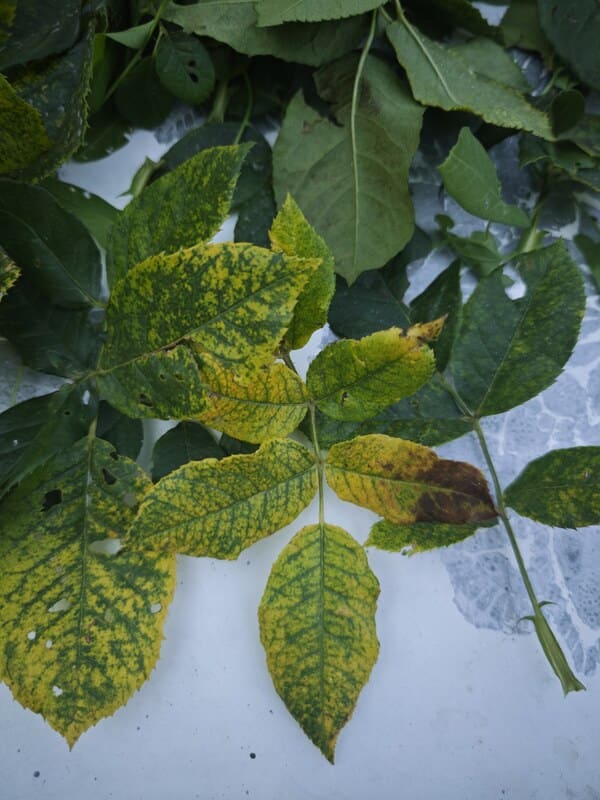
- Yellow line patterns: wavy, zigzag, or “oak leaf” outlines on the leaf.
- Ringspots: pale or yellowish rings scattered across the leaf.
- Vein banding: bright yellow or yellow-orange bands running along the veins while the rest of the leaf stays green.
- Mottling and mosaic: patchy yellow-and-green blotches.
- Sometimes streaky, mottled petals in certain varieties (this is called color break).
How your rose actually caught it (spoiler: it was not the aphids)
- Insects? No. Rose mosaic has no known insect carrier. Aphids, thrips, and mites were all suspected at some point, but as the University of Florida extension service puts it, recent studies found no scientific evidence for any of them.
- Pruning tools? No evidence. Cleaning your tools is still good hygiene, because other diseases really do travel on blades, but you do not need to bleach your pruners between every cut because of mosaic.
- Pollen and bees? Not in roses. PNRSV does spread through pollen in stone fruit trees, which is where the rumor comes from. But when researchers deliberately pollinated 173 healthy roses with pollen from infected plants for three years running, every single test came back negative. And of 651 seedlings grown from the seed of infected roses, not one carried the virus.
- Soil? Not under normal garden conditions.
What it does to the plant: the honest cost
Rose mosaic will not kill your bush. But it is not free, either. Decades of research, from Texas A&M to New Mexico State to British field trials, all point to the same picture of an infected plant:
- A little less overall vigor. The bush grows with slightly less energy.
- Fewer flowers, on shorter stems, sometimes smaller or a bit distorted.
- Poorer survival when moved. Infected roses struggle to re-establish after transplanting.
- Leaves dropping earlier in autumn.
- More vulnerability to winter damage. This is the big one for cold climates.
- A shorter useful life compared with a clean plant.
The kindest way to think about it: the virus is a small permanent tax on the plant’s energy. A well-grown bush can still bloom its heart out, and plenty do, but it is working with a handicap. That handicap shows up most under stress: midsummer heat, transplant shock, and especially winter.
First, make sure it really is mosaic
The big question: should you dig it up?

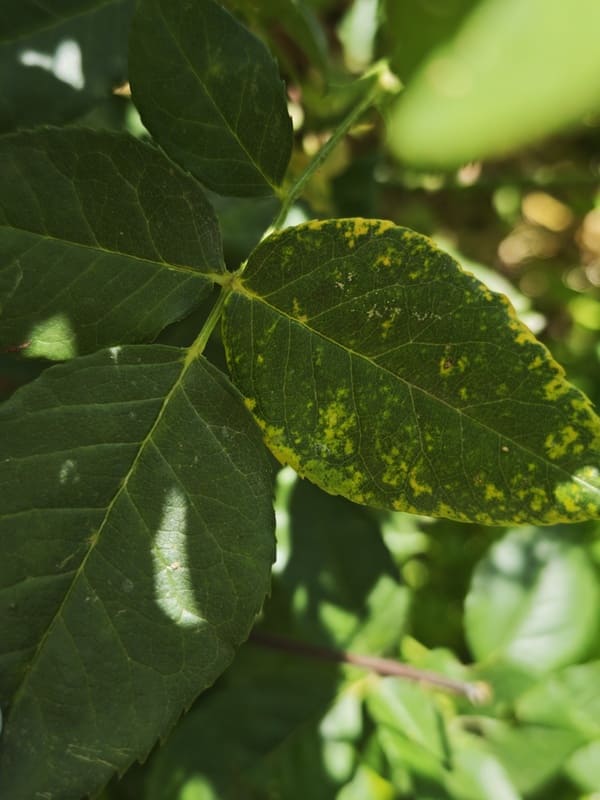
This is my rose, rose de Cisterciens. It’s infected with the mosaic virus, but I haven’t had the heart to dig it up for three years now; it’s so beautiful. I’m just aware of the disease, and I’m taking care of it. The nearby bushes aren’t infected.
Living with a mosaic rose: season-by-season care
Spring: the season to diagnose
- Look, do not spray. Spring is when symptoms show up most clearly on young growth, so this is when you confirm what you are dealing with and make your keep-or-replace decision. Do not waste fungicide on mosaic patterns. They are not fungal.
- Feed gently. Start the season with a balanced rose fertilizer, but go easy on the nitrogen. Soft, overfed growth costs the plant energy it cannot spare and invites aphids and black spot on top of the virus.
- Mulch. A 2 to 3 inch layer of compost, well-rotted manure, or shredded bark keeps the roots cool and moist. It is the cheapest stress reducer you own.
Summer: the season to manage stress
- Water deep, not often. A good soak once or twice a week beats a daily sprinkle. During heatwaves, an infected bush will wilt first, so get ahead of it rather than rescue it afterward.
- Ease off nitrogen, lean on potassium and phosphorus. From midsummer on, switch to feeds that support the roots and overall toughness rather than pushing lots of new top growth.
- Deadhead, and think about thinning the buds. If the bush is clearly straining, remove some buds during peak bloom. It feels harsh, but flowering is the most expensive thing a rose does. A slightly smaller show means a stronger plant heading into autumn.
Autumn: get it ready for winter
- Stop feeding by late summer or early autumn (earlier in cold zones) so the growth has time to harden off.
- Do not prune hard. Leave the framework in place. Heavy autumn pruning invites winter damage the bush can badly afford.
- Expect the patterns to come back with cool nights. That is just the virus, not a new problem, and no action is needed.
Winter: the real test
- Mound soil or compost 8 to 10 inches over the graft union after the first hard frosts.
- In truly cold zones, add a rose cone, burlap wrap, or extra mulch. Whatever your climate calls for, be generous.
- Do not move it. Infected roses survive transplanting poorly. Pick its spot once and let it stay.
- In spring, prune out whatever the winter killed, and be pleasantly surprised by how much usually pulls through when the bush was well protected.
What NOT to waste money on
The one firm rule: do not propagate from it
Shopping smart: how to avoid bringing it home
- Buy from reputable nurseries, ideally ones selling certified virus-free (also called virus-indexed) stock, meaning plants that have been tested and verified clean. Several specialist rose nurseries build their whole reputation on this.
- Inspect before you buy. Choose plants that have leafed out, and check the foliage for line patterns, rings, and vein banding. Spring shopping helps, since that is when symptoms are easiest to see.
- Be careful with mystery bargains. Deeply discounted, no-name, or old leftover stock carries more risk.
- Bought one and it showed symptoms within weeks? That is a fair warranty conversation with the nursery. The plant was infected before it reached you.
If you do decide to remove it
Getting it confirmed (if you really want to)
If You’re Trying to Figure Out What Your Plants Are Really Telling You
If you’ve started experimenting with eggshells because plants keep dropping buds, growing soft tips, or flowering poorly, you’re in familiar territory. Those signs usually point back to basic nutrition, timing, and growing conditions, not a lack of products. That’s why I wrote Why Doesn’t My Rose Grow and Bloom? – 100 Reasons and Solutions. It’s meant to help you understand what’s actually happening inside the plant, so you can fix the cause instead of guessing at treatments.
One thing that speeds this learning curve up more than anything else is keeping notes. When you write down what you applied, when you sprayed, and what the weather was doing, patterns show up surprisingly fast. I designed the Rose Garden Planner 2026 – Log Book for exactly that—so each season teaches you something useful instead of starting from scratch.
And if you’re aiming for fewer mystery problems altogether, soil-first gardening is where things start to settle down. Healthy soil, active microbes, and simple organic inputs solve more issues than most people expect. Revolution in the Rose Garden – Organic Rose Gardening brings those ideas together in a practical way that works in real home gardens, not just on paper.
Rose gardening books


Step into a calmer, more confident rose season. With Ann Devis’s rose gardening books and planner, you’ll get simple organic routines, proven tips, and checklists that keep your roses thriving – from first bud to last bloom.

FAQ
Almost certainly not. In roses, the only proven way it spreads is propagation: cuttings, buds, and grafts from infected plants. There is no insect carrier, and spread from bush to bush in a garden has never been documented. This is the single most misunderstood thing about the disease. Forums are full of people tearing out beautiful roses “before it spreads” when the risk was basically zero.
There is no scientific evidence that pruning tools transmit rose mosaic, and the studies that looked for it did not find it. That said, cleaning your pruners between plants is cheap insurance against plenty of other rose diseases, so keep the habit but lose the anxiety.
No, and mixing these two up is the most expensive mistake in rose gardening. Rose rosette disease is the killer: it spreads between bushes by a tiny mite, causes witches’ brooms, freakish red growth, and too many thorns, and kills within a few years. Rose mosaic does not spread, does not kill, and mostly just costs your bush some vigor. If all you see is crisp yellow patterning on otherwise normal leaves, breathe easy.
Sadly, no. It is just hiding. The amount of virus in the leaves drops below detectable levels in summer heat. Expect the pattern back with cool autumn weather or next spring. A rose that “recovered” in July and relapsed in October is textbook mosaic.
No. Nothing you can spray reaches a virus living inside plant cells. Save your money and spend it on mulch and good fertilizer instead.
No. The rose mosaic viruses are a rose problem in practice. Your tomatoes, cucumbers, and peonies are in no danger from the rose. Vegetable mosaic viruses do exist, but they are different pathogens, mostly spread by aphids, and unrelated to what is on your rose.


