
I’ll be honest about how this one started: a reader in my Facebook group asked whether the little brown bottle of “Bacillus subtilis” she’d bought for her tomatoes would also help her roses, and I realized I’d never actually written down, in one place, what I tell people about it. I use it constantly. I recommend it constantly. And most of what’s floating around online about Bacillus subtilis on roses is either a repackaged product label or a vague “it’s a good bacteria!” with nothing under the hood.
So here’s the fuller version of what this bacterium actually does once it’s on your rose, what the research says versus what’s still guesswork, and the protocol I actually run in my garden.
What Bacillus subtilis Actually Is
People lump Bacillus subtilis in with Trichoderma in their heads because both show up in the same “beneficial microbes for plants” aisle, and both get sprayed or drenched into soil. But they’re not related at all. Trichoderma is a fungus. Bacillus subtilis is a bacterium and a fairly tough one, because it survives as a dormant spore when conditions turn bad, then wakes up and starts multiplying the moment it lands somewhere warm and moist. That’s part of why it’s such a popular commercial biofungicide: those spores can sit in a bottle on a shelf for a year or more (dry, cool storage; don’t leave it in a hot shed) and still work when you finally use them.
Once it’s active on a leaf or a root, Bacillus subtilis does three separate jobs, and this is the part most product labels skip. First, it physically colonizes the leaf surface, stem, and root hair and forms a thin biofilm, which leaves less room and fewer nutrients for fungal spores trying to land in the same spot. Second, certain strains produce a family of compounds called lipopeptides; surfactin, fengycin, and iturin are the three you’ll see named in the research that have direct antifungal and antibacterial activity, essentially poking holes in the cell membranes of competing microbes. Third, and this is the one I find most interesting, those same lipopeptides can trigger induced systemic resistance in the plant itself: the rose’s own immune system gets put on alert before a pathogen ever shows up, the same broad mechanism I’ve written about with chitosan. A 2007 study by Ongena and colleagues, published in Environmental Microbiology, is the paper most of this ISR research traces back to, and it’s worth knowing that work wasn’t done on roses specifically; it’s general plant-microbe science that’s since been confirmed across a wide range of crops.
What Bacillus subtilis Does for Roses, Backed by Real Research
The best rose-specific research I found comes from a 2024 study out of Nanjing Forestry University in China, published in a journal called Agronomy. It’s not actually about disease. It’s about how roses handle bad soil.
The scientists grew potted ‘Ruby’ roses in salty, alkaline soil, the kind of tough conditions that stress a plant out (not too different from my own limestone-heavy soil here in Tbilisi, if I’m honest). Half the roses got a drench of Bacillus subtilis right after planting. Half didn’t. The ones that got it grew taller, had thicker stems, and grew almost twice as much root mass as the untreated ones. Their internal stress levels were lower too, meaning the plant was coping with the tough soil better instead of just struggling through it. And down in the soil around the roots, the bacteria didn’t take over everything, but it did help the good, beneficial microbes multiply.
So that study is about growth and toughness, not about stopping black spot or mildew. For the disease side of things, most of what we know comes from commercial products rather than university trials on roses specifically. That’s still worth something, since a product can’t legally claim to fight a disease on its label without real testing behind it, but it’s not quite the same as a peer-reviewed study. Serenade is one of the better-documented products like this, and its label says it helps against powdery mildew, black spot, botrytis, various leaf spots, and a few other rose problems.
Does that match what I’ve actually seen in my own garden? Mostly, yes. It’s never once cleared up an outbreak that had already started. But on the bushes I keep spraying all season, before anything shows up, I see less trouble overall. That’s the pattern, three years running.
What It Won’t Do
It won’t save a rose that’s already lost half its leaves to black spot this week. That ship has sailed. Good airflow, watering in the morning instead of the evening, raking up fallen leaves before they sit there rotting all winter… none of that gets replaced by a bottle, no matter what the label promises. Those old-fashioned habits still do more heavy lifting than any biological you can buy.
It’s not going to outperform a soil program built on real compost and organic matter either. I think of it as one piece that works with your soil biology, not something that lets you skip building that biology in the first place. If you haven’t sorted out the basics of soil preparation yet, honestly, that’s where your time is better spent first.
The Myth I Want to Bust: “One Bacillus Product Is the Same as Another”
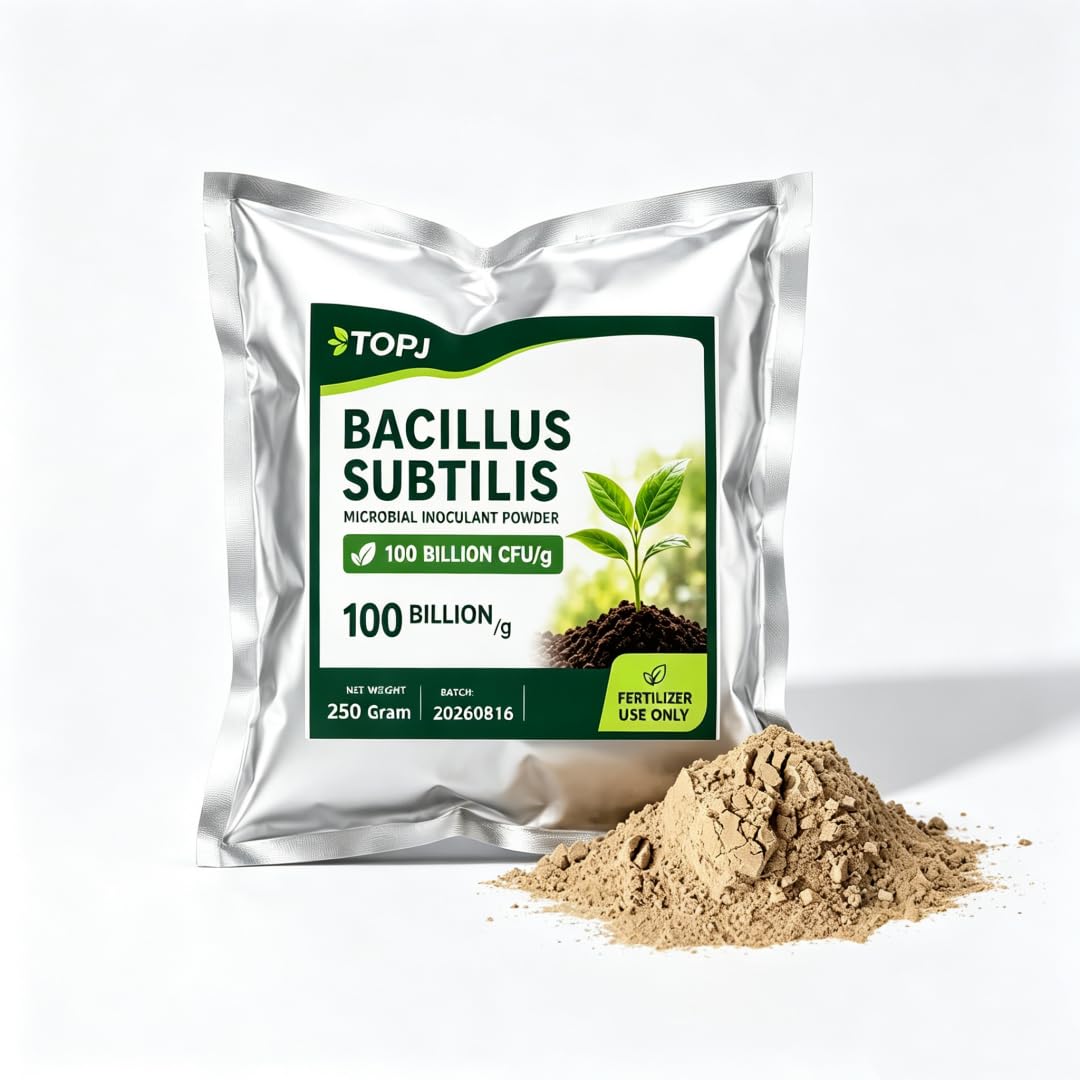
This one matters more than people think. “Bacillus subtilis” isn’t one single organism doing one single thing — it’s a species with dozens of documented strains, and the strain matters enormously. QST 713 is studied and labeled for disease suppression. ATCC6633 is what that Nanjing study used for growth and stress tolerance. A cheap bulk powder labeled “Bacillus subtilis, 100 billion CFU/gram” with no strain designation might be a fine soil inoculant for general microbial diversity, and I don’t dismiss those. Still, you have no real way of knowing if it’s the same strain the disease-suppression research was built around. If you’re buying specifically to fight black spot or powdery mildew, look for a product that names its strain or, easier, one that’s explicitly labeled and sold as a biofungicide rather than a generic soil supplement. For a general microbial boost for stressed roses or newly planted roses, if nothing specific is going on, don’t bother paying more. A broad inoculant works fine there.
And the second myth. I have to remind myself of this one every spring, no joke: it’s not a fungicide substitute. You don’t reach for it once you’ve already spotted trouble. It works by showing up early, camping out on the leaf, crowding out space, getting the plant’s own defenses switched on before the pathogen even arrives. Spra
How to Apply Bacillus subtilis to Roses
I’m not going to hand you an exact mixing recipe here, and there’s a good reason for that. Bacillus subtilis comes packaged differently depending on where you live: a liquid in one country, a powder in another, a completely different strength in a third. Any “2 tablespoons per gallon” I gave you might not even match what’s sitting on your shelf. So the real advice is simpler than a recipe: read the label on the bottle you actually bought, and follow it. The company that made it tested that exact formula, not some generic version of it.
What matters more than the math is knowing what kind of product you’re holding, because that tells you how to use it.
If the label says soil inoculant, it’s meant for the ground, not the leaves. Water it in around the roots, usually right after planting a new rose or when an established one is struggling and could use some help underground.
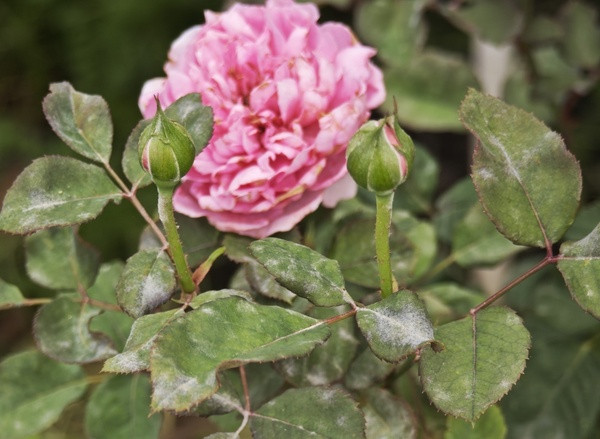
If the label says biofungicide or disease control, that’s a leaf product, and it only works as prevention. It won’t do a thing for a rose that already has symptoms, so timing is everything here. Spray before trouble shows up, not once you’ve already spotted it. Here’s the rule I go by: when the weather turns humid and unsettled, exactly the kind of stretch where black spot or mildew loves to move in, I spray about once a week. Once it dries out and calms down, I ease off.
And one thing that has nothing to do with the label at all. Spray or water it in during the early morning or evening, never in the middle of a hot, sunny afternoon. Strong sun is hard on live bacteria, and honestly it’s not doing your wet leaves any favors either.
One more thing on timing, since it comes up with my other biologicals too. I already mention this in my Trichoderma article, but it’s worth repeating here in case you’re reading this one first. Don’t spray Bacillus subtilis and Trichoderma on the same day. They’re not really enemies, but Bacillus doesn’t know the difference between a fungus that’s hurting your rose and one that’s helping it, so mixing them in the same tank just cancels out some of what each one is trying to do. I keep them on separate weeks instead. Same goes for copper fungicides. Most biofungicide guidance says to alternate copper and Bacillus rather than spray them together, partly to keep the bacteria alive and partly because copper gets harsher on the plant the more often you use it.
One more thing worth saying: this stuff is alive, not some chemical sitting inert in a bottle, so treat it that way. Keep it somewhere cool and dark, don’t stock up more than you’ll actually use in one season, and check the date on the label before you mix a batch. A biofungicide past its shelf life won’t hurt anything. It just won’t do much either, and you’ll be standing there wondering why your spray tank full of expensive nothing isn’t working.
Want the Complete System?
This is one tool in a much bigger organic protocol: the soil biology, the feeding rhythm, and the disease-prevention approach I run all season, all in one place. If you want the whole system rather than one input at a time, that’s what my book covers: Revolution in the Rose Garden — Organic Rose Gardening: Building Living Soil, Preventing Disease Naturally, and Growing Strong, Beautiful Roses Without Chemicals.
Rose gardening books


Step into a calmer, more confident rose season. With Ann Devis’s rose gardening books and planner, you’ll get simple organic routines, proven tips, and checklists that keep your roses thriving – from first bud to last bloom.

FAQ
Pretty much, yes. That’s actually how the commercial labels tell you to use it, weekly through the growing season. It’s not toxic to bees or pets or you once it’s dried on the leaf, so you’re not doing any harm there. The one thing I’d watch is timing it around Trichoderma or a copper spray. Don’t put those on the same day. Give them their own week.
No, and I wish it did. It works by getting onto the leaf first and putting the plant’s defenses on alert before anything bad shows up, not by killing off a fungus that’s already settled in. If you’re staring at spots or that white dusting right now, this isn’t your tool. Go look at my powdery mildew protocol instead, potassium bicarbonate actually does kill active mildew.
Bacillus subtilis is a bacterium that mostly works on leaf and stem surfaces against fungal and some bacterial diseases; Trichoderma is a fungus that works primarily in the root zone against root-rot pathogens like Fusarium and Pythium. They complement each other, but I keep them on alternating weeks rather than applying both at once.
There’s no dramatic before-and-after. Because it works preventively, the honest answer is that you’re measuring an absence of disease over a season compared to a comparable untreated bush rather than a visible transformation in days. Give it a full growing season before judging it.
Not reliably, and I don’t recommend trying. Commercial products use specific, tested strains produced under controlled fermentation. There isn’t a credible home recipe for culturing a particular disease-suppressing strain in your kitchen, so this is one input worth buying rather than DIY-ing.
There’s real, if limited, evidence for this. Rose-specific research found measurable gains in root growth and stress-defense enzyme activity in roses grown under salt and alkaline stress after a soil drench with a growth-promoting strain, separate from any disease-fighting use. If your soil runs alkaline the way mine does, that’s a reasonable extra motivation to use it at transplant time.


