
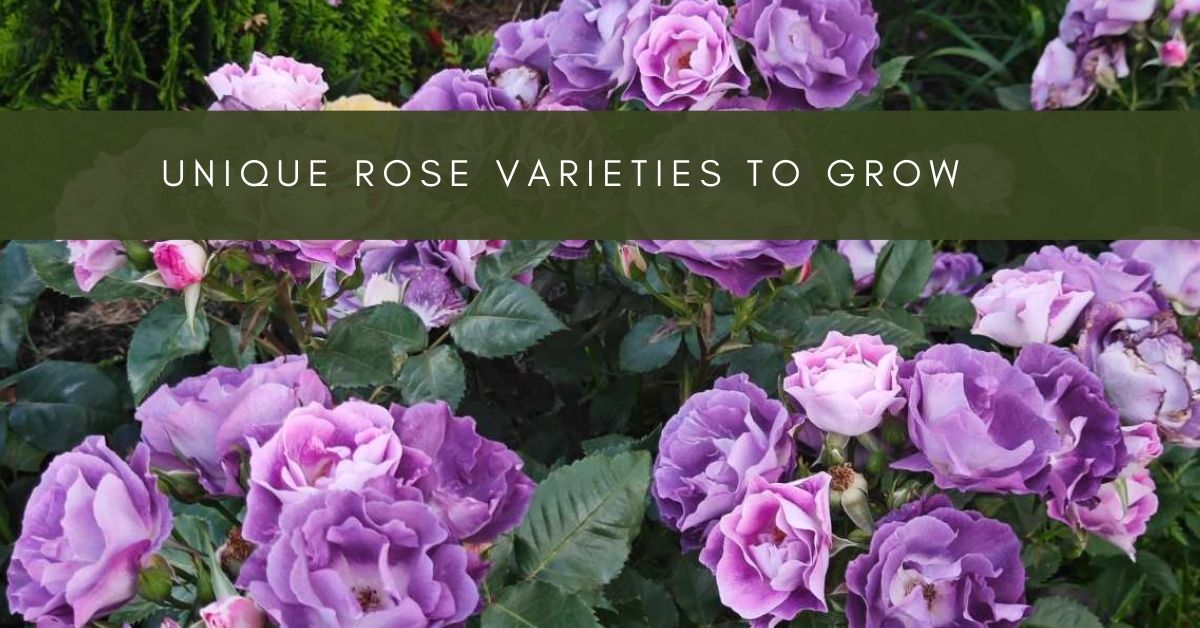
Unique roses aren’t “rare” because they’re hard – they’re unique because their color is an illusion created by pigment, temperature, light, and sometimes soil. True black and true blue roses don’t exist naturally; the best you can grow are near-black maroons like Black Baccara and Black Jade, and blue-leaning lavenders like Blue Moon and Blue for You. Green roses range from the botanical oddity Rosa chinensis ‘Viridiflora’ (green sepals instead of petals) to modern green-tinted blooms like Green Romantica and Lemon Rokoko. Rainbow roses aren’t a garden variety at all – they’re dyed cut flowers. If you match each rose to the right light and soil, the “unusual” colors show up consistently instead of fading into ordinary pinks and reds.
Roses are timeless symbols of love and beauty, but not all roses are created equal. While classic red and white roses are perennial favorites, a world of unique rose varieties can add an extraordinary touch to your garden.
The Myth and Reality of Black Roses
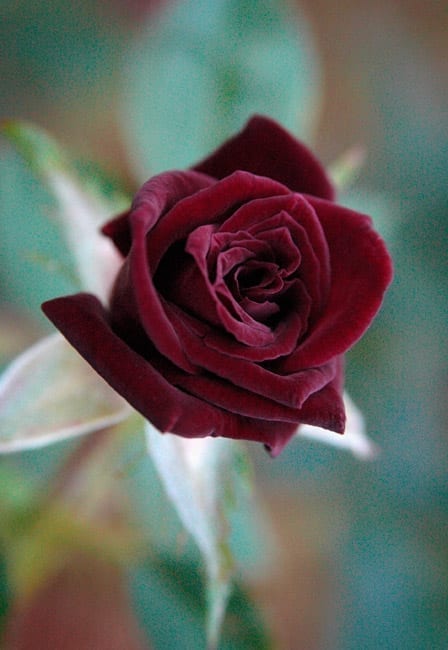
The pursuit of genuinely black roses is a fascinating endeavor in the world of horticulture. While absolute black petals can only be achieved using dyes, breeders have created stunning dark maroon varieties that appear almost black. Notable among these are Black Jade and Black Baccara.
Black Baccara
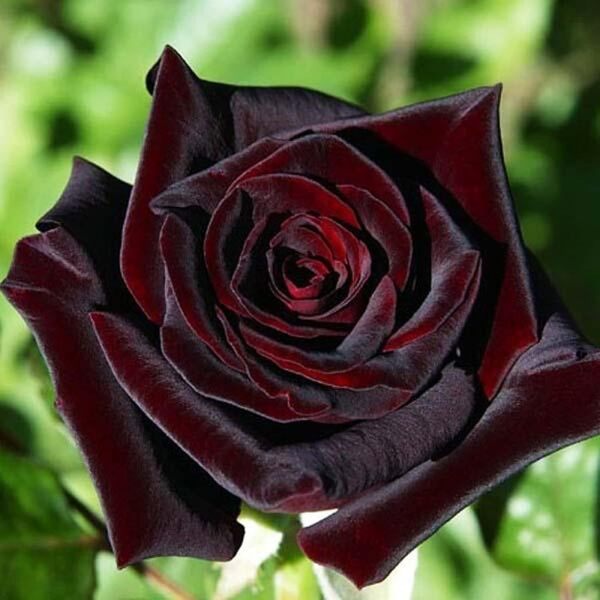
Black Baccara roses feature rich, dark red petals with a blackish hue, making them famous for gothic-themed gardens and floral arrangements.
French breeders have developed the darkest rose variety, Black Baccara, which is unanimously considered the closest to true black. The buds of this variety exhibit a distinctly black color. The flowers take on a vivid black sheen during the cool autumn months. In the summer, Black Baccara delights with dark burgundy, velvety blooms. This variety maintains its black color on acidic soils even in hot weather. The flowers are medium-sized, 9-10 cm in diameter, with a cup-shaped, dense, double-flowered structure (45 petals) and pointed angular tips. The fragrance is subtle, much like other cut roses. The foliage is green with a slightly noticeable red tint, and the variety has few thorns. The bush reaches about 80 cm in height and has moderate disease resistance. Primarily used for cutting, it also thrives in garden settings. The best planting spot is partial shade, with the most prominent velvety black hues.
Black Jade
Black Jade roses are known for their deep, velvety maroon petals, which look nearly black in certain lighting conditions. These roses exude a sense of mystery and sophistication
Green Roses
Green Rose (Rosa chinensis viridiflora): A Botanical Wonder
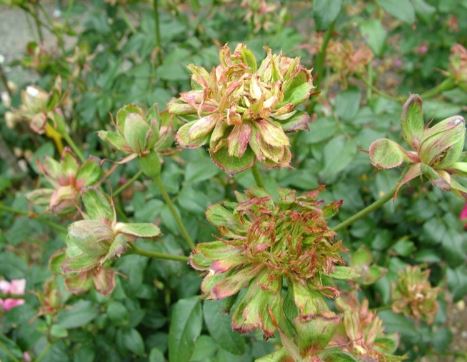
The Green Rose, or Rosa chinensis viridiflora, is one of the most unique plants in the rose family. This Chinese rose is intriguing because its “petals” are sepals, giving it a distinctive green appearance.
Botanical Name: Rosa chinensis ‘Viridiflora’
Family: Rosaceae (Rose Family)
The Viridiflora is arguably one of the most unique roses you can find. Thought to have been cultivated as early as 1743, it gained widespread recognition in 1856 when it was introduced to the general public by the British company Bembridge and Harrison.
The Charm of Lemon Rokoko
Lemon Rokoko roses, part of the “Noblesse Spray” series, are celebrated for their fresh, creamy-green color at the start of blooming. The flowers are double, 6-8 cm in diameter, and display a nostalgic appearance reminiscent of antique roses. They bloom in clusters and exhibit excellent resistance to weather conditions, maintaining their beauty for long when cut.
Growing Lemon Rokoko
These roses have dark green, glossy foliage resistant to powdery mildew and black spots. The shrub reaches a height of 70-100 cm and a width of 50 cm. It is ideal for borders, groups, and cuttings for vases. Plant it in well-drained soil with partial to full sun exposure for optimal growth. Lemon Rokoko roses also repeat bloom, providing continuous beauty throughout the season.
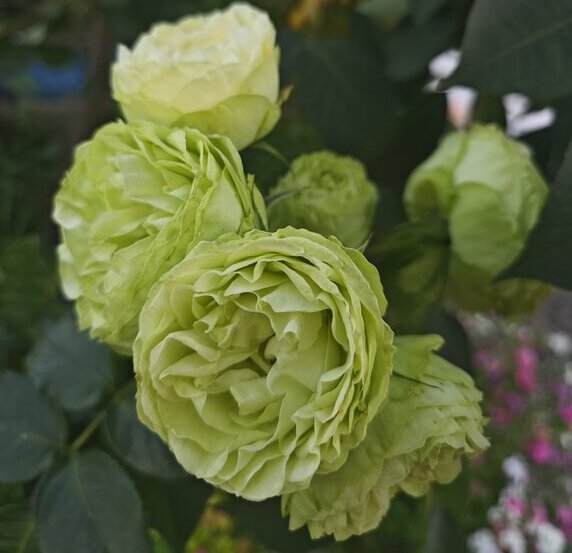
Green Romantica: A Verdant Marvel
Green Romantica roses are indeed a gardener’s dream. These roses are renowned for their lush, green-tinted petals, which give them an ethereal, otherworldly appearance.
To cultivate Green Romantica roses successfully, providing them with well-drained soil and ample sunlight is essential. These roses thrive in USDA hardiness zones 5 through 9 and require regular watering to maintain their vibrant coloration and health. The shrub is medium-sized and compact, reaching a 60–80 cm height. The dark green, glossy leaves complement the flowers’ gradient coloring, which ranges from a milky-green center to a soft, greenish hue at the edges. The flowers are large, cup-shaped, 10–12 cm in diameter, densely double (about 100 petals), and solitary with a faint fragrance.
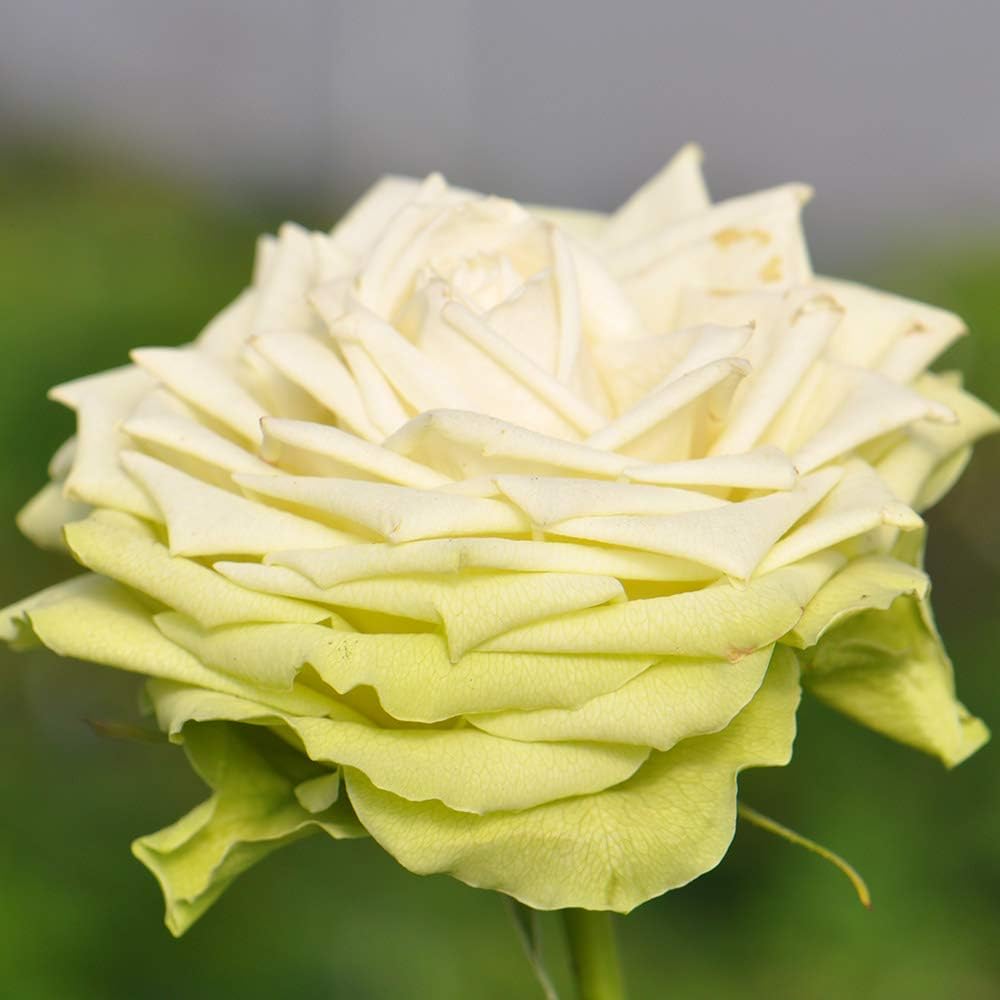
Blue Roses
Blue Moon: The Enigmatic Beauty
Blue Moon roses captivate with their soft, lavender-blue petals and intoxicating fragrance. This hybrid tea rose is a favorite among gardeners who seek a touch of the extraordinary in their rose collection.
Care Tips for Blue Moon Roses
Blue Moon roses flourish best in full sun and fertile, well-drained soil. They require regular feeding and pruning to encourage healthy growth and abundant blooms. Their delicate color makes them a perfect choice for romantic garden settings.
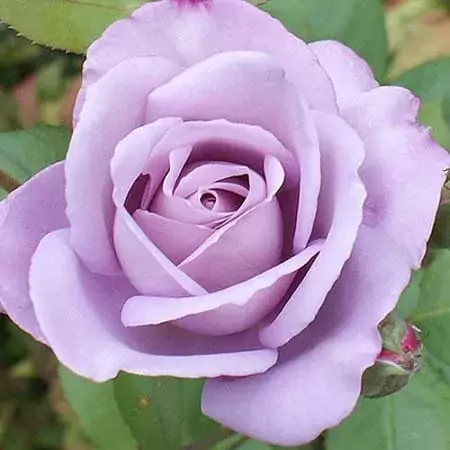
Blue for you rose
The striking coloration makes this arguably the bluest rose you’ll ever see, complemented by an extraordinary fragrance. It features abundant blooms on a neat, branching shrub that grows to less than 1 meter in height. The foliage is plentiful and slightly glossy, with above-average disease resistance.
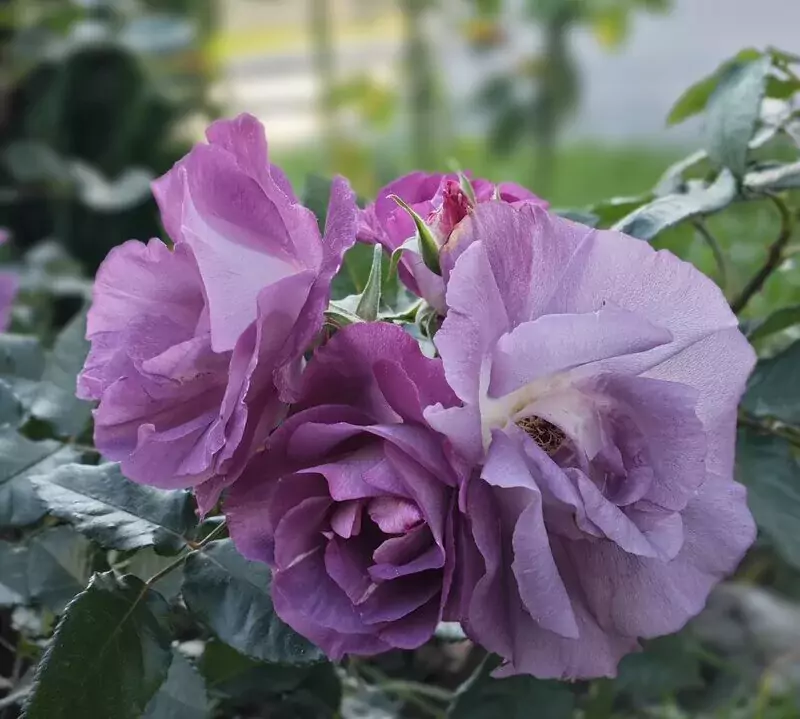
The Art of Rainbow Roses
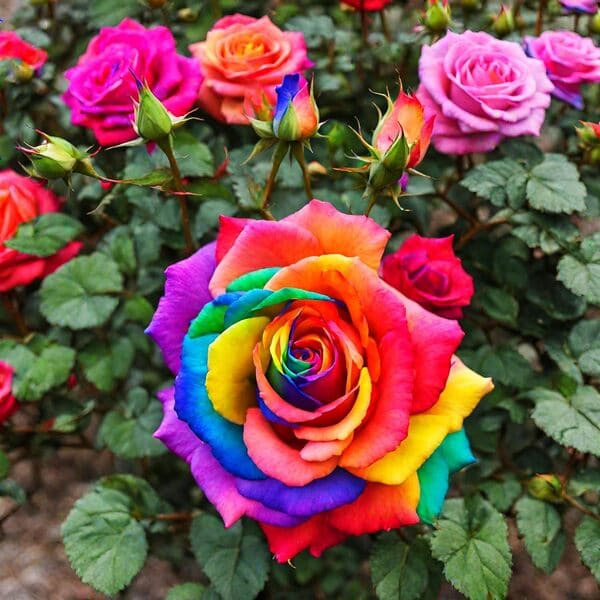
Rainbow Roses are a modern marvel created by Dutch florist Pieter Van de Werken. These roses are dyed using a unique process that allows each petal to take on a different color, resulting in a vibrant, multicolored bloom.
A particular cultivation method is used to achieve roses with multicolored petals: the stems are split into separate channels, absorbing colored water from the soil. The dye, dissolved in the water, is taken up by the petal fibers, resulting in petals that display all the rainbow colors.
Embrace the Extraordinary
Exploring and cultivating unique rose varieties can transform your garden into a spectacular display of nature’s diversity. Whether you are enchanted by the verdant beauty of Green Romantica, the mystical allure of Blue Moon, the dark elegance of Black Jade and Black Baccara, the botanical wonder of the Green Rose, or the vibrant artistry of Rainbow Roses, there is a unique rose variety waiting to captivate your heart and garden.
Understanding these roses’ specific needs and characteristics allows you to enjoy their beauty and uniqueness for years. Embrace the extraordinary and let your garden bloom with these remarkable rose varieties.
The Organic Rose Revolution: Grow Stunning Blooms, Naturally
- Unlock the secrets of nurturing your roses organically with our guidance on soil health, natural fertilizers, and sustainable pest control methods. Your garden will thrive with eco-friendly care that respects nature’s balance.
- Empower yourself with the knowledge to craft natural remedies for common rose ailments.
- Banish pests from your garden precisely using proven strategies that safeguard your roses without harsh chemicals. Keep aphids, mites, and other invaders at bay while preserving your garden’s natural harmony.
- Explore a world of breathtaking rose varieties carefully curated to captivate your senses and elevate your garden to new heights of beauty.


