
Bacillus subtilis is a soil-dwelling bacterium found naturally almost everywhere: in healthy soil, on plant leaves, and in compost. It forms spores, a protective state that allows it to survive drought, heat, and even frost. In gardening, selected strains are used for their ability to suppress plant diseases.
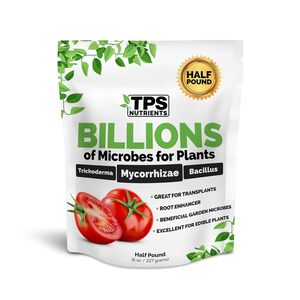
In my own garden, I work with Fitosporin – it is a well-tested product that is easy to find in Georgia. I also use Agrocatena, which is available locally, and for rose growers in the US, I recommend Nutrients Billions. All three are live products based on Bacillus subtilis.
It is important to understand that the bacterial spores in the container are dormant and only become active when they come into contact with water and the plant. That is why I always prepare the solution right before application and never leave it for later – once activated, the bacteria quickly die without a nutrient source.
Why roses need B. subtilis
Roses suffer from a range of problems that B. subtilis helps manage in comprehensive approach. Black spot attacks leave during rainy summers – the bacterium colonizes the leaf surface before fungal spores can settle. Powdery mildew covers buds with a white coating – B. subtilis produces natural antibiotics that break down fungal mycelium. Gray mold damages spent blooms – the bacterium competes with pathogens for space and nutrients. Root rot develops in waterlogged soil – a protective layer forms on the roots, blocking infection. Heat stress or transplant shock weakens plants; the bacterium stimulates immunity and root growth.
The key advantage for organic growers is that this is a living system, not a chemical. It works preventively by stopping disease from developing, rather than curing advanced infections.
How to use it correctly
Preparing the solution
For preventive treatments, use 1 gram per liter of water – about half a teaspoon without a heap. If disease pressure is high or the weather is persistently rainy, increase to 2 g/L. For soaking cuttings before rooting, use 3 grams per liter – the higher concentration helps stimulate root formation.
An important detail: mix in warm water, around 20–25°C. Cold water slows spore activation and reduces effectiveness.
When and how to apply
Ideal conditions are cloudy weather or evening, with no direct sun. Air temperature should be above 12°C. Wind is undesirable, as droplets will not stay on the leaves. Rain within 3–4 hours will wash the solution away.
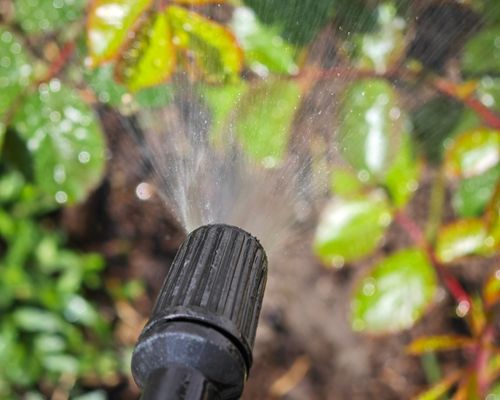
Spray both sides of the leaves, paying special attention to the underside where pathogens tend to settle. Water the soil under the bush using about half a liter for young plants and one liter for mature bushes. Do not forget the lower stems – this is a high-risk zone for root rot.
Apply every 3 – 4 weeks during the season. In rainy conditions, shorten the interval to 2 weeks.
Common mistakes in organic rose care
Mistake one:
Treating already diseased plants.
If black spots or a powdery coating are already visible, spraying with Fitosporin will not work miracles. B. subtilis is preventive, not curative. It does not destroy established fungal growth inside plant tissues.
What to do instead: remove infected leaves, prune to improve air circulation, increase concentration to 2 grams per liter, and repeat treatments every 5–7 days. Add other organic methods, such as garlic or onion infusions for spraying, and ash as both a nutrient and an antiseptic.
Mistake two: improper storage
Leaving the product in a shed where it overheats in summer and freezes in winter, or using a solution prepared the day before.
Spores die above 35°C and during freezing. Prepared solution cannot be stored – once activated, bacteria quickly die without nutrients.
Store in a dry, cool place at 5–25°C. Mix only as much as you can use within 2–3 hours.
Mistake three: spraying in heat and direct sun
Applying at midday in strong sun leads to problems. Droplets act like lenses and cause burns. UV light quickly kills bacteria. Moisture evaporates before spores can attach to leaves.
Apply early in the morning, before 9 am, or in the evening, after 6 pm. Cloudy conditions are ideal.
Mistake four: ignoring the soil
Spraying leaves only and forgetting the soil. Many pathogens overwinter in the soil and infect plants from below. The root system remains unprotected.
Always water under the root – about half a liter for young plants and one liter for mature bushes. This is especially important in spring when spores awaken, and in autumn before winter.
Mistake five: using the same product for years
Using the same product for 4–5 years can reduce effectiveness.
Bacteriophages, viruses that target specific bacterial strains, may accumulate in the soil. Local pathogens may also adapt.
Alternate with other biological products. Trichoderma protects against Fusarium and white rot. Pseudomonas suppresses bacterial diseases. Mycorrhizal fungi improve nutrient uptake. A diverse microbiome is more reliable than a monoculture.
Why it may not work
Reason one: starting too late
If the first treatment is applied when roses are already in bloom and spots have appeared, it is too late. A protective layer takes 3–5 days to form. If the pathogen is already inside the plant, bacteria will not help.
Regular weekly inspection helps catch problems early.
Reason two: incorrect water pH
Hard, alkaline water with a pH above 8 reduces bacterial activity. B. subtilis prefers neutral to slightly acidic conditions, pH 6–7.
Test water with a simple aquarium kit. If pH is high, add a small pinch of citric acid or a splash of vinegar per bucket.
Reason three: high disease pressure
If neighboring gardens are heavily infected, spores constantly enter your garden. B. subtilis is not a heavy-duty solution on its own.
Strengthen protection: improve air circulation by spacing plants, apply more frequently every 5–7 days, and combine with other organic methods. Bordeaux mixture can be used as a contact fungicide. Plant-based infusions also help.
Reason four: poor environmental conditions
Heavy rain shortly after application, extreme heat, or frost can destroy newly applied bacteria.
Spores need time to attach and multiply. Extreme conditions in the first 24 hours reduce effectiveness.
Check the weather forecast for the next 2–3 days. Ideal conditions are cloudy weather without rain and temperatures between 15–25°C.
Treatment calendar for an organic rose garden
In March, when snow melts and soil thaws, treat the soil under bushes. This activates the microbiome.
In April, when buds swell but have not yet opened, spray and water. Protection is needed before leaves emerge.
In May, before flowering, treat bushes to protect buds from gray mold.
In June and July, apply every 3 weeks, or more often in rainy weather. This is the peak period for fungal diseases.
In August, after pruning spent shoots, treat cuts and foliage to support healing.
In September, water the roots to prepare plants for winter. Healthy roots tolerate cold better.
In October, after leaf fall, spray stems and mulch to reduce overwintering pathogens.
Bacillus subtilis for the organic gardening
Bacillus subtilis is not a cure-all but part of a living protection system. It works when applied before disease appears, under suitable temperature and weather conditions, on both leaves and soil, regularly throughout the season, and in rotation with other biological and organic methods.
A monthly schedule in cloudy weather is a good foundation. Add spring soil treatment and autumn application after leaf fall. Combine with other organic tools to build a reliable, chemical-free protection system.
If You’re Trying to Figure Out What Your Plants Are Really Telling You
Rose gardening books


Step into a calmer, more confident rose season. With Ann Devis’s rose gardening books and planner, you’ll get simple organic routines, proven tips, and checklists that keep your roses thriving – from first bud to last bloom.

Frequently asked questions about Bacillus subtilis.
Yes, this is an excellent combination. Mycorrhiza works inside root hairs, helping with water and nutrient uptake. Bacillus subtilis lives on root and leaf surfaces, protecting against pathogens. They occupy different niches and do not compete. Some studies suggest a synergistic effect. Prepare solutions separately and apply them a few hours apart.
No, it is not an insecticide. It works against fungal and bacterial diseases. For aphids, spider mites, and caterpillars, use other methods such as tobacco infusion, soap solution, beneficial insects, or pyrethrum-based products.
Organic fertilizers, such as nettle infusion or seaweed, and humic fertilizers are compatible. Mineral fertilizers high in copper, zinc, or manganese may inhibit bacterial activity. Apply them separately.
If less than 3–4 hours have passed, repeat the treatment. If more than 6 hours have passed and the rain was light, reapplication is usually not necessary.
Most likely due to spraying in direct sun or using too high a concentration. The bacteria themselves are safe for plant tissues
If the infection is mild and recent, it may slow the spread. Severely affected leaves should be removed.
Yes, and it is often better than tap water because it contains no chlorine. Just ensure the water is clean.
Yes, it has a broad spectrum. Effective on peonies, phlox, cucumbers, apple trees, grapes, and more.
Plants will not be harmed, but efficiency does not increase proportionally. Excess bacteria simply die due to a lack of resources.
Yes, it accelerates decomposition. Apply a concentrated solution to the compost pile.


